Well report No. RR-5018 · T22N · R30W · SEC 22 · filed October 10, 2026
Upstream Drilling & ProductionWell report
5,000-Gallon Oil Spill Near Riverton Mostly Contained
A 5,000-gallon oil spill near Riverton, Wyoming, is mostly contained, but responders have not determined the cause. Details on the Wind River Basin incident remain limited.
Field notes
- An estimated 5,000 gallons of oil spilled near Riverton, Wyoming.
- Response crews report the spill is mostly contained.
- The cause of the spill remains unknown.
- The incident sits in Fremont County, on the edge of the Wind River Basin producing region.
- No operator or source facility has been publicly identified in initial reporting.
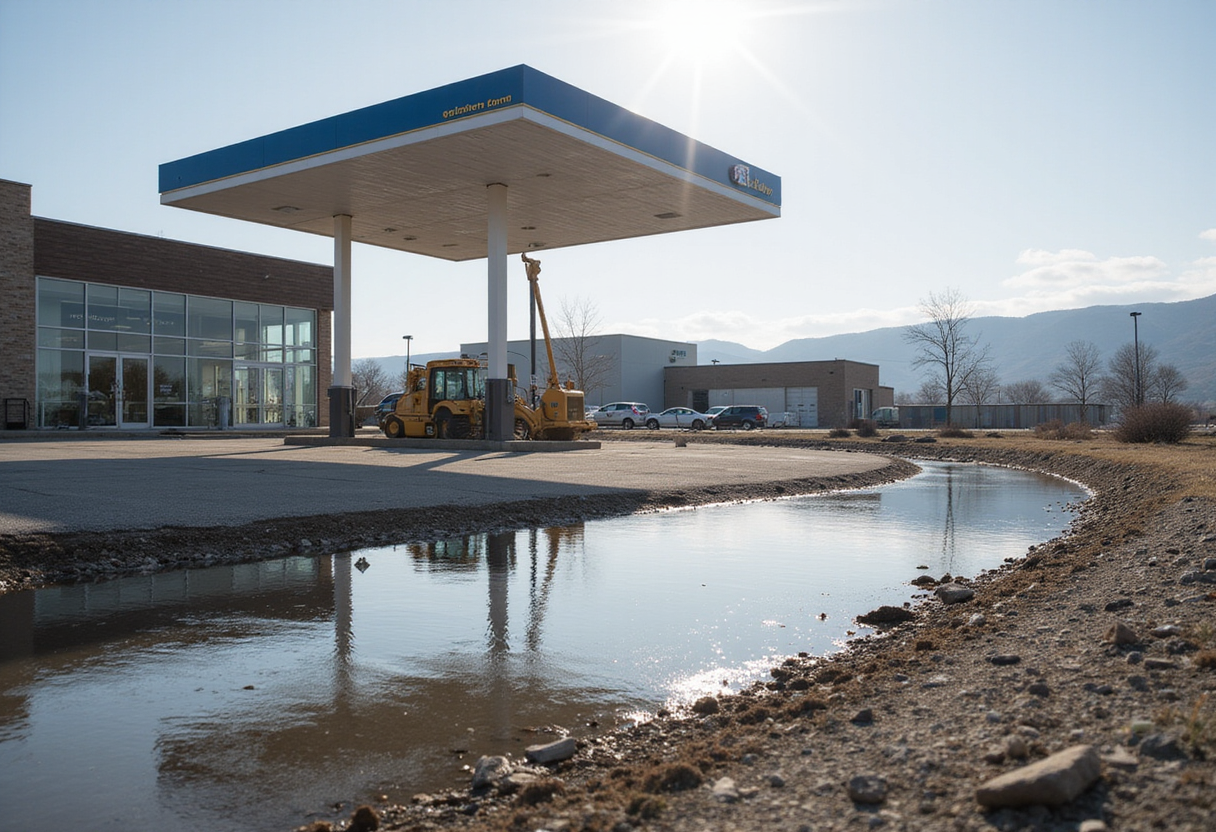
A roughly 5,000-gallon oil spill near Riverton, Wyoming, is mostly contained, but responders and regulators have not yet determined what caused the release.
The volume — on the order of 5,000 gallons — places the incident among the larger onshore spills reported in the state this year, and the confirmation that containment is largely in hand marks the first operational milestone in the response. What remains open is the harder question: the cause.
What is known about the spill?
According to Cowboy State Daily, which first reported the incident, the spill occurred near Riverton in Fremont County, a hub of Wyoming's historic Wind River Basin oil activity. The report gives three concrete data points:
- An estimated 5,000 gallons of oil was released.
- Response crews have achieved what authorities describe as mostly contained status.
- The cause of the spill has not been identified.
That combination — containment achieved, cause unknown — is common in the first days of an onshore spill response, when recovery and stabilization take priority over root-cause work. Operators and regulators typically sequence the investigation after the site is secure.
Where does Riverton sit on the oil map?
Riverton sits on the northern edge of the Wind River Basin, one of Wyoming's older producing regions. The basin hosts legacy fields that have pumped since the mid-20th century, and aged surface equipment, flowlines and tank batteries are a recurring factor in spills across the Rockies' mature patches.
Neither the operator nor the specific facility involved in this release has been named in the initial reporting, and no link to a particular lease, pipeline or tank battery has been established publicly. Until the company or the regulating agency identifies the source facility, any attribution to a specific piece of infrastructure remains speculation.
What does "mostly contained" mean operationally?
In spill-response practice, containment means halting the further spread of released oil — via booms, berms, ditches or shutoff of the leaking source — while recovery and remediation continue. "Mostly contained" signals that the release is no longer spreading significantly but that crews have not yet fully controlled or recovered the affected material.
The next phases for a release of this size typically include:
- Free-oil recovery from the spill area.
- Contaminated soil removal and disposal.
- Groundwater screening, depending on proximity to water tables and the Wind River's drainages.
- A written spill report and root-cause determination filed with state regulators.
Who regulates spills of this size in Wyoming?
Onshore oil spills in Wyoming fall under the Wyoming Oil and Gas Conservation Commission and the state Department of Environmental Quality, depending on the facility type and whether waters of the state are affected. Releases above reporting thresholds must be notified to the agencies promptly, and operators must file follow-up documentation on volumes recovered and remediation plans.
Whether this 5,000-gallon incident triggers enforcement action will depend on the eventual cause determination — mechanical failure, human error, corrosion or a third-party factor — and on the operator's compliance record.
What happens next?
The watch items are straightforward. First, the cause: an agency or company statement identifying the source facility and failure mechanism would move the story from response to accountability. Second, the recovery tally: how much of the 5,000 gallons crews actually recover, a figure regulators will track through closure of the site. Third, remediation timing — spills of this scale in agricultural areas near Riverton commonly require multi-month soil cleanup programs before state sign-off.
For now, the operational picture stands at a contained 5,000-gallon release, an unidentified cause, and an investigation that Wyoming's regulators and the involved operator have yet to detail publicly.
via Google News: Pipelines and midstream (Source)
More from Olivia Hart
Adjoining reports
- Oil pipeline leak reported between Riverton and Kinnear in Wyoming
- Syracuse Study Links Conventional Oil Drilling to Waterway Degradation
- Line 5 pipeline construction crews breach Wisconsin aquifer
- Wisconsin DNR Still Evaluating Possible Aquifer Breach on Line 5
- Interior Dept Eases Environmental Reviews for Alaska Oil Drilling