Well report No. RR-3872 · T20N · R25W · SEC 8 · filed October 10, 2026
Midstream & PipelinesWell report
CITGO ships Lemont gasoline to New York via reversed Laurel Pipeline
CITGO has begun moving finished gasoline from its Lemont, Illinois refinery into the New York Harbor market via a reversed Laurel Pipeline, according to IndexBox trade-flow reporting.
Field notes
- CITGO has begun shipping finished gasoline from its Lemont, Illinois refinery into the New York Harbor market via a reversed Laurel Pipeline, according to IndexBox trade-flow reporting.
- The Lemont plant sits on the Des Plaines River southwest of Chicago and ranks among the largest refineries operating inside PADD 2.
- CITGO Petroleum Corporation operates three US refineries: Lemont in Illinois, Corpus Christi in Texas, and Lake Charles in Louisiana.
- The reversed Laurel dispatch routes Lemont barrels east and south to NY Harbor, bypassing the alternative of Jones Act tanker lifts from the US Gulf.
- A sustained RBOB and ULSD crack premium at New York Harbor is the analytical condition that sustains the reversed-flow economics.
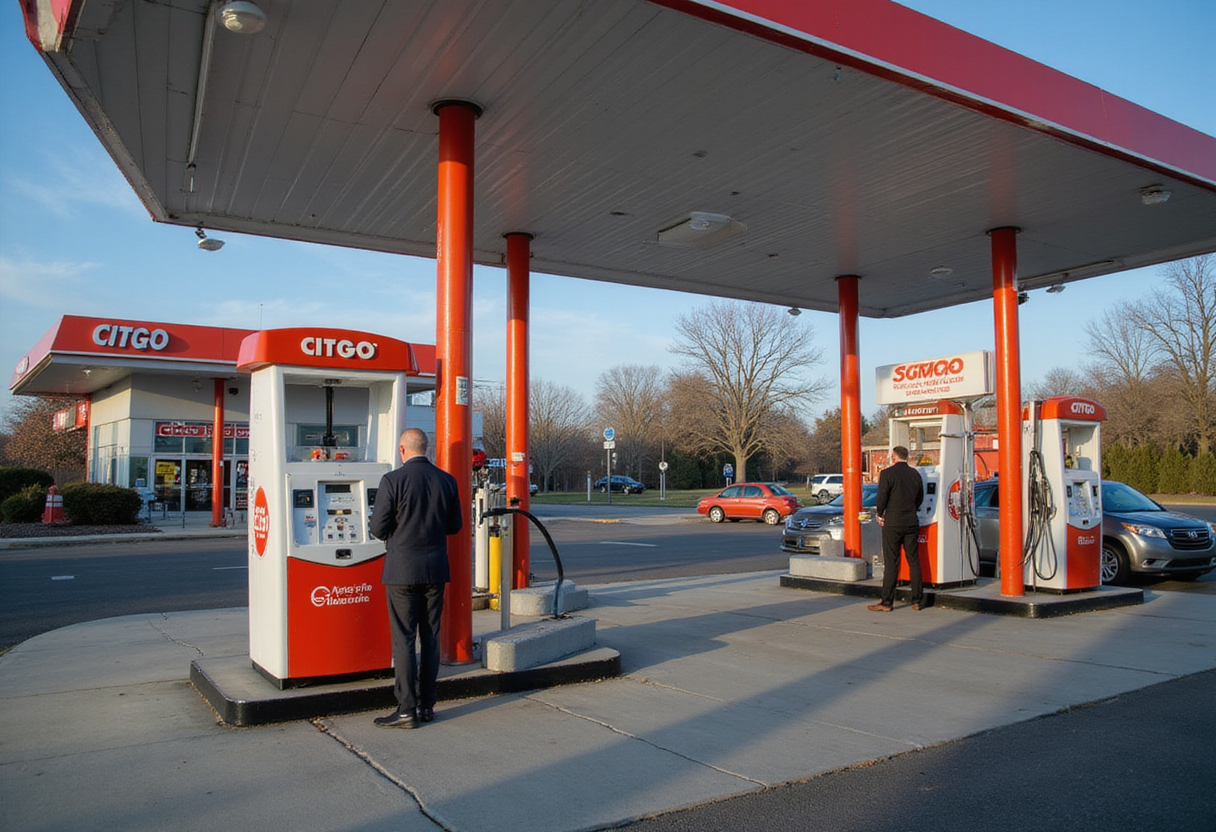
CITGO has begun moving finished gasoline from its Lemont, Illinois refinery into the New York Harbor market via the Laurel Pipeline operating in reversed flow direction, according to IndexBox trade-flow reporting.
How does the reversal reposition Lemont barrels?
The flow reorientation places CITGO's largest Midwest refinery into the East Coast gasoline supply stack. Lemont — situated on the Des Plaines River southwest of Chicago and one of the largest plants operating inside PADD 2 — typically clears its finished gasoline pool into Chicago-area wholesale channels, the regional Mid-Continent market, and outbound pipelines and marine routes heading away from the Northeast.
The reversed Laurel dispatch now represents an East Coast pull instead. Mid-Continent refiners commonly send gasoline east when NY Harbor crack spreads widen enough to absorb pipeline tariff and operational costs; the reverse-flow routing removes the alternative of Jones Act tanker lifts out of the US Gulf for the same end market.
What is the Laurel Pipeline's role here?
The Laurel Pipeline is a long-haul refined products system linking Mid-Continent and Gulf Coast origins to eastern terminals, threading through a corridor historically associated with the Mid-Continent-to-East-Coast product trade. Pipeline operators have reconfigured segments in recent years as US refinery output, pipeline interconnectivity, and finished-product export volumes have shifted regional balances. A reversed Laurel dispatch moves Lemont barrels east and south toward NY Harbor delivery points that historically received Gulf-origin product.
Where does CITGO fit in US refining?
CITGO Petroleum Corporation operates three US refineries: Lemont in Illinois, Corpus Christi on the Texas Gulf Coast, and Lake Charles in Louisiana. The three-plant configuration has ranked among the larger US refining networks by nameplate capacity. The reversed-flow move gives CITGO a logistics option that bypasses Gulf Coast tanker lift for an East Coast sale, drawing on a Mid-Continent supply that already sits within pipeline distance of the Northeast.
What to watch
- Weekly IndexBox and trade-press flow updates confirming sustained volume on the reversed Laurel route.
- Crack-spread behaviour at New York Harbor: a sustained RBOB and ULSD premium is the analytical condition that makes the reversal economic; a compression pulls barrels back into Mid-Continent channels.
- Posture of competing Midwest refiners — including operators at the BP-Husky Toledo complex and Marathon's Illinois plants — and whether they follow CITGO into reversed Laurel flows.
- CITGO's broader logistics positioning into year-end under the PDVSA court-appointed Board framework, which continues to shape refining and marketing decisions.
via Google News: Pipelines and midstream (Source)
More from Olivia Hart
Adjoining reports
- Canadian Refinery Outage Seen Tightening U.S. Fuel Supply
- Asia Set to Absorb 70% of Canadian Oil Exports, Pipeline Executive Says
- US atmospheric distillation capacity to decline in 2026, EIA says
- Washington Governor Voices Concern Over Canada's West Coast Pipeline Plan
- East-West pipeline throughput restored to 5.8M bpd