Well report No. RR-6674 · T6N · R3W · SEC 30 · filed October 10, 2026
Gas & LNGWell report
Coastal Bend LNG enters FERC permitting for Texas export terminal
Coastal Bend LNG has begun FERC permitting for a proposed Texas LNG export terminal, according to BIC Magazine. Capacity, schedule and partners undisclosed.
Field notes
- Coastal Bend LNG has commenced FERC permitting for a proposed Texas LNG export terminal.
- BIC Magazine first reported the regulatory entry; no capacity, schedule or partner details were disclosed.
- A FERC review triggers NEPA environmental assessment and public comment.
- A separate DOE non-FTA export authorization is also required before construction.
- The permitting entry is an early-stage regulatory milestone, not a sanctioned supply addition.
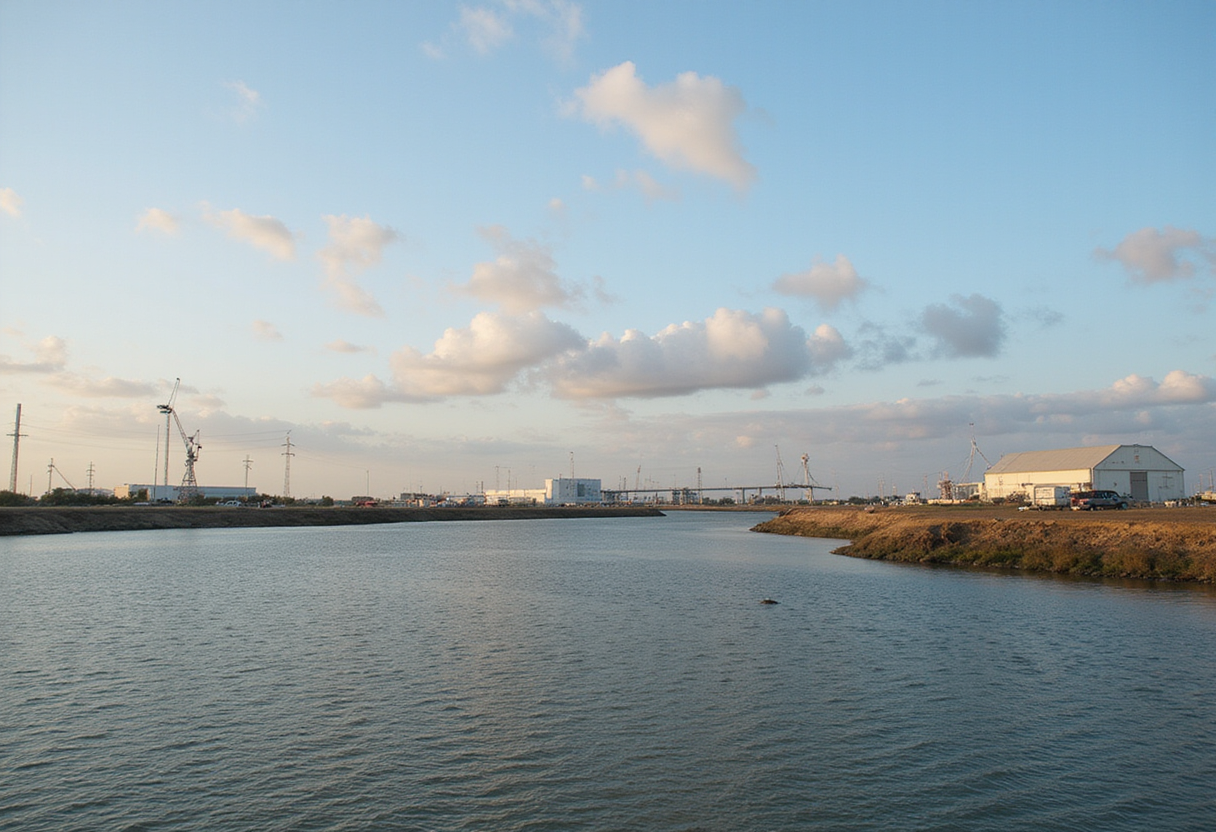
Coastal Bend LNG has commenced Federal Energy Regulatory Commission (FERC) permitting for a proposed LNG export terminal in Texas, according to BIC Magazine.
The regulatory entry places the project at the front end of the federal approval sequence that any new U.S. LNG export facility must complete before construction can begin. Until a formal application or pre-filing notice appears on FERC's docket with project specifics, capacity, schedule and partnership details remain undisclosed.
What does a FERC permitting entry actually trigger?
A FERC review for an LNG terminal begins the Commission's environmental assessment under the National Environmental Policy Act. Sponsors typically file resource reports covering site geology, water usage, air emissions, pipeline interconnect, marine operations and community impact. Public comment periods and intervenor participation follow that filing.
Alongside FERC, the developer must secure a separate authorization from the U.S. Department of Energy to export LNG to countries without a U.S. free trade agreement. Both approvals gate construction; neither alone authorizes the project to break ground on a new export facility.
What has BIC Magazine disclosed so far?
BIC Magazine, the trade publication that first reported the regulatory entry, did not include capacity figures, a targeted in-service date or a final investment decision target in its initial notice. The article identifies the project as a Texas export terminal but provides no design specifications, site coordinates, pipeline interconnect details or upstream gas supply arrangements.
Without those data points, Coastal Bend LNG joins the queue of early-stage Gulf Coast export proposals rather than the roster of sanctioned U.S. LNG capacity moving toward construction. Investors, lenders and offtakers typically require those disclosures before committing capital. That includes anchor offtake contracts with creditworthy buyers, signed EPC pricing, and equity commitments from sponsors prepared to carry the project through construction.
How does this project fit into the U.S. LNG queue?
The U.S. LNG export fleet has expanded sharply since 2016, when the first cargo left Sabine Pass. Operating terminals are now clustered along the Louisiana coast at Sabine Pass and Calcasieu Pass, and along the Texas coast near Corpus Christi. The current fleet has lifted U.S. seaborne exports to record monthly highs in 2024 and 2025, with European buyers continuing to draw on Atlantic-basin molecules.
Coastal Bend LNG enters permitting as additional capacity is being sanctioned by other developers along the same coastline. A Texas location places the project within reach of the established Permian and Eagle Ford gas supply networks that feed existing export terminals through the Agua Dulce and Katy pricing hubs, where the bulk of U.S. dry-gas production clears.
A FERC permitting entry alone does not constitute a supply story. It signals that a developer has retained the engineering, legal and regulatory resources needed to begin a federal docket proceeding. Recent U.S. LNG projects have taken between two and five years to clear FERC review and reach a final investment decision after entering the permitting queue, with terminal design, offtake contracts and financing typically taking shape in the latter half of that window.
What to watch
The next tradable data points for Coastal Bend LNG:
- The first FERC docket filing with site, capacity and pipeline details
- A companion DOE non-FTA export authorization application
- Disclosure of a final investment decision target, offtake agreements and equity partners
- Identification of an EPC contractor and feed-gas supplier
Until those disclosures land, the permitting entry stands as a regulatory milestone rather than a near-term addition to U.S. LNG capacity.
via Google News: LNG export terminals (Source)
More from James Calloway
Show full bio
Staff writer covering industry trends and analytics at Rig & Refinery.
401 articles
Adjoining reports
- Coastal Bend LNG Opens FERC Pre-Filing for Texas Export Terminal
- Trump Administration Flags Progress at First U.S. Offshore LNG Project
- Argent LNG Awards Engineering Contract for 25-MMtpy Port Fourchon Export Terminal
- Trump greenlights offshore Louisiana LNG export hub; project risks flagged
- DOE Clears Argent's 25-MMtpy Louisiana LNG Export Permit