Well report No. RR-9511 · T13N · R49W · SEC 25 · filed October 10, 2026
Midstream & PipelinesWell report
Crude exports resume to Yanbu after Houthi pipeline strike
TradeWinds reports crude flows resumed to Yanbu, Saudi Arabia's principal Red Sea export terminal, after a Houthi-linked pipeline strike; traders now await an Aramco throughput figure.
Field notes
- Crude flows resumed to Yanbu, Saudi Arabia's principal Red Sea export terminal
- Outage was triggered by a Houthi-linked pipeline strike on the East-West corridor
- The 1,200 km East-West pipeline links Eastern Province production near Abqaiq to Yanbu
- Houthi attacks on Saudi energy infrastructure have continued in waves since 2015
- VLCC rerouting around the Cape of Good Hope has lifted Red Sea–Atlantic tonne-mile demand since late 2023
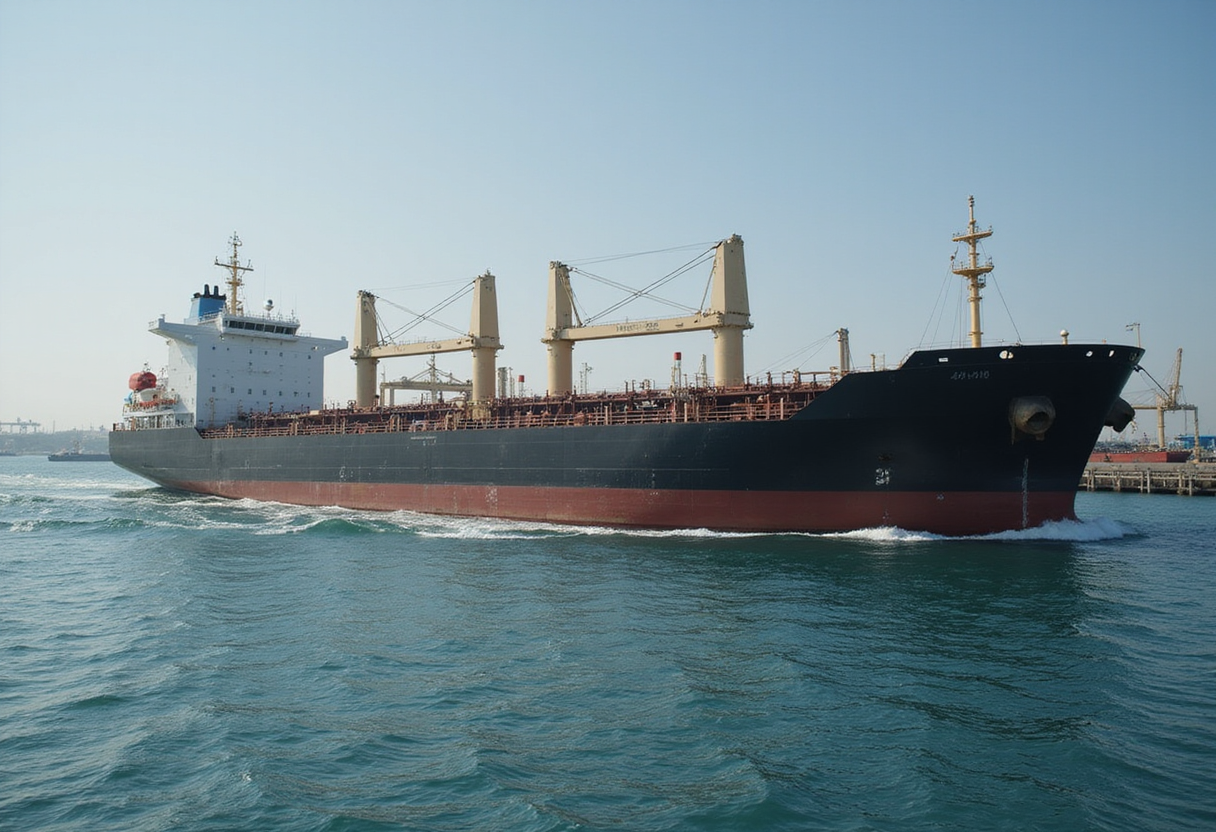
Crude deliveries to Yanbu, Saudi Arabia's principal Red Sea export terminal, resumed after a Houthi-linked pipeline strike interrupted westbound flows, according to TradeWinds News.
The restart ends an outage of undisclosed duration and volume. TradeWinds, in a single-line headline item, confirmed the resumption without publishing throughput figures. The gap leaves refiners and traders reliant on subsequent confirmation from Saudi Aramco or from Lloyd's List Intelligence tonnage tracking before they can size the market hit.
What does Yanbu's restart mean for westbound Saudi barrels?
For the Mediterranean and Northwest European refiners that price off Saudi medium and heavy grades loaded out of Yanbu, the answer hinges on whether the interruption was measured in days or weeks. Days-long pipeline repairs are routine; weeks-long outages alter liftings schedules and stretch term-contract patience.
Yanbu sits at the western terminus of the kingdom's East-West pipeline, the 1,200 km crude artery that runs from producing areas near Abqaiq to the Red Sea marine terminal. The dual Gulf-Red Sea route — Ras Tanura on one end, Yanbu on the other — gives Saudi Aramco structural redundancy against both Hormuz disruption and Red Sea closure. Strikes on either end therefore test half the redundancy at a time.
Why do Houthi strikes keep the pipeline story alive?
Houthi forces have targeted Saudi energy infrastructure in waves since 2015, with the tempo accelerating as the Yemen conflict expanded. Pipelines, pumping stations, and storage have all featured in strike reports. Each incident triggers integrity verification by Aramco crews — physical inspection, pressure testing, and, where damage is confirmed, line isolation while repair teams mobilize.
That pattern has trained operators to plan for short interruptions. Refiners with long-haul Saudi term contracts often run a multi-week grade buffer at the receiving end, smoothing routine hits of under a week. Anything longer pulls on the East-West pipeline's spare capacity at the Abqaiq end, then on offshore storage, then on the producer's willingness to defer.
How does the restart land on the tanker market?
A pipeline-driven reduction in Yanbu loadings lands on a tanker market already distorted by Houthi attacks on commercial shipping through the Bab el-Mandeb strait. Several major operators rerouted VLCCs around the Cape of Good Hope since late 2023. That shift lifted tonne-mile demand and supported freight rates on both basins' routes. Less crude loading at Yanbu during the outage would have compounded that pressure by tightening available cargo at precisely the time shipowners wanted volume.
A terminal built for redundancy
Yanbu's North and South export facilities, operated by Aramco and joint-venture partners, have handled the bulk of westbound Saudi crude for three decades. The terminal's monthly loading program sets the schedule against which European and Asian refiners calibrate Saudi grade nominations. A contained pipeline incident usually disappears into the program within a week; a structural event ripples across contracts for months.
Watch items
- Throughput figure disclosed by Aramco or confirmed by tonnage trackers in the next 24-48 hours
- Repair duration and any line-section replacement required
- Whether the strike triggered secondary damage at pump stations or manifold yards
- Shipping advisories issued via UKMTO and the Joint Maritime Information Centre
- Any OPEC+ communication on adjustment to the kingdom's voluntary cut
via Google News: Pipelines and midstream (Source)
More from Elena Vasquez
Adjoining reports
- Saudi Arabia Restarts Yanbu Crude Exports After Pipeline Return
- Saudi Arabia Restores Yanbu Oil Exports After Pipeline Repair
- Saudi Arabia Restarts Crude Loadings at Yanbu After Pipeline Repair
- Saudi Arabia Restores Crude Loading at Yanbu After East-West Pipeline Restart
- Saudi Arabia Restarts East-West Crude Pipeline, Sources Say