Well report No. RR-7835 · T23N · R19W · SEC 23 · filed October 14, 2026
Refining & PetrochemicalsWell report
Dangote Refinery Extends IPO Window as Fuel Market Shifts
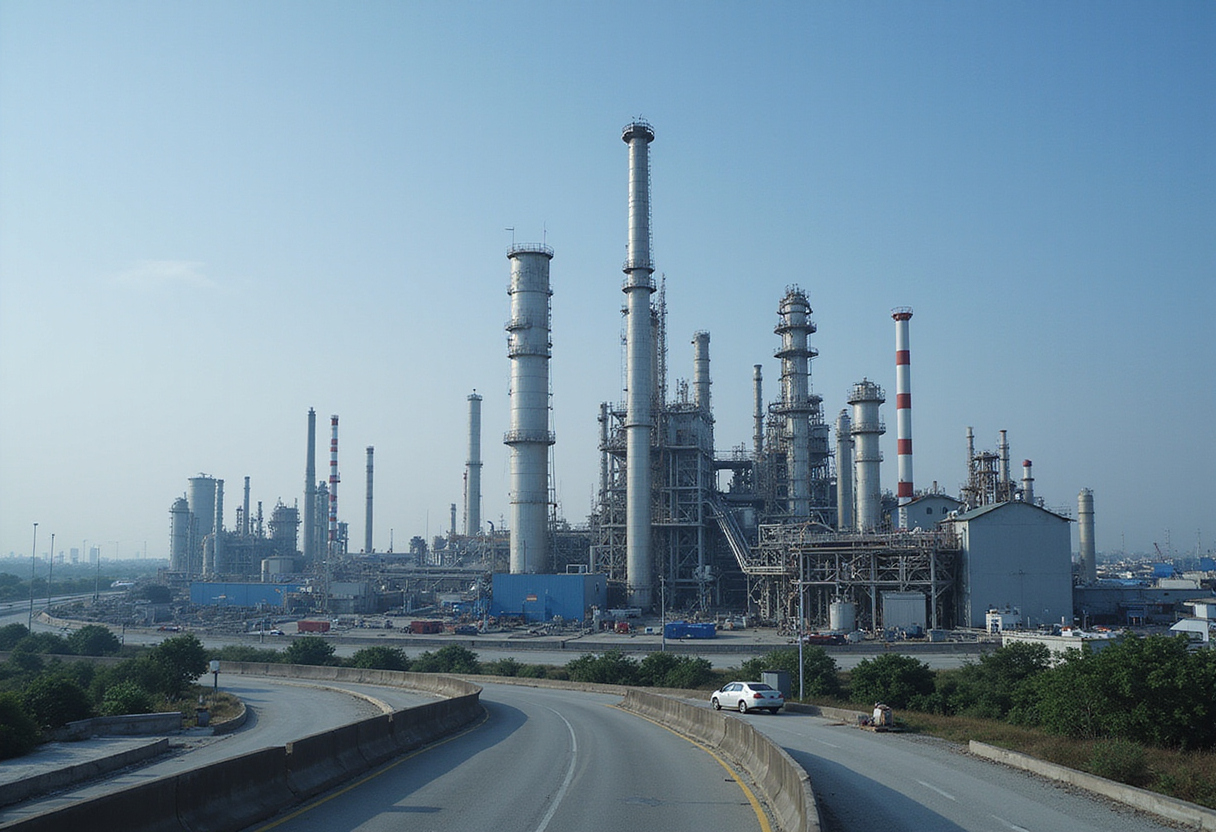
Dangote Industries has extended the IPO window for its refinery, the plant that has displaced fuel imports and redrawn Nigeria's downstream market. Investors get more time to price it.
Field notes
- Dangote Industries has extended the offering window for the refinery's planned IPO.
- The refinery now supplies the bulk of Nigeria's domestic fuel, displacing imports.
- No revised closing date for the offering was stated in the announcement.
- The plant is positioned near Lagos and anchors Nigeria's reshaped downstream market.
By Daniel Okafor
Dangote Industries has extended the window for its planned initial public offering of the Dangote refinery, the company at the centre of Nigeria's reshaped fuel market. The extension gives prospective investors additional time to price an asset whose commercial footprint keeps moving under their feet. The company confirmed the change; it did not state a new closing date in the announcement.
The refinery has already altered how Africa's largest oil producer consumes its own fuel. Nigeria, long dependent on imported refined products, now draws the bulk of its domestic supply from the plant near Lagos. Importers who once controlled the market have watched their volumes shrink. The word from distributors is blunt: the trade has changed hands.
Why extend an IPO now?
A longer book-build window usually means one of two things. Either demand needs more time to build, or the seller wants a better price than the current bids imply. Both readings fit a refinery whose earnings story is still being written.
The plant sits at the centre of Nigeria's downstream economics. Its output has displaced imports that once drained foreign exchange from the country. That much is arithmetic, not opinion. What investors must value is whether the margin holds, and that question has no settled answer yet.
The company frames the offering as a chance for Nigerians to own a piece of the country's most consequential industrial asset. Whether retail enthusiasm matches institutional caution is the number to watch.
What has the plant changed?
The refinery's effect on the fuel market is visible at the pump supply chain.
- Import dependence has fallen as domestic refining replaces cargoes.
- Distribution contracts have shifted toward local supply arrangements.
- Nigeria's product import bill has come under downward pressure.
Each item traces back to one facility. One plant has done what decades of policy papers proposed and never delivered. That is the plain reading, and it is also the IPO pitch.
What should investors watch?
An extended timeline is not a cancellation. It is a renegotiation with the calendar. The offering will still test whether public markets will pay private-market prices for refining assets in a market where fuel subsidies, pricing policy and supply logistics all remain live questions.
The watch items are straightforward.
- The revised offer closing date, once published.
- Take-up from institutional versus retail investors.
- Any change in stated listing venue or timetable.
The refinery has already changed Nigeria's fuel market. The IPO extension suggests the company believes the market has not yet fully priced that change. Investors now have more time to decide whether they agree.
The takeaway: the plant is built, the market has moved, and the listing clock now runs longer than first advertised.
via Google News: Refineries and petrochemicals (Source)
More from Daniel Okafor
Show full bio
Market editor covering companies, deals and strategy in Oil and gas industry operations and markets at Rig & Refinery.
438 articles
Adjoining reports
- Dangote Extends Refinery IPO Window as Fuel Market Shifts
- Dangote Reports 'Enormous' Investor Demand for Lagos Refinery IPO
- Dangote Refinery Chases $1.6 Billion in Africa's Largest IPO
- Dangote Refinery Targets $14 Billion Expansion as IPO Documents Signed
- Dangote Refinery IPO Draws 'Enormous' Demand as Kenya Push Advances