Well report No. RR-6325 · T17N · R46W · SEC 17 · filed October 14, 2026
Refining & PetrochemicalsWell report
Dangote Refinery logs $4.7bn profit on $22.5bn revenue across nine months
Dangote Refinery booked $4.7bn in net profit on $22.5bn in revenue across a nine-month window — a margin near 21% that puts the Nigerian plant at the top of global refining returns and reshapes the West African product trade map.
Field notes
- Dangote Refinery booked $4.7bn in net profit on $22.5bn in revenue across a nine-month reporting window
- Implied net margin on revenue reached roughly 20.9%
- Full-year revenue run-rate would exceed $25bn at current pace and could reach $30bn
- Imports into Nigeria have fallen sharply since the plant reached steady-state operations
- Net margins above 20% would put the plant in the top decile of global refining operators for any comparable period
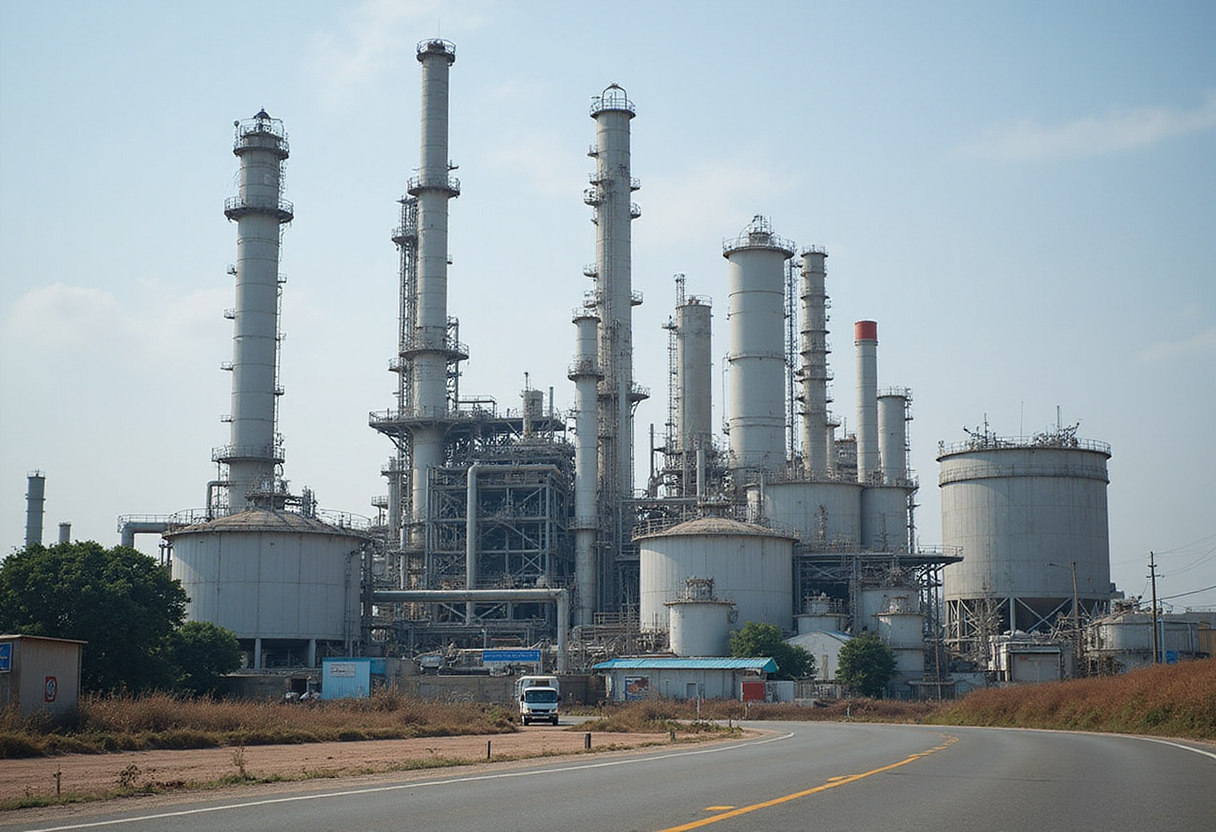
Dangote Refinery booked $4.7bn in net profit on $22.5bn in revenue across a nine-month reporting window, figures published via Newspeakonline indicate — a margin of roughly 20.9% that places the Nigerian plant at the upper end of global refining returns.
For downstream desks tracking West African product flows, the print confirms what cargo movements have signalled for several quarters. Imports into Nigeria have fallen sharply since the plant reached steady-state operations, and domestic refining has captured the displaced volume.
What does the nine-month window cover?
The published data does not specify the exact start and end date. Two readings remain open. If the period runs from January through September, the full-year revenue run-rate lands near $30bn at current pace, with profit tracking toward $6.3bn. A later cut-off would push the full-year figure lower, but in either scenario revenue would exceed $25bn.
The profit line carries the larger weight. Net margins in single-site refining rarely clear 15% outside boom years for crack spreads. A 20%-plus net return on revenue, sustained across nine months, is an outlier on any global comparison.
Why the margin sits where it does
- A captive feedstock pool routing Nigerian crude to the plant at preferential offtake terms
- FX lag effects between naira-denominated product prices and dollar-denominated crude costs
- Domestic PMS and AGO pricing that has held below import parity, letting the operator capture the spread
- A throughput base at full ramp that pushes fixed cost coverage lower than smaller African competitors
Each driver is durable in the near term. Import competition and FX adjustment timing remain the two open variables for the next reporting cycle.
How this shifts the regional trade map
European refiners that historically exported gasoline and gasoil into West Africa face a market where Dangote has absorbed most of the home-market growth. The reported results validate strategy shifts several majors announced in 2023 and 2024.
Export nominations into Nigeria are down. Cargoes have been re-routed to Northwest Europe and the U.S. Atlantic basin. Inventory-to-trade ratios at regional hubs along the Bight of Benin have tightened.
For wholesale fuel marketers and bunker operators in the Gulf of Guinea, the watch item is product pricing. Dangote's print suggests the operator has not been forced to discount aggressively against imports. Domestic supply and demand appear to remain in balance even with new capacity online.
Where this ranks globally
Net margins above 20% on revenue over a sustained period sit outside the typical refining envelope. Integrated oil majors tend to post single-digit margins on the downstream segment in normalized years. Standalone refiners in the U.S. and Asia typically cycle between 5% and 12% across a full commodity cycle.
Dangote's implied full-year outcome would put the company in the top decile of global refining operators for any comparable period. The print also resets the bar for what a single-site, non-integrated refinery can deliver when feedstock, FX, and pricing all align.
What to watch next
- Full-year audited results, expected in the months ahead
- Product slate updates — particularly any move into petrochemicals, polypropylene, lubricants, or base oils
- Crude sourcing diversification beyond the current Nigerian-dominated slate
- Capacity utilization disclosure as the plant moves past commissioning bottlenecks
- Any pricing formula revisions for PMS and AGO under the domestic regulatory framework
The next quarterly disclosure will tell traders whether the run-rate holds.
via Google News: Refineries and petrochemicals (Source)
More from James Calloway
Show full bio
Staff writer covering people, launches and day-to-day practice in Oil and gas industry operations and markets at Rig & Refinery.
487 articles
Adjoining reports
- Dangote Refinery Profit Climbs as Nigeria Plant Prepares IPO
- Dangote Refinery Posts $4.73 Billion Profit Ahead of Record IPO
- Dangote Refinery targets $36 billion revenue mark for 2026
- Dangote Refinery Targets $14 Billion Expansion as IPO Documents Signed
- Dangote Refinery Crosses 700,000 b/d Mark for First Time