Well report No. RR-9590 · T22N · R39W · SEC 22 · filed October 11, 2026
Refining & PetrochemicalsWell report
Drone Strike Halts 70% of Volgograd Refinery Capacity
Drone strikes have knocked out 70% of capacity at the Volgograd oil refinery, Militarnyi reports, with no restart timeline yet disclosed for one of Russia's key fuels plants.
Field notes
- Drone strikes knocked out 70% of Volgograd refinery capacity, Militarnyi reports.
- The report gives no timeline for repairs or unit restarts.
- Volgograd is one of southern Russia's largest refining centers.
- Damage breakdown — whether distillation units were hit — remains unconfirmed.
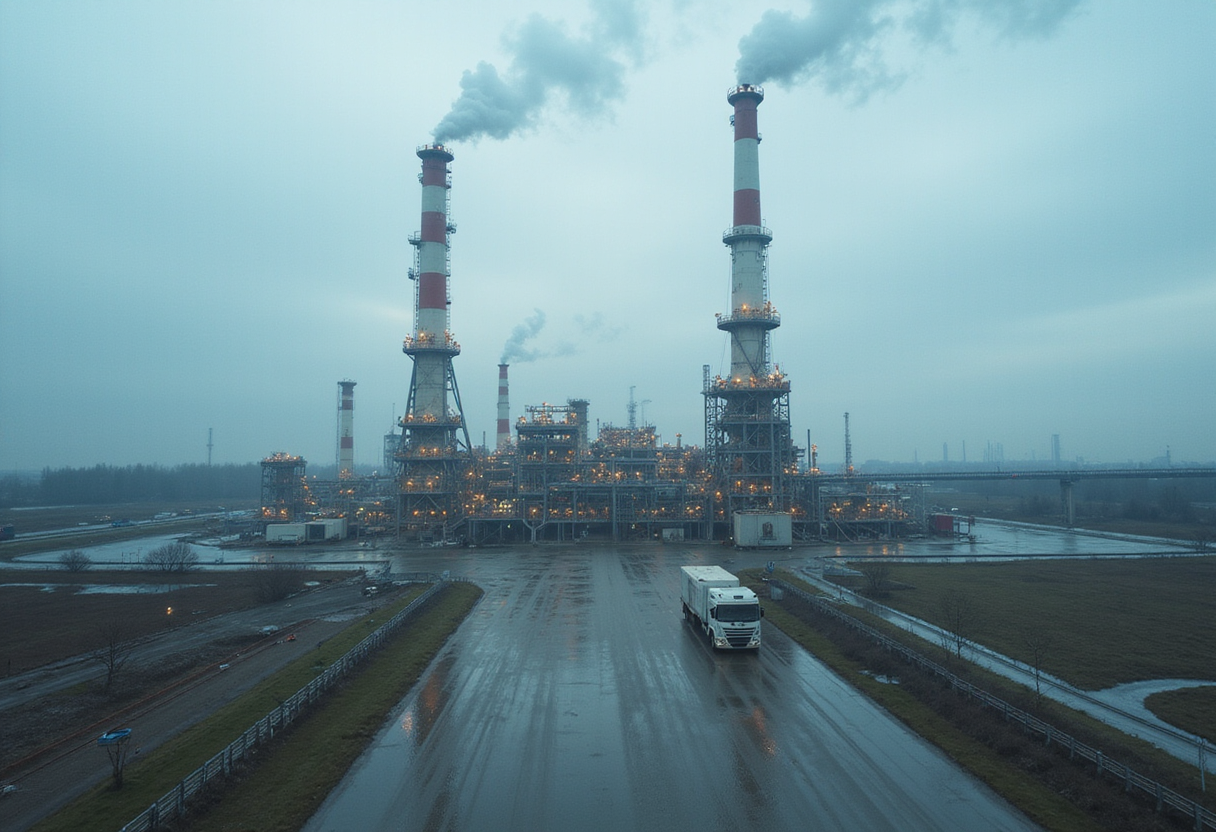
Drone strikes have knocked out 70% of processing capacity at the Volgograd oil refinery, according to a report by Ukrainian military news outlet Militarnyi.
The reported outage removes the majority of the plant's throughput from service at a refinery that sits among the largest fuels suppliers in southern Russia. Militarnyi did not specify in the report how long repairs to the damaged units might take.
What do we actually know at this stage?
The story rests on a single reported figure: 70% of the refinery's capacity is out of action following a drone attack. Several points remain unconfirmed:
- The report does not identify which process units were hit or the extent of physical damage.
- No timeline for restoration has been published.
- The refinery's operator has not, in the material available, issued a matching statement on lost throughput.
- No casualty or fire-duration details appear in the source reporting.
Until the operator or Russian authorities confirm the damage assessment, the 70% figure should be treated as a battlefield-derived estimate rather than an audited outage number.
Why does Volgograd matter to fuel markets?
Volgograd is a major refining center on the Volga, and its products feed domestic diesel, gasoline, and fuel oil supply. When a plant of this scale loses most of its capacity, the typical market transmission runs through several channels:
- Domestic product shortages in surrounding regions, which Russian authorities have previously managed with export bans or temporary fuel-rationing measures after earlier refinery strikes.
- Reduced diesel and fuel oil availability for export, tightening balances in a market where Russian refinery outages have repeatedly moved refining margins.
- Higher run rates at other Russian refineries, where crude slates and logistics allow, to backfill lost barrels.
This refinery is not the first Russian plant to lose capacity to drone attack. Strikes on Russian refining assets over the past two years have repeatedly forced partial or full shutdowns, and repair times have ranged from days for auxiliary damage to many months where primary distillation units were destroyed.
What is the watch item?
The number to watch is not the 70% itself but the damage breakdown behind it. If the strikes destroyed crude distillation capacity, the outage could run into months; if the damage is confined to secondary or utility units, restoration can come far faster.
Market participants should track three things:
- Any statement from the refinery's operator on run cuts and restart timing.
- Russian government decisions on export quotas or product-export restrictions in response to the lost output.
- Diesel crack spreads and Russian product export nominations in the weeks ahead, which will show whether the market prices in a prolonged outage.
Militarnyi's report puts a hard number on the strike's effect. Confirmation of what that 70% consists of — and how quickly it can be rebuilt — is the next datapoint that moves the story.
via Google News: Refineries and petrochemicals (Source)
More from Olivia Hart
Adjoining reports
- Drone Strike Hits Volgograd: Fires Reported Near Refinery and Chemical Plant
- Drone Strike Hits Volgograd Refinery and Chemical Plant, Witnesses Report Large Fire
- Ukrainian Drones Strike Refinery Deep Inside Russian Territory
- Drone Strikes Ignite Volgograd Refinery and Samara Tank Farm
- Drone Strike Halts Operations at Another Russian Refinery