Well report No. RR-6366 · T24N · R6W · SEC 12 · filed October 10, 2026
Midstream & PipelinesWell report
East-West Pipeline throughput hits 5.8 million bpd
Reported throughput on Saudi Arabia's East-West Pipeline has hit 5.8 million bpd, putting the cross-country crude artery at the center of export-routing questions.
Field notes
- Reported oil flow on Saudi Arabia's East-West Pipeline has reached 5.8 million bpd (StreetInsider).
- The line links Eastern Province production with Red Sea export terminals, bypassing the Strait of Hormuz.
- The report does not specify whether the figure is peak or sustained throughput.
- The reading implies heavy utilization of the kingdom's overland crude routing option.
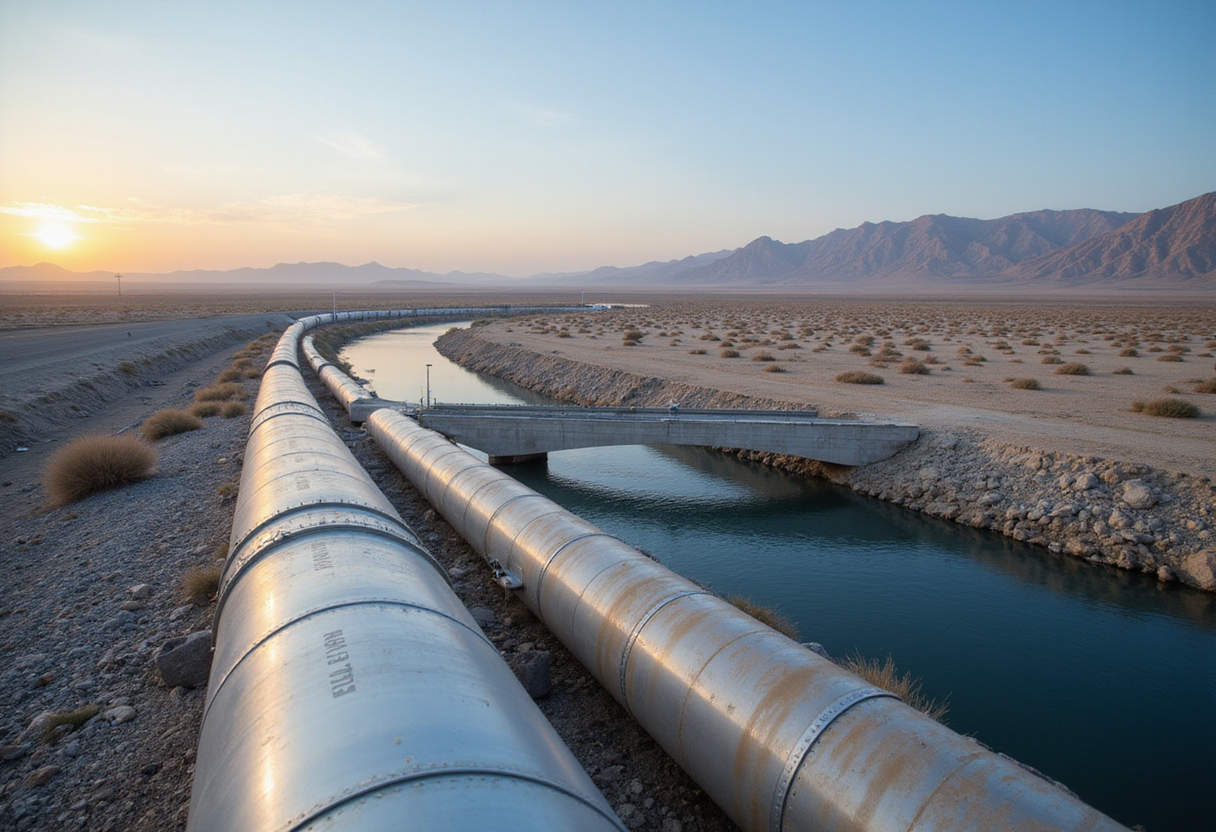
Oil flow on Saudi Arabia's East-West Pipeline has reached 5.8 million bpd, StreetInsider reported, a figure that puts throughput on the cross-country crude artery well above its long-standing design envelope and refocuses attention on how Riyadh is routing barrels between its producing heartland and export terminals.
The number matters for three reasons. It is an operational datapoint, not a forecast. It concerns a single, named piece of infrastructure — the line that carries crude from Eastern Province fields westward across the kingdom. And it arrives at a moment when traders are watching Saudi export logistics closely for signals about supply policy.
What is the East-West Pipeline?
The conduit links Saudi Arabia's oil-producing east, anchored by the giant fields of the Eastern Province, with western export and loading points on the Red Sea coast. It exists to give Riyadh a routing option that bypasses the Strait of Hormuz entirely.
That bypass function is the pipeline's strategic core. Crude moved westward can load from Red Sea facilities and reach European and Asian buyers without transiting the Gulf chokepoint. Throughput on the line therefore reads as a proxy for how much Saudi volume the kingdom is prepared to shift off Hormuz-dependent routes.
A reported flow of 5.8 million bpd, if sustained, would represent a substantial share of the kingdom's production moving through the overland route at any given time.
What does the 5.8 million bpd figure signal?
Reported throughput at this level raises two immediate questions for market participants.
The first is capacity. Operators have historically discussed the line's throughput in terms of a nominal rating around the 5 million bpd mark, with expansion work understood to have lifted the ceiling. A flow reading of 5.8 million bpd suggests either that de-bottlenecking has delivered additional headroom, or that the figure reflects peak rather than sustained throughput. StreetInsider's report does not specify the averaging period, and that distinction is material.
The second is intent. Routing decisions of this scale are made against the backdrop of OPEC+ supply management, and Saudi Arabia sits at the center of that group. High East-West flow can reflect routine optimization between export terminals, tanker scheduling economics, or a deliberate posture that keeps more barrels positioned outside Hormuz. The report itself attributes no motive, and price commentary flowing from the figure should be treated as analysis rather than established fact.
How should readers weigh the number?
Single-datapoint flow reports carry caveats. Throughput on any crude line fluctuates with nomination cycles, maintenance windows, and terminal loading schedules. A headline figure can capture a peak day rather than a monthly average.
What is not in dispute is the direction of the report: the figure points to heavy utilization of the kingdom's overland crude route. For refiners and traders, that has practical read-throughs for Red Sea loading programs, for freight assessments on routes served from the west coast, and for the availability of Saudi crude to buyers who prefer non-Hormuz loading points.
What comes next?
The watch items are straightforward. Watch for official Saudi or Aramco confirmation of the throughput figure and the period it covers. Watch subsequent monthly export data for evidence that elevated East-West flow is sustained rather than episodic. And watch the OPEC+ calendar: any decision on production levels will feed directly into how hard the kingdom pushes crude through the line in the months ahead.
Until confirmation arrives, the 5.8 million bpd reading stands as a reported operational figure — a strong one, but a single source — on the infrastructure that carries Saudi crude around the Gulf's most watched chokepoint.
via Google News: Pipelines and midstream (Source)