Well report No. RR-4736 · T6N · R45W · SEC 6 · filed October 10, 2026
Gas & LNGWell report
Golden Pass LNG ships first cargo, becomes 9th U.S. export terminal
QatarEnergy-ExxonMobil joint venture ships first LNG cargo from Sabine Pass terminal on April 22, 2026, ranking third among U.S. export projects by nominal capacity at 2.0 Bcf/d.
Field notes
- Golden Pass LNG shipped its first cargo from Train 1 at Sabine Pass, Texas, on April 22, 2026, becoming the ninth U.S. LNG export terminal
- Facility will rank third among U.S. LNG export projects by nominal capacity at 2.0 Bcf/d (2.4 Bcf/d peak), behind Sabine Pass (3.6 Bcf/d) and Plaquemines LNG (2.6 Bcf/d)
- Joint venture owned 70% by QatarEnergy and 30% by ExxonMobil; final investment decision reached February 2019
- First LNG production delayed to March 2026 after lead contractor Zachry Holdings filed Chapter 11 in 2024
- Train 2 targets H2 2026 startup; Train 3 targets H1 2027 startup
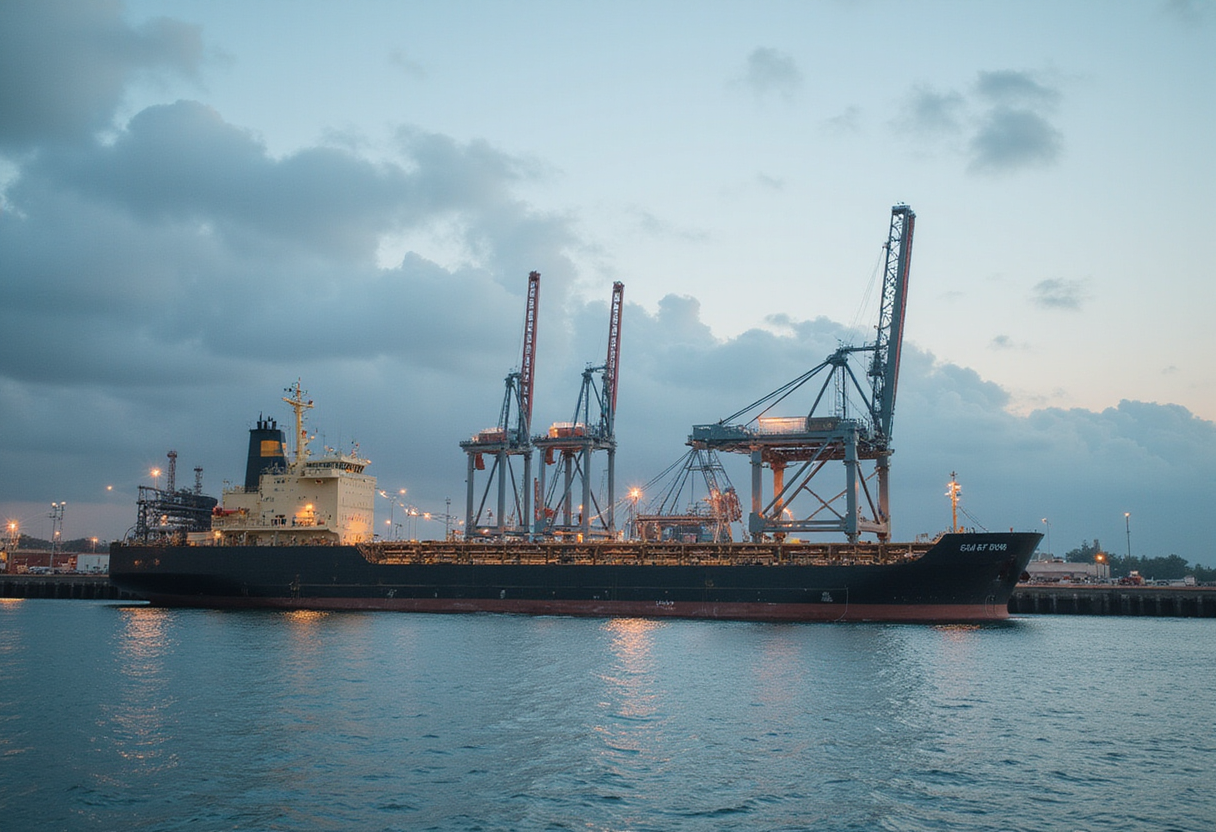
Golden Pass LNG exported its first cargo on April 22, 2026, becoming the ninth U.S. liquefied natural gas export terminal to enter service, the U.S. Energy Information Administration (EIA) reported.
Train 1 at the Sabine Pass, Texas, complex produced its first LNG in March 2026, 23 days before the shipment, the project developer said. The cargo launches a 2.0 Bcf/d (billion cubic feet per day) facility that will rank third among U.S. LNG export projects by nominal capacity — behind Cheniere's Sabine Pass at 3.6 Bcf/d and Venture Global's Plaquemines LNG at 2.6 Bcf/d.
Golden Pass is the only U.S. LNG export terminal on track to begin shipments in 2026, the agency added.
What capacity does Golden Pass bring to U.S. LNG supply?
The project comprises three liquefaction trains:
- Train 1: 0.7 Bcf/d nominal; 0.8 Bcf/d peak — operational as of April 22, 2026
- Train 2: 0.7 Bcf/d nominal; 0.8 Bcf/d peak — target startup H2 2026
- Train 3: 0.7 Bcf/d nominal; 0.8 Bcf/d peak — target startup H1 2027
Aggregate nominal output will reach 2.0 Bcf/d at full buildout; aggregate peak output, 2.4 Bcf/d. LNG terminals commonly operate above nominal but below peak capacity, the EIA noted.
Who developed the project?
QatarEnergy holds 70% of the joint venture; ExxonMobil holds 30%. The 70/30 ownership split places Qatar's state energy major as the majority partner and largest single equity contributor to the project. ExxonMobil's stake gives the U.S. major direct exposure to Gulf Coast LNG export economics.
The partners reached final investment decision in February 2019 — a date that preceded the surge in Atlantic Basin LNG demand that followed Europe's pivot away from Russian pipeline gas.
How did the contractor bankruptcy reshape the schedule?
Lead construction contractor Zachry Holdings filed for Chapter 11 in 2024, halting work on the project. A federal judge approved a settlement in July 2024, allowing Zachry to step away. A replacement contractor entered the project by early 2025 to complete mechanical, electrical, and commissioning scopes. The contractor change pushed first LNG production to March 2026 — roughly seven years after FID.
Why does the timing matter for global LNG flows?
The cargo departs as geopolitical developments in the Strait of Hormuz have disrupted LNG flows representing more than 10 Bcf/d — roughly 20% of global supply, the EIA estimated. In the first half of 2025, 11.4 Bcf/d, or more than 20% of global LNG trade, transited the strait, primarily from Qatar. China was the largest destination for those volumes, accounting for almost one-third of Hormuz-transit LNG.
Qatari LNG trade relies on the Strait of Hormuz as the primary shipping route to Asian and European buyers. China's reliance on Qatari cargoes makes the country among the most exposed large buyers to sustained strait disruptions.
Golden Pass adds marginal supply at a moment of acute sensitivity in the seaborne market, but the project will not reach full 2.0 Bcf/d output until 2027.
How will the developer ramp the remaining trains?
The developer targets Train 2 commissioning in the second half of 2026 and Train 3 in the first half of 2027. The three-train ramp moves Golden Pass toward 2.0 Bcf/d nominal capacity — enough to keep the terminal behind only Sabine Pass and Plaquemines LNG among operating U.S. LNG export projects by capacity.
What to watch
- Train 2 commissioning: Target startup in the second half of 2026
- Train 3 commissioning: Target startup in the first half of 2027
- Strait of Hormuz flows: Continued disruption could shift buyer behavior toward Atlantic-basin supply, including U.S. Gulf Coast cargoes
via x.com (Original)
More from Priya Raman
Show full bio
Senior reporter covering media and advertising at Rig & Refinery.
381 articles
Adjoining reports
- Golden Pass LNG Loads First Export Cargo at Sabine Pass
- Golden Pass Loads First LNG Export Cargo at Sabine Pass
- US LNG exports up 23% in 1H26 as new Gulf capacity ramps
- First Export Cargo Sails from Golden Pass LNG as US Gulf Coast Adds New Capacity
- Golden Pass LNG Startup Delays Cloud US Gas Demand Outlook