Well report · filed November 20, 2026
Petroleum MarketsWell report
IEA: 2.8 Billion bbl Lost as Hormuz Crisis Points to Softer Markets
IEA counts 2.8 billion bbl of oil supply lost to the Hormuz crisis and sees demand falling 2.7 million b/d in 2026, with looser oil and LNG markets possible once Gulf flows recover.
Field notes
- Hormuz disruption has cost 2.8 billion bbl of oil and 60 bcm of gas; peak supply loss was 16.1 million b/d
- IEA expects 2026 oil demand down 2.7 million b/d, the first annual decline since 2020
- 350 bcm of new LNG supply arrives 2025-2035; STEPS implies a persistent surplus with demand flat near 4,800 bcm
- Upstream investment runs near $550 billion in 2026, with nearly 90% offsetting field declines of 8-9% per year
- UAE targets 5 million b/d capacity by 2027 after leaving OPEC in May 2026
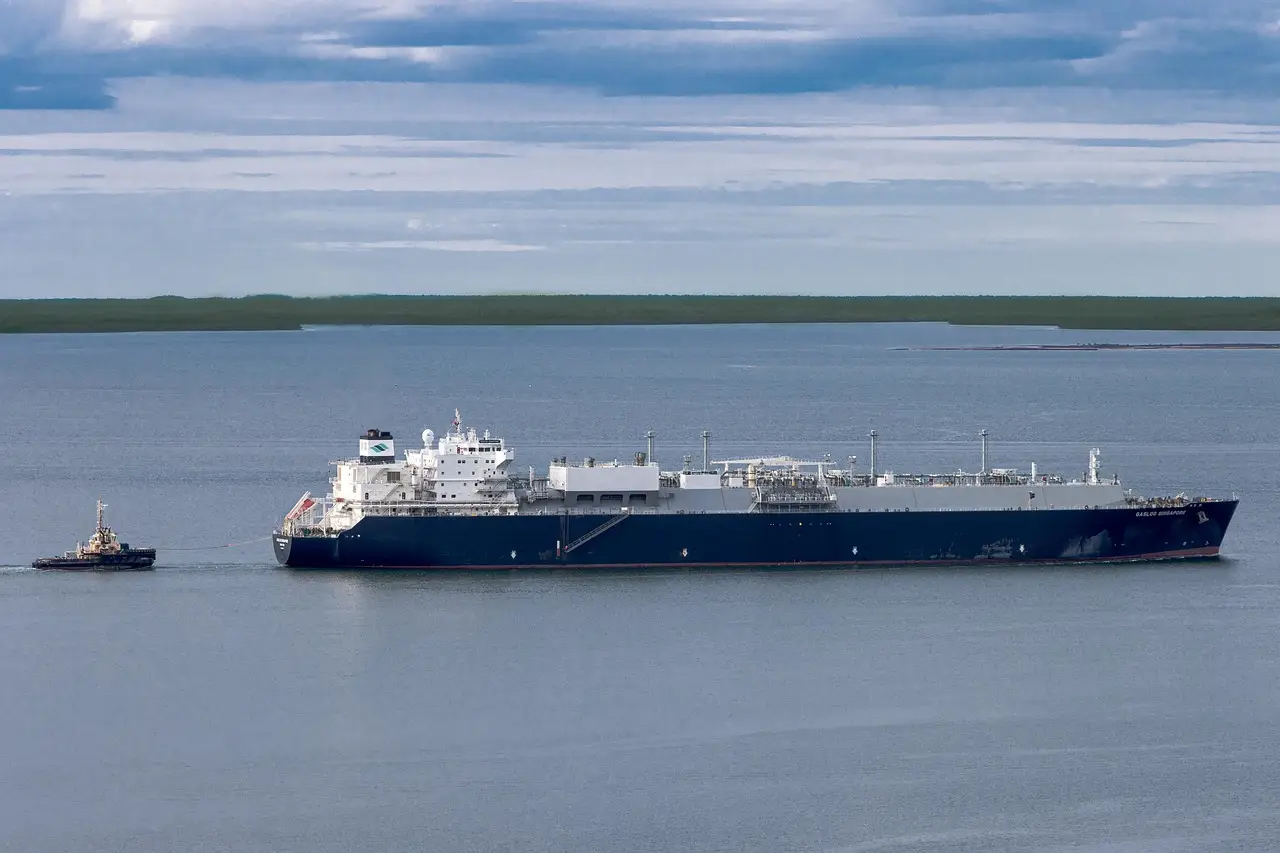
Global oil supply fell by 16.1 million b/d at the peak of the Strait of Hormuz disruption, and cumulative losses have reached 2.8 billion bbl of oil and 60 billion cu m of natural gas, according to the International Energy Agency's World Energy Outlook 2026. The Paris-based agency said the disruption could ultimately deliver looser oil and LNG markets, though timing and extent remain uncertain.
The projections assume constraints on Gulf exports ease into 2027 and unimpeded transit through the Strait of Hormuz resumes by end-2027. IEA cautioned that its scenarios are not forecasts and that considerable uncertainty hangs over the crisis duration and the future of Middle East exports.
How much demand has the crisis destroyed?
IEA's November 2026 Oil Market Report expects global oil demand to decline by about 2.7 million b/d in 2026 — the first annual decrease since 2020. Natural gas demand is expected to fall by around 1.5%, or 65 bcm.
Diesel markets have been particularly strained. Prices exceeded $200/bbl amid disrupted Middle Eastern product exports and reduced Russian supplies. Higher prices increasingly weighed on consumption as inventories declined.
Cushions came from several sources:
- Ample inventories and higher output from non-Gulf suppliers
- Alternative export routes and reduced Chinese crude imports
- A coordinated release of 400 million bbl of IEA emergency stocks, announced Mar. 11, 2026
What do the long-term scenarios show?
Demand trajectories diverge sharply across IEA's three cases. Under the Current Policies Scenario (CPS), covering regulations already in place, oil demand rises to around 106 million b/d in 2035 and 114 million b/d in 2050. Electrification, efficiency and biofuels cut passenger car consumption, but petrochemicals, aviation and heavy freight more than offset those gains.
Under the Stated Policies Scenario (STEPS), which adds formally proposed policies, oil demand levels off at around 103 million b/d by 2030, slips to 102 million b/d in 2035 and reaches 96 million b/d by 2050. The Additional Response Case (ARC), covering further measures to cut import dependence, puts demand more than 4 million b/d below STEPS by 2035 and at 85 million b/d by 2050.
Price paths follow. IEA projects crude at $85/bbl in 2035 and $106/bbl in 2050 under CPS, versus $75/bbl and $70/bbl under STEPS. The ARC yields $72/bbl in 2035 and $62/bbl in 2050.
In plain terms: the harder governments push on substitution, the lower the long-run price deck.
Is an LNG surplus coming?
Around 350 bcm of new LNG supply enters global markets between 2025 and 2035, led by the United States. IEA estimates LNG supply capacity could grow by more than 50% if all planned projects proceed.
Under CPS, stronger gas consumption absorbs the new volumes and requires import prices to rise again in the 2030s to support investment. Under STEPS, gas demand levels off near 4,800 bcm from the 2030s onward, leaving a persistent overhang that pushes import prices toward short-run marginal cost — the lowest price at which cargoes cover their operating costs.
The ARC carries the sharpest surplus risk. Price-sensitive Asian importers, facing uncertainty over Middle East exports, would lean on domestic energy and invest less in LNG terminals and pipelines. If Middle East supplies then recover while exporters press ahead with expansion, IEA sees potential for a large and lasting LNG surplus.
By 2050, global gas demand reaches roughly 5,800 bcm in CPS, 4,800 bcm in STEPS and 4,100 bcm in ARC.
What happens to upstream investment?
Fields decline naturally at 8-9% annually, generally faster outside the Middle East. Nearly 90% of the $550 billion invested annually in upstream oil and gas over the past 5 years went to offsetting declines, not meeting demand growth.
Global upstream investment is estimated at around $550 billion in 2026, about 1% above 2025. The IEA Upstream Capital Cost Index (a gauge of project cost inflation) is expected to rise by around 8%.
Additional barrels could come from the UAE, which left OPEC in May 2026 and plans to expand crude capacity to 5 million b/d by 2027; its output reaches 5.8 million b/d in 2035 under STEPS. Venezuela is projected to rise to 1.5 million b/d by 2035, supported by roughly $70 billion of cumulative investment to refurbish existing facilities and develop new fields.
Even in the ARC, IEA estimates around 9 million b/d of new oil projects and 500 bcm of new gas projects will be required by 2035 to offset declining output from existing fields.
The watch item: whether Hormuz transit actually normalizes by end-2027, the assumption on which every looser-market projection in the outlook depends.
via Oil & Gas Journal (Source)
More from Olivia Hart
Show full bio
Correspondent covering technology and product news in Oil and gas industry operations and markets at Rig & Refinery.
626 articles
Adjoining reports
- Oil Drops 6% as Gas Constraints and $3.1B LNG Canada Bid Dominate
- Oil supply forecast flips to surplus as Brent retreats
- IEA Sees Oil Market Flipping to Surplus as Gulf Exports Recover
- IEA sees 2.6 million b/d demand drop in 2026, supply rebound fragile
- IEA Sees Global Gas Tightness Stretching Into 2027 on Hormuz Shock