Well report No. RR-8346 · T2N · R3W · SEC 2 · filed October 2, 2026
Refining & PetrochemicalsWell report
Kazakhstan Targets Fourth Major Refinery Online by 2033
Kazakhstan aims to commission a fourth major oil refinery by 2033, The Times of Central Asia reported, extending a downstream system now built on Atyrau, Pavlodar and Shymkent.
Field notes
- Kazakhstan plans a fourth major oil refinery on line by 2033, The Times of Central Asia reported.
- The country's existing refining base comprises three plants: Atyrau, Pavlodar and Shymkent.
- No site, capacity in bpd, cost estimate or financing structure accompanied the reported plan.
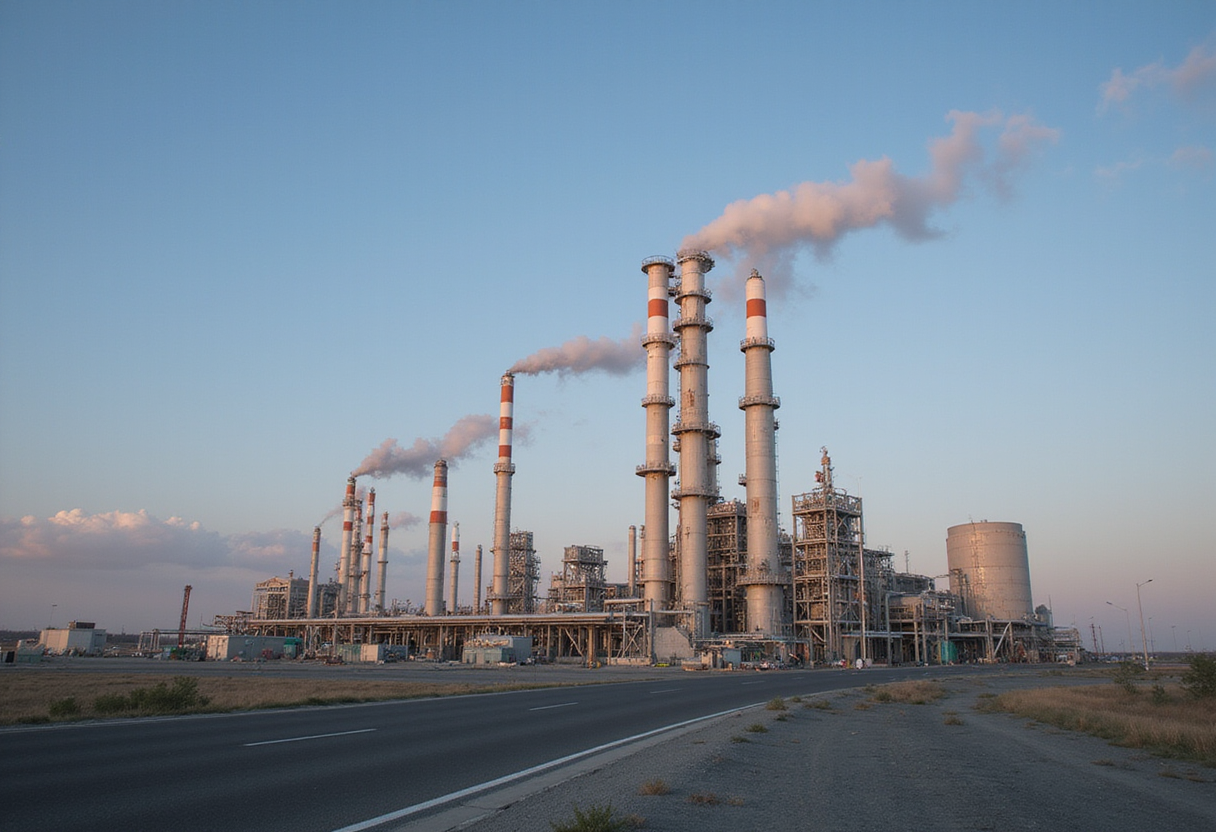
Kazakhstan plans to bring a fourth major oil refinery on line by 2033, The Times of Central Asia reported, laying out a downstream expansion timeline that would add primary processing capacity to a refining system currently built around three plants. The target year anchors the plan to the end of the next decade and gives project watchers a fixed horizon against which to measure progress — or the lack of it. Between now and 2033, every milestone matters: site selection, feasibility work, financing structure, engineering procurement, and ultimately the first crude charge. Kazakhstan's existing refining base consists of three major plants — Atyrau on the Caspian coast, Pavlodar in the northeast, and Shymkent in the south. Together they supply the domestic fuel market, and all three have undergone modernization programs in recent years aimed at lifting conversion depth and meeting tighter fuel specifications. A fourth plant, as reported, would represent the first major addition to that trio in the post-independence era's current configuration.
Why a fourth plant, and why now
The rationale that typically drives such decisions is domestic supply security: Kazakhstan balances significant crude production and export flows through the Caspian Pipeline Consortium system and other routes against a refining base sized largely for internal demand. As demand for motor fuels, jet fuel and petrochemical feedstocks grows, the gap between domestic refining output and consumption tightens. The Times of Central Asia's report does not specify a site, a capacity figure in barrels per day, an estimated capital cost, or a financing structure. Those four data points are precisely what will separate a sanctioned project from a planning-stage aspiration as the 2033 window approaches.
What to watch
For downstream analysts tracking Central Asia, the immediate watch items are procedural rather than operational:
- Site and capacity disclosure. A named location and a bpd design capacity would move the project from concept to engineering prefeasibility.
- Funding clarity. Whether the plant proceeds on state budget lines, through Kazakhstan's sovereign fund structures, with international lenders, or via a strategic partner will signal commitment levels.
- Feedstock logic. Which crude streams supply the unit — domestic production from fields in the west, or a mix that requires new pipeline connections — shapes both the siting decision and the economics.
- Interfuel balance. Whether the plant targets gasoline and diesel output or pivots toward petrochemical integration would determine its competitive position against regional refineries.
Regional context
Any new refining capacity in Kazakhstan enters a Central Asian market where fuel trade flows already cross borders in multiple directions, and where upstream projects on the Kazakh side of the Caspian continue to define the country's hydrocarbon trajectory. A plant commissioned by 2033 would coincide with a period in which regional fuel demand growth and refinery investment elsewhere in the wider region will already be reshaping supply balances. The 2033 target also implies a compressed but feasible schedule if work begins in earnest within the next few years. Major grassroots refineries of comparable scope typically require seven to ten years from concept to startup when financing, permitting and engineering proceed without major disruption. That arithmetic leaves Kazakhstan a narrow but workable runway.
The bottom line
For now, the plan stands as a stated government intention with a deadline, reported by The Times of Central Asia, without sanctioned-project detail behind it. The number that moves this story next is a capacity figure in barrels per day — followed by a nameplate location, a budget, and a contractor. Until those arrive, 2033 functions as the metric: watch for feasibility announcements, site shortlists and financing agreements against that clock.
via Google News: Refineries and petrochemicals (Source)
More from Daniel Okafor
Show full bio
Market editor covering consumer brands and retail at Rig & Refinery.
119 articles