Well report No. RR-3420 · T16N · R30W · SEC 16 · filed October 30, 2026
Gas & LNGWell report
LNG Hits Record 31% of Colombia Gas Supply as Output Slides
LNG supplied a record 31% of Colombia's gas in July 2026 as output fell to 673 MMcf/d; a strong El Niño threatens to lift gas-fired power demand this winter.
Field notes
- LNG supplied a record 31% of Colombia's monthly natural gas supply in July 2026 (BEC).
- Gas production fell from 1,070 MMcf/d in 2022 to 673 MMcf/d average in January–August 2026.
- Proved reserves dropped 39% to 1.7 Tcf between 2022 and 2025 (National Hydrocarbons Agency).
- NOAA puts the chance of a strong to very-strong El Niño through Q1 2027 above 83%.
- SPEC LNG expansion is targeted online as early as end of October 2026; Buenaventura LNG by November 2026.
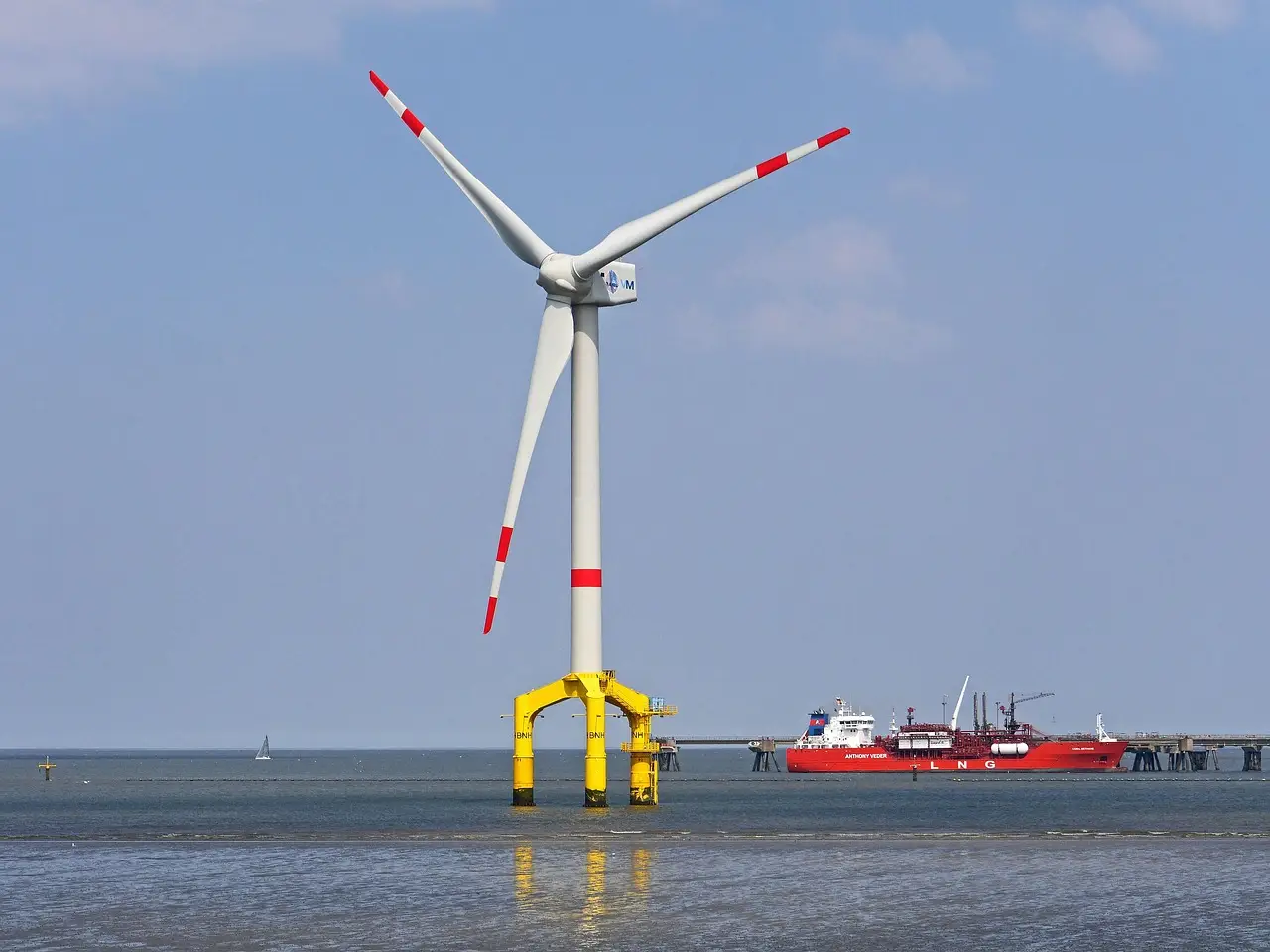
LNG covered a record 31% of Colombia's monthly natural gas supply in July 2026, according to Gestor del Mercado de Gas Natural en Colombia (BEC), the country's gas market administrator. The milestone marks how fast the Andean producer has shifted from self-sufficiency toward import dependence — just as a strengthening El Niño threatens to push gas demand sharply higher this winter.
How fast is domestic production falling?
Average annual marketed natural gas production fell from 1,070 MMcf/d in 2022 to 772 MMcf/d in 2025, BEC data show. The decline has not stopped: from January through August 2026, production averaged just 673 MMcf/d.
The drop is structural, not episodic. The fields that supply most of Colombia's gas — Cusiana, Cupiagua, Pauto Sur, and the offshore Guajira fields — have all been declining since 2022, and no large discoveries have been developed to replace them. The National Hydrocarbons Agency reports proved reserves fell 39% between 2022 and 2025, to 1.7 trillion cubic feet.
Takeaway: Colombia is drawing down a shrinking reserve base with no sanctioned replacement volume behind it.
What is the import infrastructure picture?
Colombia operates a single LNG import terminal today: SPEC LNG, near Cartagena on the Caribbean coast. Expansion work is under way to raise the terminal's capacity, with Promigas targeting an online date in 2026 — as early as the end of October.
Three more projects sit behind it:
- Buenaventura LNG terminal — targeting startup by November 2026
- Puerto Bahia LNG terminal — could start operations next year
- Ballenas LNG terminal — could start operations next year
The timing matters. If El Niño curtails hydropower output this December-through-February window, incremental regasification capacity arriving between October and November would land exactly when the power sector needs the molecules.
Takeaway: Colombia's import capacity is about to multiply, but only one terminal is operating right now.
What does El Niño change?
On June 11, the National Oceanic and Atmospheric Administration (NOAA) announced that an El Niño had formed in the tropical Pacific. In October 2026, NOAA's Climate Prediction Center issued an El Niño Advisory, reporting the event continues to strengthen, with a greater than 83% chance of a strong to very-strong event through the first quarter of 2027.
NOAA classifies an El Niño as strong when ocean temperatures in the monitored Niño region equal or exceed 1.5°C, and very strong at 2.0°C or above. Strong events typically bring drier-than-normal weather to northern South America from December through February, cutting hydropower availability. Colombia's government has already declared a national disaster in anticipation of drought.
The generation mix shows what that means for gas burn. In 2025, hydropower supplied 81% of Colombia's electricity, natural gas 8%, and coal 4%. In March 2024 — the last strong El Niño year — hydropower's share fell to 55%, while gas-fired generation rose to 22% and coal climbed to 15%. Natural gas consumption in the power sector spiked in both 2023 and 2024 under the same weather pattern.
The shift is already under way: hydropower's share fell to 66% in July 2026, with coal and natural gas each at 12%. If a strong El Niño persists, natural gas will likely take a larger share of generation.
Takeaway: every strong El Niño has roughly tripled gas's share of Colombian power generation — onto a supply base that is now 37% smaller than in 2022.
What to watch
The watch items are the SPEC LNG expansion's commissioning date — end of October, per Promigas — Buenaventura's November startup, and NOAA's monthly Niño-region temperature readings through the first quarter of 2027.
via portal.gestiondelriesgo.gov.co (Original)
More from James Calloway
Show full bio
Staff writer covering people, launches and day-to-day practice in Oil and gas industry operations and markets at Rig & Refinery.
587 articles
Adjoining reports
- Colombia's Oil and Gas Output Falls in August
- 1 Million Bpd: Guyana Weighs Keeping Its Gas Off the Export Market
- EIA Sees U.S. Gas Output Hitting Record 122.5 Bcf/d in 2026
- Guyana's Stabroek Output Tops 900,000 Bpd; 1 Million Marker in Sight
- U.S. gas net exports to reach 20.5 Bcf/d by 2027 on five LNG ramps