Well report No. RR-8440 · T4N · R39W · SEC 28 · filed October 10, 2026
Gas & LNGWell report
Louisiana Coastal Gas Terminal Poised to Become Largest in US
A natural gas terminal on Louisiana's eroding coast is poised to become the largest in the US, Grist reports; capacity and permitting details pending verification.
Field notes
- Grist reports a Louisiana coastal natural gas terminal is poised to become the largest in the US
- The project sits on Louisiana coastline experiencing rapid land loss
- Capacity figures, operator identity, and permitting status were not included in the syndicated report
- Verification against FERC filings and operator disclosures is pending
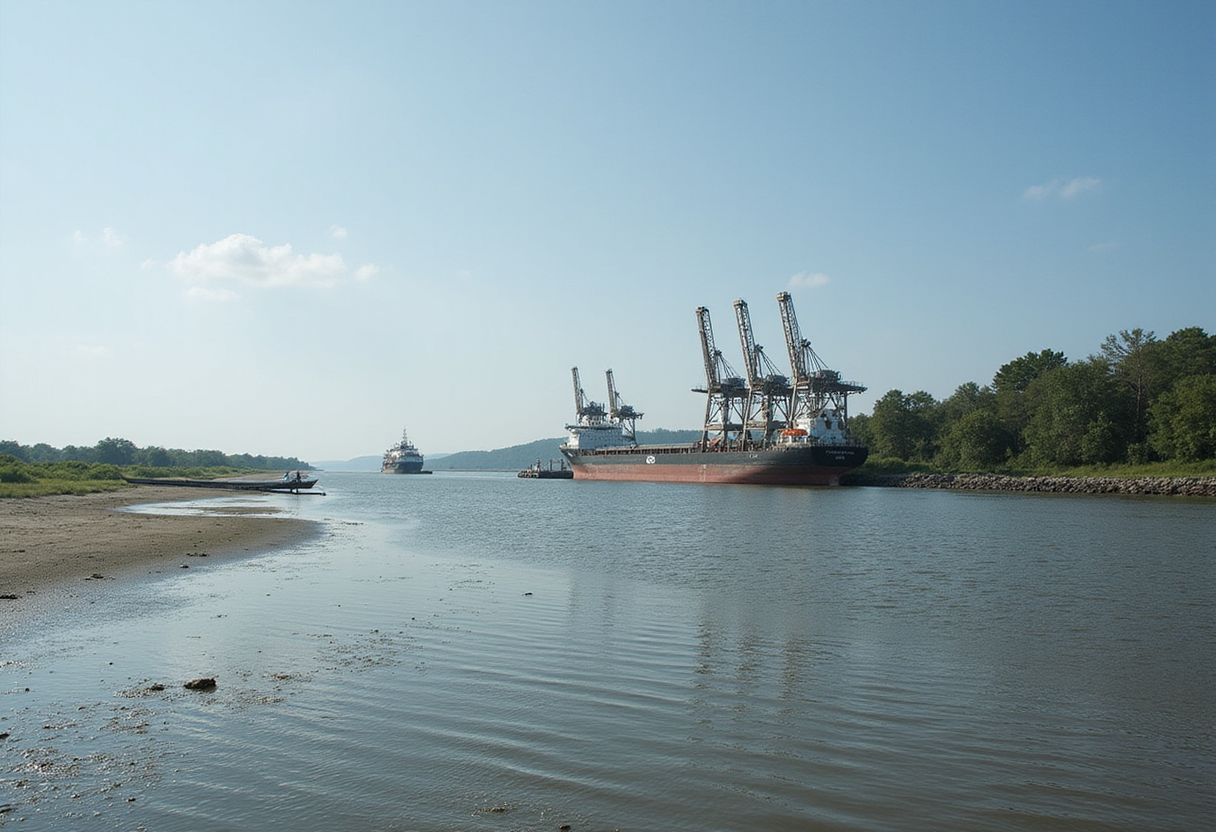
A natural gas terminal on Louisiana's retreating coastline is positioned to become the largest of its kind in the United States, according to a report published by Grist.
The outlet's reporting centers on the stretch of Gulf Coast where wetland loss is most acute and where industrial expansion continues despite the shifting terrain. Louisiana's coast loses land at one of the fastest rates in the country, and the terminal project sits squarely within that zone.
What does the report actually establish?
The Grist piece, as surfaced in the aggregator feed, makes one core claim: a natural gas terminal planned or operating on the Louisiana coast is poised to become the largest in the US. The article headline frames the facility against the backdrop of the state's disappearing coastline — a pairing of infrastructure scale and environmental risk that has defined Gulf Coast energy development for two decades.
The syndicated summary available at press time does not carry the underlying capacity figures, ownership structure, permitting status, or construction timeline. Readers should treat the "largest in the US" designation as Grist's characterization pending confirmation of the terminal's nameplate throughput.
For context on scale, the largest US natural gas export terminals now operating on the Gulf Coast are multi-train LNG facilities rated in the tens of millions of tonnes per annum, and any project described as the largest gas terminal nationally would need to clear that bar — a claim that warrants verification against operator disclosures and FERC filings.
Why the coastal-setting framing matters
Grist places the terminal story in the context of Louisiana's land-loss crisis. The state has lost roughly a quarter of its coastal wetlands since the 1930s, a fact repeatedly documented by the US Geological Survey and Louisiana's Coastal Protection and Restoration Authority. Siting major gas infrastructure in this environment raises standard questions for our readers:
- Foundation and subsidence engineering for heavy terminal assets on soft deltaic soils
- Hurricane exposure and shut-in risk for Gulf-margin facilities
- Pipeline right-of-way maintenance through eroding wetlands
- State and federal permitting timelines where coastal-zone review applies
The Grist report does not, in the material available here, quantify these risks for the specific terminal; the environmental framing is the outlet's editorial lens rather than a disclosed engineering assessment.
What we cannot yet confirm
Because the full article text was not included in the syndication feed, Rig & Refinery has not independently verified:
- The terminal's name, operator, and ownership partners
- Its rated capacity in million cubic feet per day or tonnes per annum of LNG equivalent
- Whether the project is sanctioned, under construction, or at the Federal Energy Regulatory Commission application stage
- Target in-service dates or contracted offtake volumes
We are treating the story as a headline-level development rather than a confirmed capacity record, and we separate that status explicitly from sanctioned-project reporting.
The watch item
The operational numbers to track are the terminal's nameplate capacity, its FERC or MARAD permit status, and its startup schedule — the three data points that would confirm or retire the "largest in the US" claim. When the operator's filings or Grist's full text surface, the desk will update with throughput figures and basin-level context.
via Google News: LNG export terminals (Source)
More from Daniel Okafor
Show full bio
Market editor covering consumer brands and retail at Rig & Refinery.
341 articles
Adjoining reports
- Louisiana LNG project labeled US's most polluting by Grist
- Trump greenlights offshore Louisiana LNG export hub; project risks flagged
- Louisiana LNG Terminal Set to Become Largest US Natural Gas Exporter
- East Coast LNG Export Plans Suffer Another Setback
- Mississippi still lacks an LNG export terminal — for now