Well report No. RR-9423 · T23N · R21W · SEC 35 · filed October 10, 2026
Refining & PetrochemicalsWell report
Luanda Refinery Crude Receipts Hit 12-Month High: Africa Report
Africa Oil+Gas Report flagged the largest crude deliveries to Angola's Luanda Refinery in twelve months. The 12-month high signal has implications for domestic product availability and the export programme.
Field notes
- Africa Oil+Gas Report flagged a 12-month high in crude feedstock deliveries to Angola's Luanda Refinery.
- Luanda Refinery is Angola's principal refining asset, located in the capital.
- Angola is an OPEC+ participant and one of Africa's larger crude exporters.
- Africa Oil+Gas Report did not enumerate the absolute daily volume in its headline summary.
- Higher Luanda Refinery receipts reduce crude availability for export through the next loading cycle.
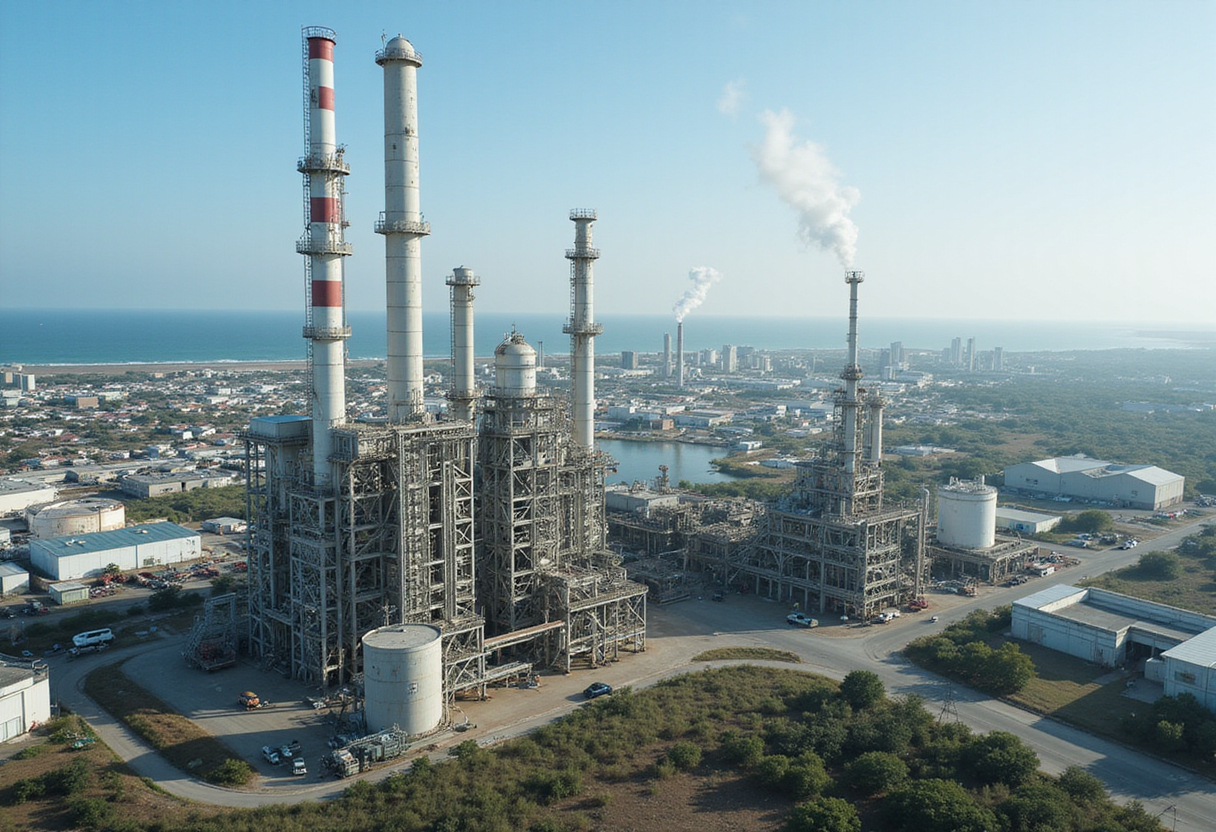
Angola's Luanda Refinery absorbed its largest crude feedstock deliveries in twelve months, Africa Oil+Gas Report said, flagging a 12-month supply high at the capital's principal refining asset.
The brief summary from Africa Oil+Gas Report carries the directional signal but does not enumerate the absolute daily volume or specify the comparison window. The implication, however, is operational: domestic receipts into Luanda are running above the trailing twelve-month average.
What the 12-month high signals
The Luanda Refinery has historically served as Angola's primary conversion asset, processing local Angolan crude grades alongside imported feedstock into gasoline, diesel, jet fuel, and fuel oil. A 12-month high in receipts points to greater domestic throughput.
Operators in similar positions — refining peers across West Africa — typically read such an uptick as a function of one of three drivers: post-turnaround restart volumes, a seasonal lift in domestic product demand, or a drawdown of stored feedstock. Africa Oil+Gas Report did not specify which applies.
Why downstream readers care
For Angola, a long-standing OPEC+ participant and one of Africa's larger crude exporters, downstream throughput has direct fiscal implications. Higher refinery utilisation reduces refined-product imports and eases pressure on the country's foreign-exchange position.
It also tightens the link between domestic energy security and the export programme that ships Angolan grades to buyers in Asia, Europe, and the Mediterranean. Refiners downstream of Luanda — distributors, bunkering operators, and industrial offtakers — watch receipts as a leading indicator of domestic product availability.
What the feedstock mix tells us
A 12-month high in receipts does not, on its own, identify the grade mix. Local Angolan crudes from the offshore block system and imported feedstock have all historically fed Luanda.
The grade split matters for refiners: heavier crudes require more complex processing, lighter crudes yield more gasoline and diesel but less fuel oil. Without the detailed Africa Oil+Gas Report data, public and private market watchers are working from the directional headline rather than the underlying number.
How this fits the wider downstream picture
The headline arrives against a backdrop of shifting African refining utilisation. If Luanda is running hotter, less crude is available for export; if Luanda eases back, more Angolan barrels reach the seaborne market.
Trade-press readers running Angola exposure will recognise this as a familiar two-way dynamic: domestic refinery offtake and the export programme are linked balance sheets, not separate ones. A 12-month supply high at the refinery is, by the same logic, a soft headwind for Angolan export volumes through the next loading cycle.
What trade-press readers should track next
The detailed Africa Oil+Gas Report data set will carry the headline volume and reference period.
From there, the next operational anchors are: any statement from Sonangol on refining throughput targets, Angola's next monthly OPEC+ production submission, and any tender activity at the refinery's product terminals.
Refiners downstream of Luanda will watch the next monthly print for confirmation.
The watch item at the close is the absolute volume behind the 12-month high, and whether the next monthly reading confirms the trend or reverts toward the trailing twelve-month average.
For trade-press desks running Angola exposure, the immediate question is straightforward: is Luanda running hot because of one-off dynamics, or has the facility stepped up to a higher baseline? Africa Oil+Gas Report will set the volume context for downstream balance sheets through the next reporting cycle.
via Google News: Refineries and petrochemicals (Source)