Middle East Conflict Puts Saudi Arabia's Oil Pipeline to the Test
Bloomberg reports that regional war is stress-testing Saudi Arabia's oil pipeline network. No outage confirmed; watch Aramco throughput data and Red Sea loadings.
TAG P-4181 · 410 words on the permit
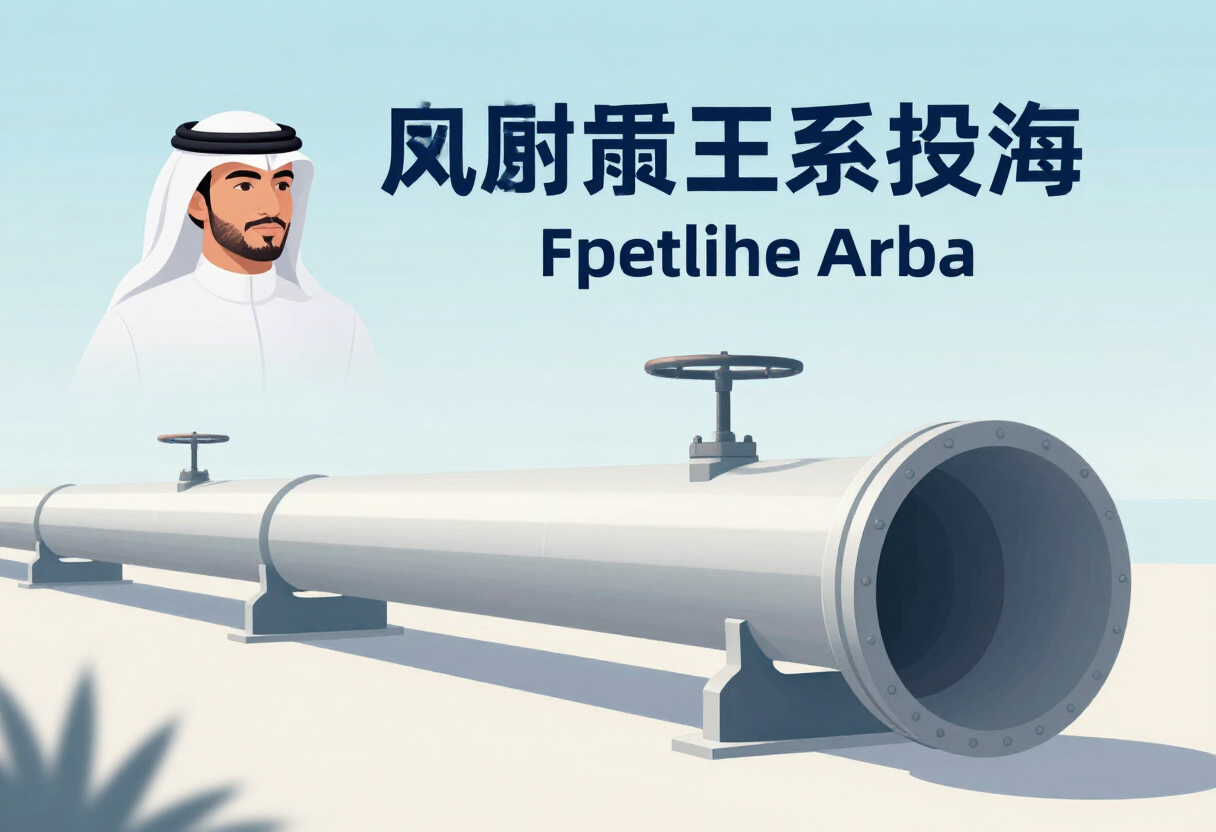
Scope of work
- Bloomberg reports that the Middle East war is testing Saudi Arabia's oil pipeline network.
- The report frames the exposure as risk analysis; no force majeure, terminal closure, or confirmed volume loss is disclosed.
- Watch items: Aramco statements on East-West pipeline throughput, Red Sea loading activity, and freight and insurance rate signals.
The widening war in the Middle East is placing Saudi Arabia's oil pipeline network under sustained operational strain, according to a Bloomberg report published this week.
The report's central claim is straightforward: active regional conflict is now testing the kingdom's ability to keep crude moving. Saudi Arabia operates the largest export infrastructure in OPEC, anchored by the 5 million bpd East-West pipeline that carries crude from fields in the Eastern Province to the Red Sea coast. The Bloomberg piece frames that system — and the broader Saudi transit network — as directly exposed to the security dynamics now playing out across the region.
For readers tracking flows rather than headlines, the salient question is what the conflict means for routing. Saudi export crude traditionally loads from Gulf terminals, with the East-West pipeline and Red Sea loading points providing the bypass option around the Strait of Hormuz. Any event that raises the perceived risk of Gulf transits tends to focus attention on whether the overland link and its coastal terminals can absorb redirected volumes. The Bloomberg report places that question squarely on the desk: the war, not the market, is now the variable.
Saudi Aramco, which operates the pipeline and the loading infrastructure, has not commented within the report's framework on specific throughput changes, and Bloomberg's account remains an analysis of exposure rather than a disclosure of disrupted volumes. No force majeure declarations, terminal closures, or confirmed reductions in loadings accompany the reporting at this stage. The piece should be read as an assessment of risk to sanctioned, operating infrastructure — not as confirmation of damage.
That distinction matters for price watchers. Commentary linking Middle East escalation to crude benchmarks is analysis to attribute, not a statement of physical outage. As of the report's publication, the story is one of stress-testing: can the kingdom's pipeline architecture continue functioning as designed while the conflict around it escalates?
The watch items from here are concrete. Watch for any Aramco statement on East-West pipeline throughput, for insurance and freight-rate movements on Gulf and Red Sea routes, and for cargo-tracking evidence that loadings have shifted westward. A confirmed terminal incident or a declared disruption at a Red Sea loading point would convert this from risk analysis into an operational story with direct barrel-count implications.
Bloomberg's reporting does not assert that the pipeline has failed the test. It asserts that the test is underway.
via Google News: Pipelines and midstream (Source)
More from Elena Vasquez
Linked permits
- E-2320
- K-9147
- C-9302
- V-4758
- K-8109