Well report No. RR-4476 · T2N · R8W · SEC 14 · filed October 10, 2026
Midstream & PipelinesWell report
Petroecuador lifts force majeure at SOTE pipeline pumping station
Petroecuador has lifted force majeure at a SOTE pipeline pumping station, restoring normal crude pumping on Ecuador's main export route to the Esmeraldas terminal.
Field notes
- Petroecuador lifted force majeure at a pumping station on the SOTE crude pipeline.
- The SOTE carries crude from the Oriente basin to the Esmeraldas terminal on the Pacific coast.
- The lifting restores normal pumping and full contractual delivery obligations for the state company.
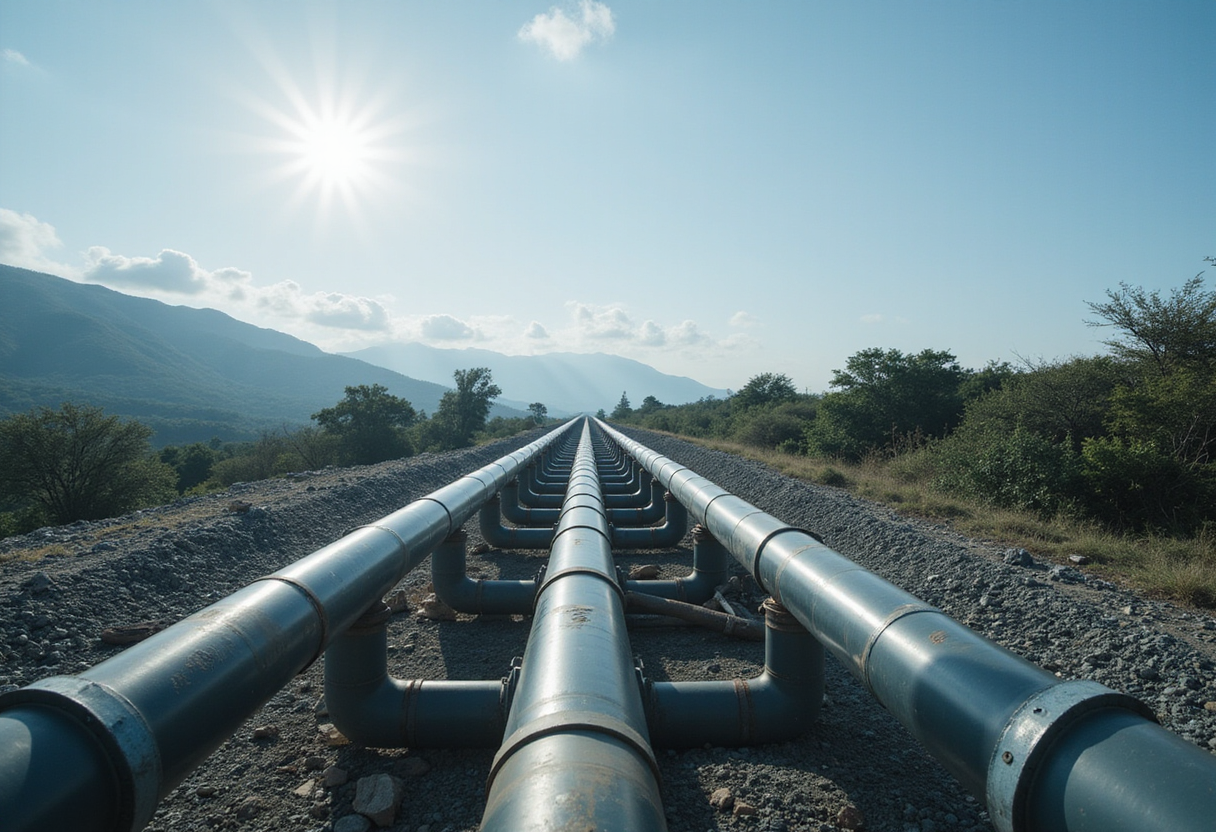
Ecuador's state oil company Petroecuador has lifted the force majeure it declared at a pumping station on the SOTE crude pipeline, restoring normal operations on the country's main export route for heavy crude, the company said.
The declaration and its lifting mark the latest in a series of operational disruptions to hit Ecuador's aging upstream-to-terminal infrastructure, where the 500 km Sistema Oleoducto Trans Ecuatoriano (SOTE) carries crude from Amazonian production blocks in the Oriente basin to the maritime terminal at Esmeraldas on the Pacific coast.
What happened at the pumping station?
Petroecuador invoked force majeure at the pumping station — a contractual step that suspends normal delivery and transport obligations while an operator resolves a technical or physical disruption. The company has now formally withdrawn that status, signalling that pumping at the affected station has returned to service and that crude flow through the line can proceed under standard terms.
Force majeure declarations on Ecuadorian pipelines typically interrupt nominations and loading schedules for crude buyers, and the lifting of the status allows Petroecuador to resume contractual deliveries to the Esmeraldas terminal without the legal cover the declaration provided.
Why does the SOTE line matter?
The SOTE is one of two trunk lines that move Ecuadorian crude from the Oriente basin to the coast, alongside the privately operated OCP pipeline. Together they handle the export stream that underpins Ecuador's fiscal accounts, with crude sales representing one of the largest single sources of state revenue.
The system's pumping stations, built decades ago, have repeatedly required maintenance interventions, and any halt at a station along the route quickly propagates upstream: producers in the Oriente must slow output or shut in wells when line pressure and storage headroom disappear.
A return to normal pumping therefore matters beyond the pipeline itself. It stabilizes the logistics chain that connects Amazonian heavy crude production — the barrels that Esmeraldas loads onto tankers for export — to the terminals and the buyers who schedule cargoes.
What does the lifting change in practice?
With force majeure withdrawn, Petroecuador resumes full responsibility for throughput on the line. For its upstream partners and for the traders lifting Ecuadorian crude, the change means:
- pumping operations at the affected station are back online;
- transport and delivery obligations under crude marketing contracts apply again in full;
- the operational risk previously transferred to the force majeure clause returns to the company.
The company did not indicate in the announcement that any further stations on the route remain under restricted status.
A pattern of interruptions
The episode fits a broader pattern. Ecuador's hydrocarbon infrastructure has suffered repeated outages in recent years, from pipeline ruptures and spills to protest-related shutdowns that halted both the SOTE and the OCP line and forced producers to curtail output across the Oriente.
Each interruption carries a cost in deferred barrels and renegotiated loading windows. Conversely, each restoration — such as this lifting of force majeure — returns barrels to the export schedule and removes a source of supply noise from a market that tracks Ecuadorian heavy crude grades closely, particularly Napo and Oriente, which price off US Gulf Coast and Asian refining demand.
For downstream buyers, a functioning SOTE means more reliable arrivals of Ecuadorian heavy crude, a feedstock valued by complex refineries for its yield profile.
Watch items
Traders and operators will now watch whether Petroecuador can hold stable operations at the pumping station without a repeat declaration. The key forward indicators are:
- sustained throughput at SOTE pumping stations without renewed force majeure filings;
- loading schedules at the Esmeraldas terminal returning to planned volumes;
- any company guidance on the underlying cause of the disruption and remediation work at the station.
Until Petroecuador publishes details on what triggered the declaration and what repairs or inspections preceded the lifting, the market will treat the restoration as operational rather than structural — a fixed fault, not a fixed system.
The next scheduled maintenance notice, spill report, or throughput update from the state company will show whether the SOTE can run clean through the coming loading cycle.
via Google News: Pipelines and midstream (Source)
More from James Calloway
Show full bio
Staff writer covering industry trends and analytics at Rig & Refinery.
375 articles
Adjoining reports
- Bahrain Declares Force Majeure After Refinery Fire
- Libyan crude pipeline back in service after armed blockade ends
- Saudi Arabia Races to Restore Key Pipeline as Oil Safety Net Frays
- Libyan Pipeline Blockage Threatens Total Shutdown at Major Oil Field
- Petronas Shuts Songkhla Export Pipeline After Routine Check