Well report No. RR-4114 · T6N · R30W · SEC 6 · filed November 12, 2026
OffshoreWell report
Planet One Hits Hydrocarbons in Ghana's First Carbonate Play Test
Planet One's Nya Gyidie-1X well found hydrocarbons in carbonates at 3,364–3,499 m MD in 2,289 m of water offshore Ghana, the country's first test of the Cenomanian–Turonian play.
Field notes
- Nya Gyidie-1X encountered hydrocarbons in carbonate between 3,364 and 3,499 m measured depth.
- The well was drilled in 2,289 m of water, about 148 km offshore Ghana in the DWCTP Block.
- It is Ghana's first successful test of a Cenomanian–Turonian carbonate play as a primary target.
- The block covers roughly 1,454 sq km; Planet One partnered with GOIL Upstream in 2023.
- Ghana announced $3.5 billion in upstream investment commitments in July 2026.
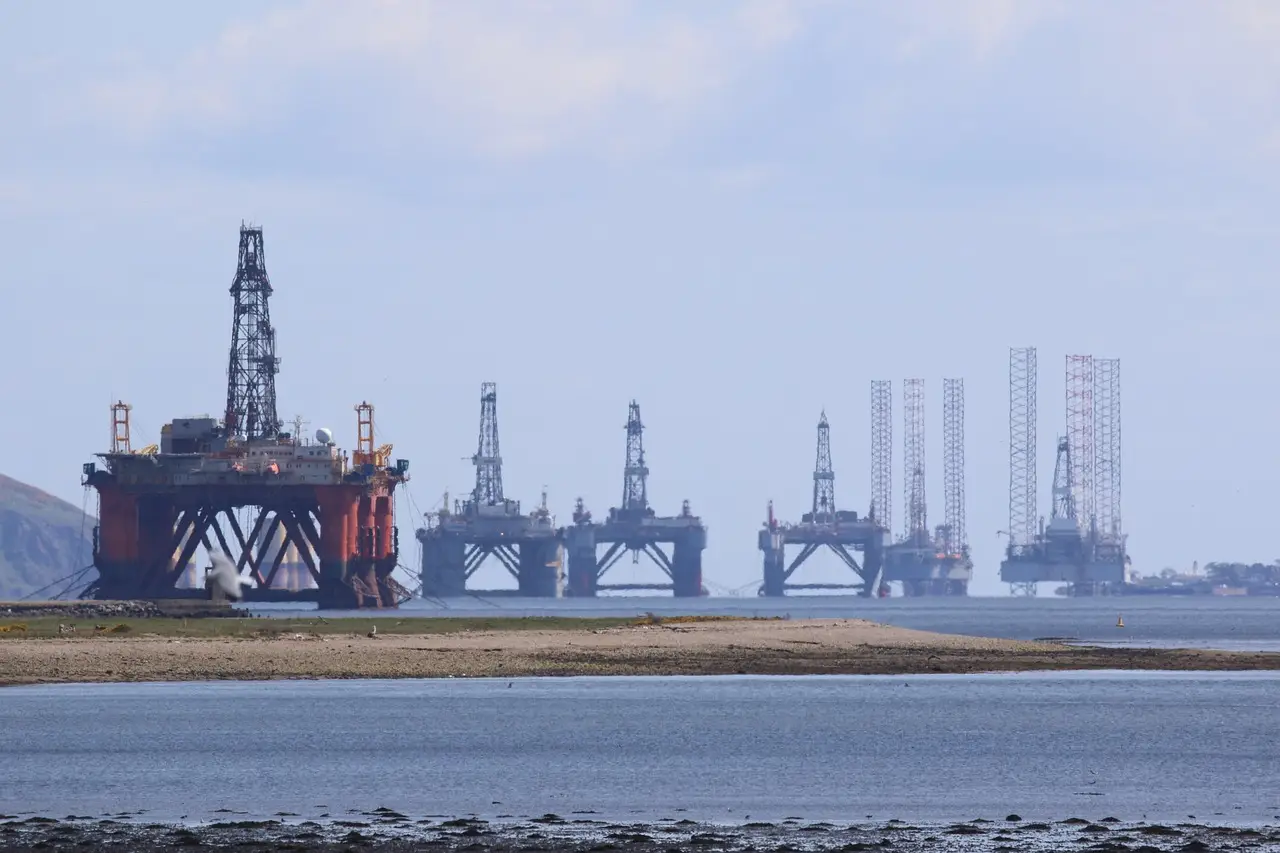
Planet One Oil & Gas has found hydrocarbons in a carbonate reservoir at its Nya Gyidie-1X exploration well, roughly 148 km offshore Ghana in the Deepwater Cape Three Points (DWCTP) Block. The well was drilled in 2,289 meters of water and encountered hydrocarbons in carbonate rock between 3,364 and 3,499 meters measured depth along the wellbore, according to separate announcements from Planet One and Ghana National Petroleum Corporation (GNPC).
The result is a first for Ghana on two counts. It is the country's first successful test of a Cenomanian–Turonian carbonate play as a primary exploration target, and it establishes a reservoir type beyond the sandstones that underpin Ghana's existing commercial oil and gas fields. President John Dramani Mahama described the find as exactly that — the nation's first successful test of the carbonate play, with the Albian zone carried as a secondary objective.
The well also marks an operational milestone for the operator. Nya Gyidie-1X is the first deepwater exploration well drilled by Planet One, which operates the roughly 1,454-square-kilometre block in partnership with GNPC and GOIL Upstream Limited, a subsidiary of GOIL PLC. That partnership dates to 2023, when the parties signed farm-in and joint operating agreements covering the block.
What does the discovery change for Ghana's upstream?
For practitioners, the significance is geological before it is commercial. Every producing field in Ghana to date draws on sandstone reservoirs. A working carbonate system in the Cenomanian–Turonian opens exploration fairways that existing basin models have not targeted, and it gives operators with deepwater acreage a new play to map against seismic.
The timing matters as much as the geology. GNPC welcomed the result as a significant development for an upstream sector focused on replacing produced reserves, attracting new investment and addressing declining production. Those three pressures frame every exploration decision in the basin right now.
The broader policy backdrop adds weight. In July 2026, Mahama announced $3.5 billion in new upstream investment commitments as Ghana works to revive exploration activity. A successful well in an untested play strengthens the case for that capital to keep arriving.
For the partners themselves, the well de-risks the operator's deepwater capability and validates the GOIL Upstream farm-in structure put in place two years ago. In plain terms: a junior operator has now drilled, and found something, in one of the tougher drilling environments offshore West Africa.
Where does the prospect stand between discovery and sanction?
Both companies were careful with their language, and readers should be too. The announcements confirm hydrocarbons in the carbonate interval — nothing more at this stage.
Further technical evaluation is required to determine the size, reservoir characteristics and commercial viability of the discovery before Planet One and its partners can decide on additional exploration and appraisal activity. No resource estimate has been disclosed. No appraisal well is scheduled. The well is a discovery, not a development, and the distance between those two categories in 2,289 meters of water is measured in years and hundreds of millions of dollars.
The distinction matters for how the market reads the news. Ghana's producing fields face decline, and headlines about a "new reservoir type" can inflate expectations ahead of the data. The appraisal program, when it comes, will determine whether the carbonate play is a basin-opener or a single encouraging well.
What to watch next
The watch items are concrete. Watch for the pace of the technical evaluation announced by Planet One and GNPC, any disclosure of net pay or resource ranges, and whether an appraisal well location is identified on the block. Watch also for the effect on other deepwater licence holders in the Tano Basin and Cape Three Points area, who now have a reason to re-examine carbonate intervals in their own seismic.
The one-line takeaway: Ghana has a working carbonate play on the board for the first time, and the next well will tell us how much it is worth.
via oedigital.com (Source)
More from James Calloway
Show full bio
Staff writer covering people, launches and day-to-day practice in Oil and gas industry operations and markets at Rig & Refinery.
597 articles
Adjoining reports
- ENI seeks higher gas throughput from Yinson's Sankofa FPSO off Ghana
- ReconAfrica Plots October Sidetrack at Kavango West 1X
- Vår Energi, Equinor hit gas-condensate at Lakris in Norwegian Sea
- Vår Energi Hits Gas-Condensate at Lakris, Sizing Find at 1.3-5.5 MMboe
- Aker BP Lifts North Sea Discovery Estimate to 8-15 Million bbl