Well report No. RR-3501 · T15N · R46W · SEC 27 · filed October 15, 2026
Midstream & PipelinesWell report
Riyadh weighs Red Sea pipeline expansion, sources say
Saudi Arabia is studying an expansion of the kingdom's oil pipeline to the Red Sea, three sources tell Reuters. Aramco and the Ministry of Energy declined to comment. No FID yet from Riyadh.
Field notes
- Saudi Arabia is studying an expansion of its East-West Pipeline to the Red Sea, three sources said.
- Pumping stations and crude-storage expansion at the Yanbu terminal are reportedly part of the review.
- Saudi Aramco and the Ministry of Energy in Riyadh declined to comment on the discussions.
- No engineering, procurement and construction contractor, no tender, and no FID have been announced.
- The Public Investment Fund has not been publicly attached to the talks.
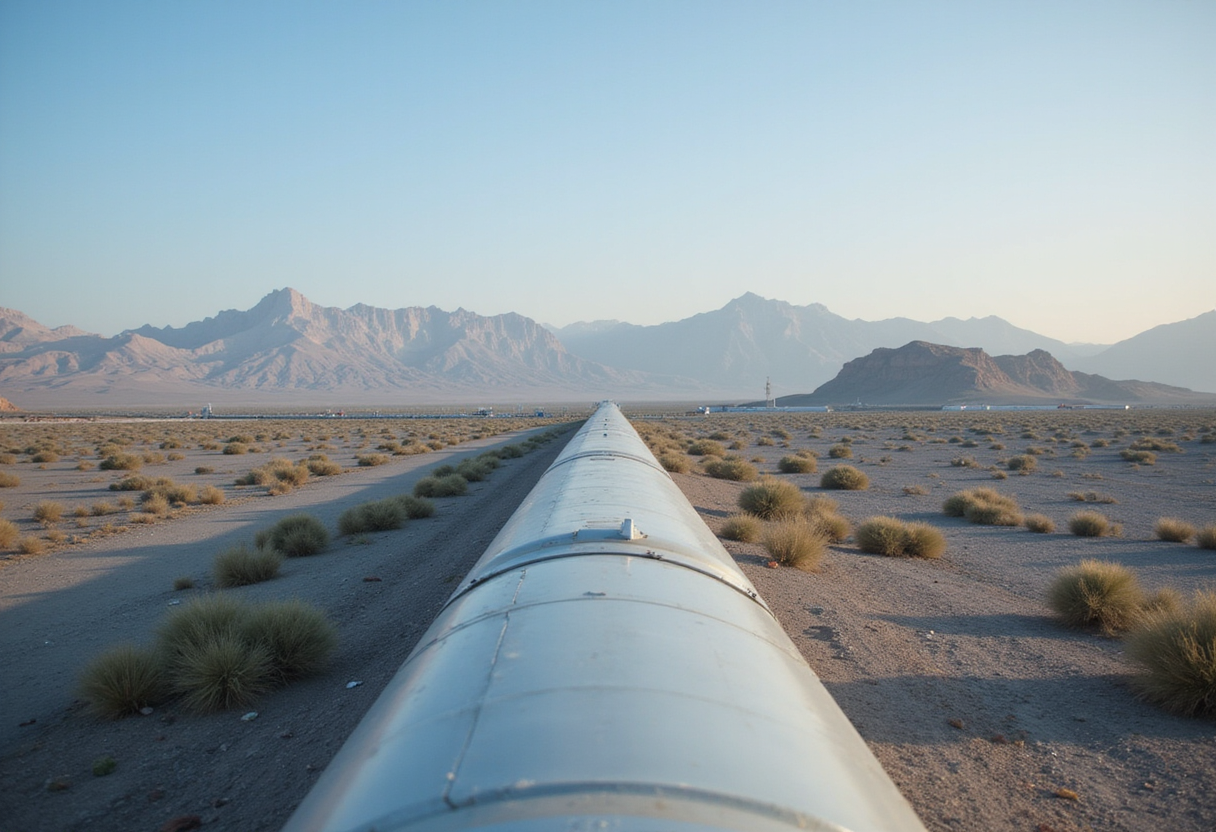
Riyadh weighs Red Sea pipeline expansion, sources say
Saudi Arabia is studying an expansion of the kingdom's oil pipeline to the Red Sea, according to three people familiar with the matter. The undisclosed review covers additional capacity at the Yanbu terminal on the kingdom's west coast, two of the sources said.
The asset under discussion is the state-run East-West Pipeline, a crude artery running from the Eastern Province oilfields to the Red Sea export complex at Yanbu. The system has historically given Saudi Arabia a second export channel that runs outside the Persian Gulf and the Strait of Hormuz.
Saudi Aramco, operator of the pipeline, declined to comment. The Ministry of Energy in Riyadh also declined to comment.
What do the sources disclose?
Two of the three people briefed on the review said the discussions touch on additional pumping stations and crude-storage expansion at Yanbu. They declined to give a target throughput figure. A third source confirmed the existence of the talks without adding detail.
No engineering, procurement and construction contractor has been named. No tender has been issued. The earliest construction start would follow a final investment decision, which has yet to be announced.
The talks sit inside the Ministry of Energy and at Saudi Aramco, one source said. The Public Investment Fund, the kingdom's sovereign wealth investor, has not been publicly attached to the review.
Why does the Red Sea route matter to oil markets?
The Yanbu terminal sits outside the Strait of Hormuz, the chokepoint through which the bulk of Saudi seaborne crude flows. Any capacity lift at Yanbu would move additional barrels onto a route that does not pass through the strait, where periodic maritime incidents have shaped insurance and freight markets for years.
The Red Sea option has long functioned as strategic redundancy for the kingdom. The trade-press read is that the pipeline review addresses routing flexibility rather than headline production growth.
How does this fit Saudi OPEC+ arithmetic?
Saudi crude production has sat at the lower end of the kingdom's voluntary OPEC+ ceiling through 2024. The pipeline review is independent of the quota debate, both sources said. Capacity decisions at Yanbu move routing arithmetic, not the supply discipline agreed inside OPEC+.
Aramco has signalled capital discipline since its 2019 public listing. The company's posture looks consistent with midstream investment that does not add to headline output. Midstream capex sits at a lower unit cost than upstream or refining, by industry-standard read.
What is the maritime backdrop?
Maritime incidents in the southern Red Sea through 2023 and 2024 added a second-order case for spare capacity at Yanbu. Container lines rerouted around Africa for much of that period. Crude flow held up better, but war-risk insurance premia climbed, and several shipowners grew cautious about the Bab el-Mandeb transit.
Any lift at Yanbu reads, in that context, as resilience infrastructure rather than an export push. The Ministry of Energy in Riyadh has named energy resilience a budget priority across recent cycles.
What to watch
- An Aramco or ministry statement confirming capacity targets, a budget or a construction start date.
- A public tender for pumping stations, pipeline or Yanbu crude-storage expansion.
- An FID at the Aramco board or at the Public Investment Fund.
- The next OPEC+ ministerial meeting, where spare-capacity logic at Yanbu will colour any Saudi production move.
The next test is a number. Until Aramco prints one, every capacity figure in circulation is analysis dressed as fact.
via Google News: Pipelines and midstream (Source)
More from Daniel Okafor
Show full bio
Market editor covering companies, deals and strategy in Oil and gas industry operations and markets at Rig & Refinery.
451 articles
Adjoining reports
- Saudi East-West Pipeline Flows at Normal Rates, Bloomberg Reports
- Saudi Arabia targets 10 million bpd pipeline export capacity
- Saudi East-West Pipeline Throughput Hits 5.8 Million Barrels
- Saudi Arabia Targets 10 Million bpd East-West Pipeline Capacity
- Saudi East-West Line Carries Near 6 Million Bpd, Bloomberg Says