Well report No. RR-9135 · T21N · R3W · SEC 9 · filed October 10, 2026
Midstream & PipelinesWell report
Saudi Arabia Restarts Hormuz Bypass Pipeline as Oil Prices Ease
Saudi Arabia has restarted a pipeline bypassing the Strait of Hormuz, removing one upside risk from Middle East seaborne crude flows, IranWire reports. Oil prices fell on the news.
Field notes
- Saudi Arabia restarted a pipeline bypassing the Strait of Hormuz, per IranWire
- Oil prices fell on the announcement; magnitude not specified
- IranWire report did not name the pipeline system or quote an official
- No volumes, restart date, or duration provided in the source
- Watch: ICE Brent and DME Dubai settlements to size the price reaction
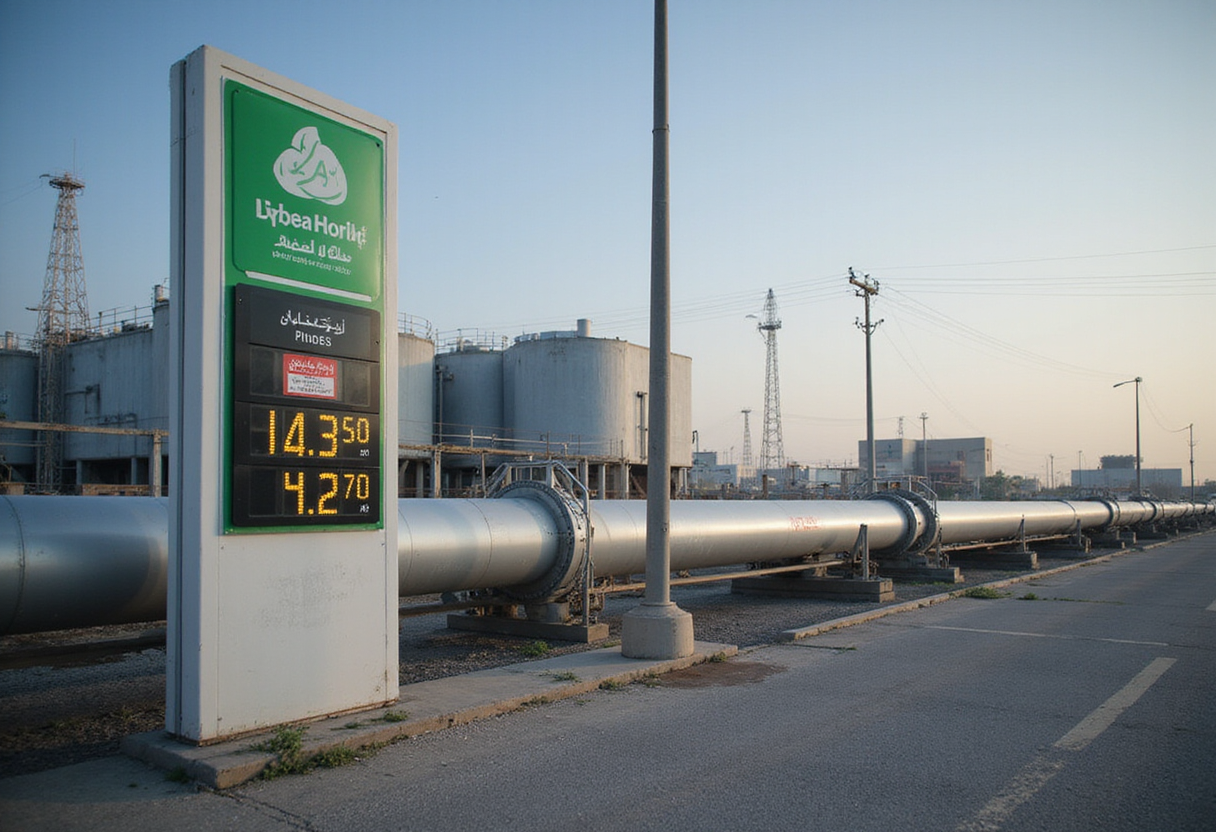
Saudi Arabia has restarted a pipeline that allows crude to reach export terminals without transiting the Strait of Hormuz, according to a report carried by IranWire. Oil prices fell on the news.
The IranWire report did not specify the magnitude of the price decline, identify the operator, or quote any government or company official. The development nonetheless landed as a bearish signal for Middle East-linked grades, which typically carry a geopolitical risk premium when tanker traffic through the strait is under threat.
What route is involved?
The pipeline links Saudi Arabia's Eastern Province production network to Red Sea export terminals, giving the Kingdom a way to move crude to global markets without passing through the strait. IranWire did not name the system or confirm whether it is the East-West pipeline running to Yanbu. Saudi Energy Ministry confirmation had not been published alongside the IranWire report at the time of writing.
How much supply is now insulated from Hormuz risk?
The report does not state volumes flowing through the bypass, leaving open whether the restart is a commercial-scale event or a precautionary reactivation. Traders will look to Saudi Aramco's next export programme notice and to upcoming loading schedules at Red Sea terminals for the first concrete data point.
How did the market react?
IranWire reported a fall in oil prices without naming a benchmark or citing a settlement. Brent and Dubai-linked contracts typically carry the largest Hormuz risk premium during periods of tension, so the size of the reaction can only be read against ICE Brent and DME Dubai prints at the next session close. The duration of any move will depend on whether the bypass is kept warm or run at full capacity.
Why does the timing matter?
The restart lands as scrutiny on Iranian and Saudi maritime posture in the Gulf remains elevated. Demonstrating that bypass capacity can be brought back online quickly reduces one of the upside risks that had supported flat prices in prior sessions. For Asian refiners in China, India, Japan and South Korea, the optionality is operationally relevant because term contract allocations have historically been rerouted through the Red Sea coast during prior standstills. For Northwest European and Suezmax-exposed routes, the signal reduces the probability of a sustained freight premium tied to Gulf disruption.
What is still unconfirmed?
IranWire's report cited no direct quote from Saudi energy officials, Aramco, or the Kingdom's Ministry of Energy. The pipeline's name, its current throughput, the restart date, and the duration of the reactivation all remain unspecified in the source material reviewed.
What to watch next
- Any Saudi Aramco customer notice revising loading points toward Red Sea terminals
- Ministry of Energy statements confirming operational status and throughput
- Iranian official responses, particularly from the IRGC Navy, which has previously reacted to such announcements
- ICE Brent and DME Dubai settlements at the next session close to size the price reaction
- Refiner margin impact across Singapore and Mediterranean complexes once revised cargo flows are priced in
via Google News: Pipelines and midstream (Source)
More from Olivia Hart
Adjoining reports
- Saudi Arabia Restarts Oil Exports via Hormuz-Bypass Pipeline
- Saudi Arabia Restarts Crude Flows on East-West Pipeline
- Saudi Arabia Restarts Crude Flows on Key Pipeline After Attack
- Saudi Arabia Reportedly Restarts East-West Crude Pipeline Operations
- Saudi Crude Flows Shift Back to Hormuz After Pipeline Shutdown