Well report No. RR-2908 · T16N · R43W · SEC 28 · filed September 30, 2026
Midstream & PipelinesWell report
Saudi Arabia Restarts Key Oil Pipeline After Drone Damage
Saudi Arabia restarted a key oil pipeline nearly two weeks after drone damage, restoring its East-West crude route to Red Sea export terminals.
Field notes
- Saudi Arabia restarted a key oil pipeline nearly two weeks after drone damage knocked it offline.
- The pipeline carries crude from Eastern Province fields to a Red Sea export terminal, bypassing the Strait of Hormuz.
- The restart restores Saudi Arabia's ability to load crude outside the Gulf, but no throughput or repair details were disclosed.
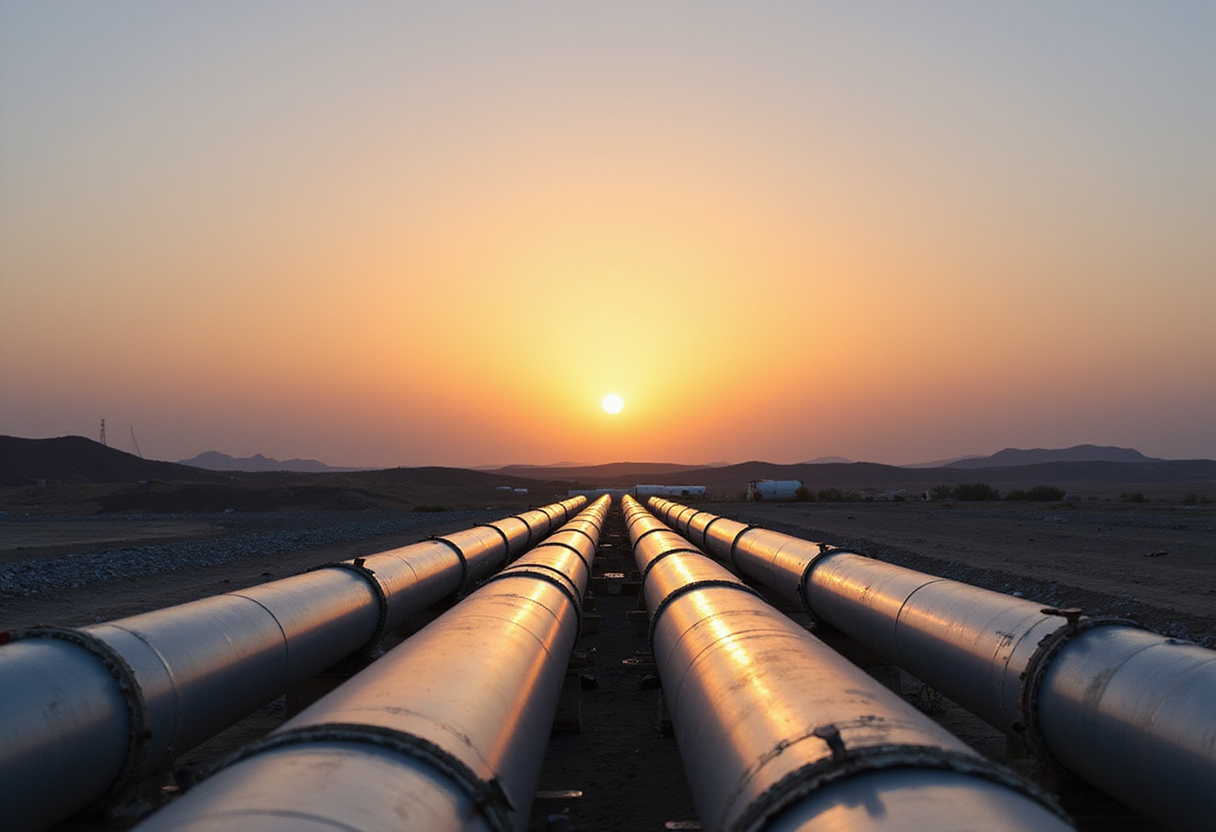
Saudi Arabia has restarted a key oil pipeline nearly two weeks after drone damage forced it offline, according to a report from Quartz.
The pipeline, which carries crude from the kingdom's Eastern Province fields to a Red Sea export terminal on the west coast, resumed flows after crews completed repairs. The line is a critical piece of Saudi export infrastructure because it allows barrels to bypass the Strait of Hormuz and load from the Red Sea side of the Arabian Peninsula.
The restart closes out an operational disruption that had knocked out one of the kingdom's main alternate export routes. The pipeline had been out of service since the drone strike roughly two weeks before the reported resumption, removing a portion of the kingdom's spare capacity to move crude westward and load tankers outside the Gulf.
For Saudi Arabia, the outage carried weight beyond the immediate barrels. The East-West line underpins Riyadh's ability to guarantee supply to customers even if shipping through Hormuz is threatened, a logistics hedge that Aramco has long marketed to Asian and European buyers as a reason to rely on Saudi crude. Any extended shutdown of the line narrows that hedge and concentrates export exposure at Gulf coast terminals.
The restart restores that redundancy. Flows moving through the line again give the kingdom a second loading corridor on the Red Sea, keeping the bypass option available to shippers watching regional security conditions.
The incident is one in a series of attacks on Saudi energy infrastructure in recent years that have pushed the kingdom and its customers to place a premium on route flexibility and terminal redundancy. Each interruption — pipeline, refinery, or terminal — has translated into renewed attention on how quickly Saudi operator Aramco can restore service, and this restart, within about two weeks of the strike, follows the pattern of rapid repair work the company has demonstrated after previous incidents.
No detail was given in the report on the current throughput level of the restarted line, the extent of the damage repaired, or whether any export schedule adjustments made during the outage remain in place.
The watch items going forward: whether the pipeline returns to full rated capacity or continues to run at reduced rates while inspections continue; how loading programs at the Red Sea terminal adjust in the coming weeks; and whether the strike prompts any visible change in tanker routing or insurance terms for vessels calling at Saudi terminals.
via Google News: Pipelines and midstream (Source)
More from James Calloway
Show full bio
Staff writer covering industry trends and analytics at Rig & Refinery.
108 articles