Well report No. RR-2382 · T12N · R1W · SEC 36 · filed October 10, 2026
Midstream & PipelinesWell report
Saudi Arabia Restores East-West Pipeline Capacity to 5.8 Million bpd
Saudi Arabia has restored its main crude pipeline to 5.8 million bpd, returning the East-West line to full nameplate capacity, Anadolu Agency reports.
Field notes
- Saudi Arabia restored pipeline capacity to 5.8 million bpd, per Anadolu Agency.
- The East-West line links Eastern Province fields to the Red Sea export terminal at Yanbu.
- Restored capacity gives Riyadh a full routing alternative around the Strait of Hormuz.
- The report does not specify the completion date or scope of the restoration work.
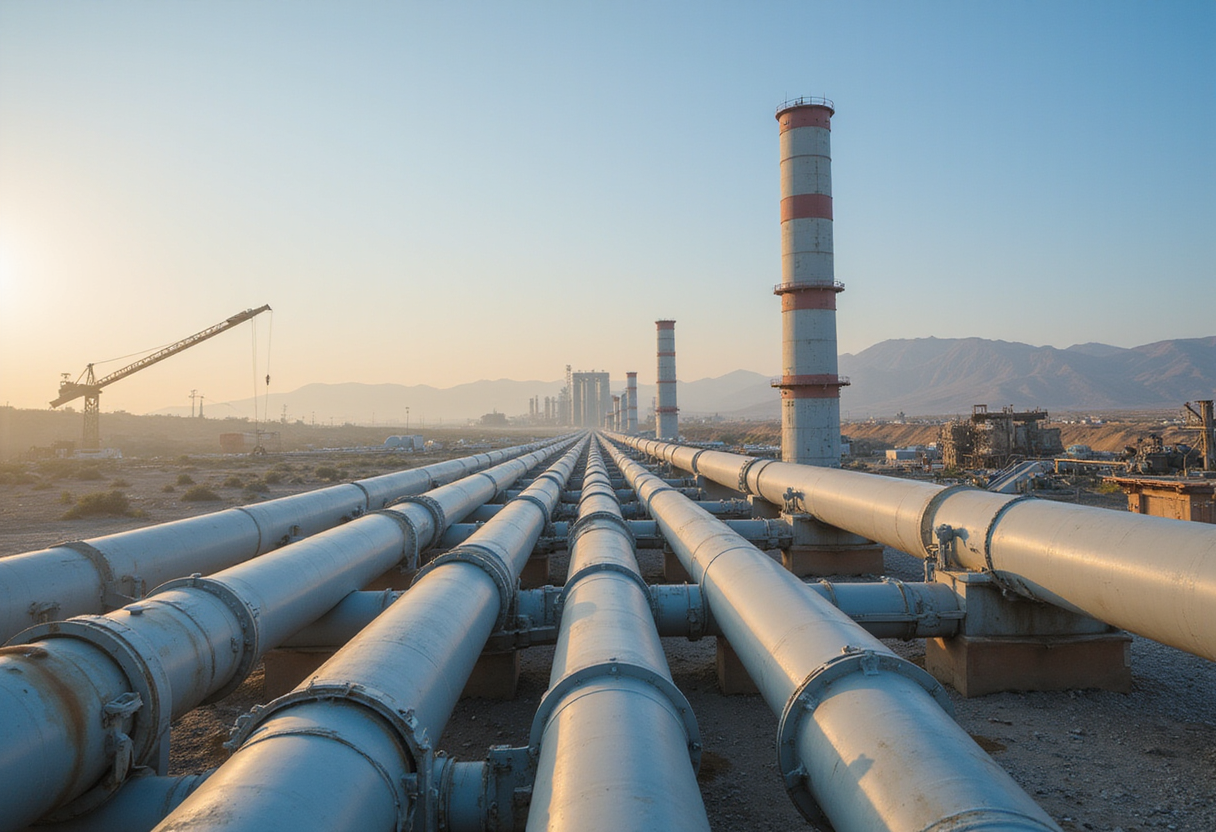
Saudi Arabia has restored the capacity of its main crude pipeline to 5.8 million barrels per day, according to a report from Anadolu Agency carried by UA.NEWS.
The figure marks a return to full nameplate capacity for the East-West line, the 1,200-kilometre conduit that carries crude from fields in the Eastern Province across the kingdom to the Red Sea export terminal at Yanbu. The pipeline gives Saudi Aramco a routing alternative around the Strait of Hormuz, and its throughput level is a closely watched indicator of how much export flexibility the kingdom holds.
Why does 5.8 million bpd matter?
The East-West pipeline's designed capacity is roughly 5 million bpd, with expansion work over the years having lifted its maximum throughput capability to around 5.8 million bpd. Operating the line at that level lets Riyadh move a substantial share of its export barrel to Red Sea loading points, out of range of any disruption in the Gulf chokepoint.
For refiners and traders, the restored capacity signals that the kingdom retains the infrastructure headroom to surge exports westward on short notice — a factor that weighs on the Atlantic Basin crude market whenever OPEC+ spare capacity discussions intensify.
What remains unconfirmed?
The Anadolu Agency dispatch, as aggregated by UA.NEWS, does not specify when the restoration was completed, which sections or pump stations were involved, or whether the work followed scheduled maintenance, debottlenecking, or repairs to earlier damage. Saudi Aramco has not issued a matching operational statement in the publicly available report, and the company routinely declines to comment on line-by-line infrastructure status.
The pipeline's operability has been a sensitive topic since May 2019, when drone attacks forced a temporary shutdown, but the new report does not link the current restoration to any specific incident or timeline.
What should the market watch next?
The watch items are concrete. First, whether Saudi Aramco's quarterly disclosures or shipping data from Yanbu show a corresponding rise in Red Sea loadings. Second, how the restored routing capacity interacts with OPEC+ production decisions, since pipeline flexibility only translates into export surge capability if crude allocation follows. Third, any confirmation from Aramco or the Saudi energy ministry on the scope of the work behind the restoration.
For now, the headline number stands: 5.8 million bpd of pipeline capacity is back in service, restoring the kingdom's full overland routing option between the Gulf and the Red Sea.
via Google News: Pipelines and midstream (Source)
More from Olivia Hart
Adjoining reports
- Saudi East-West Pipeline Restored to 5.8 Million bpd
- Saudi Arabia Puts East-West Pipeline Throughput at 5.8 Million Bpd
- Saudi East-West Pipeline Running at 50% as Crude Exports Resume
- East-West Pipeline Moves 5.8 Million Barrels Per Day, Saudi Minister Says
- Saudi East-West Pipeline Runs at 5.8 Million Bbl/Day