Well report No. RR-1046 · T8N · R31W · SEC 20 · filed October 10, 2026
Petroleum MarketsWell report
Saudi Arabia shuts critical oil pipeline, market impact under scrutiny
Saudi Arabia has shut a critical oil pipeline, CNN reported, prompting immediate scrutiny of Persian Gulf loadings and Saudi Aramco's next official selling price notice.
Field notes
- CNN reported Saudi Arabia has shut a critical oil pipeline in a headline circulated via Google News.
- The CNN report does not name the affected pipeline, its capacity, or the duration of the closure in the available excerpt.
- Saudi Arabia's East-West Pipeline (Petroline) carries Arab Light from Abqaiq to Yanbu with nameplate capacity historically cited near 5 million bpd.
- Saudi Arabia functions as the swing producer inside OPEC+; pipeline disruptions typically move Brent–Dubai spreads within a session.
- The next datapoint to watch is Saudi Aramco's monthly official selling price notice.
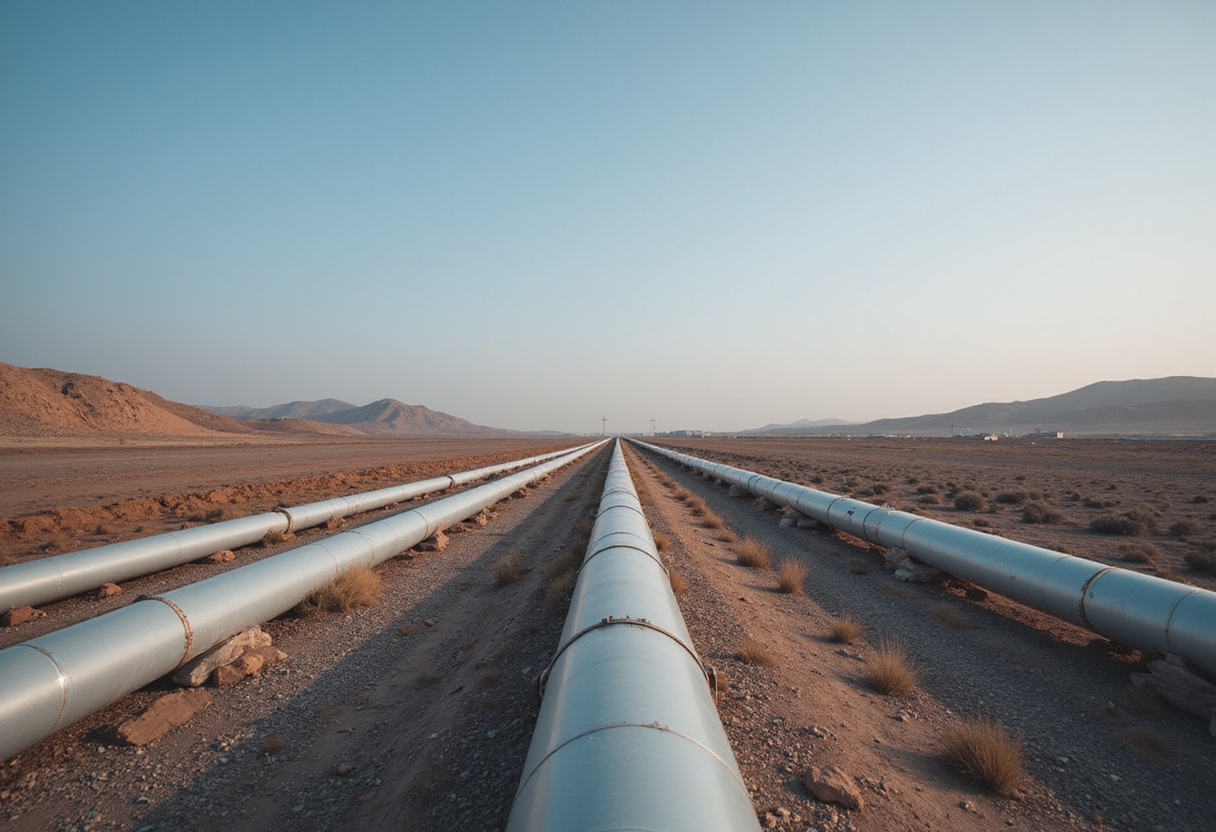
Saudi Arabia has shut a critical oil pipeline, according to a CNN report circulated via Google News, in a move that immediately draws the upstream-to-downstream desk's attention to Persian Gulf loadings and Saudi Aramco's next pricing notice.
The CNN headline, distributed in the news feed received by Rig & Refinery, reads in full: "Saudi Arabia has shut a critical oil pipeline. Here's why it matters for the global oil market." The body of the CNN article was not available in the feed; specifics on the pipeline's identity, capacity, and the duration of the shutdown remain pending.
What did the CNN headline actually say?
The CNN report carries a single declarative clause — that Saudi Arabia has shut a critical oil pipeline — followed by an analytic frame explaining why the move matters for global crude. The phrasing places the closure inside a "why it matters" register rather than a confirmed operational incident, which suggests the article interprets the move in market terms rather than describing an unplanned accident. Rig & Refinery treats the headline as an early signal pending the full CNN text.
Why does this matter for global crude flows?
Saudi Arabia remains the swing producer inside OPEC+, and any operational disruption to its export network carries read-throughs to Brent and Dubai benchmarks within the same trading session. The kingdom operates two principal long-haul crude arteries:
- The East-West Pipeline (Petroline), which carries Arab Light from Abqaiq in Eastern Province to Yanbu on the Red Sea, with nameplate capacity historically cited near 5 million bpd
- Shorter lines feeding Persian Gulf export terminals at Ras Tanura and Ju'aymah, which load the majority of Saudi seaborne crude
A halt on either system reshapes near-term shipping patterns even before any formal production cut is announced. Refiners configured for Arab Medium and Arab Heavy grades in Asia and the US Gulf Coast feel the impact first, since alternative grades — Murban, Iraqi Basrah, Kuwaiti — typically demand substitution premiums when Saudi liftings tighten.
What remains unclear?
CNN's available headline does not name the pipeline, the operator, or the stated reason for the closure. Rig & Refinery cannot confirm whether the shutdown affects the East-West Pipeline, an NGL or condensate line, or a regional gathering system. Capacity figures, the shutdown's start date, and any official communications likewise remain undisclosed in the available excerpt.
Until those details emerge, the story sits closer to a market-alert signal than to a confirmed structural change in Saudi exports.
What should desks watch next?
Three datapoints will resolve the ambiguity:
- Saudi Aramco's next OSP notice. The monthly official selling price release tells refiners whether Aramco expects the disruption to persist. A wider Arab Light differential to Dubai would suggest the company is anticipating tighter prompt supply.
- Brent–Dubai spreads. The exchange of futures for swaps typically widens when Persian Gulf loadings are constrained, pulling barrels away from Europe and toward Asia.
- Refiner run cuts. Asian and US Gulf Coast refiners with high Arab Medium and Arab Heavy diet will move first to draw from commercial inventories and spot cargoes if the shutdown holds.
For now, this is a "watch the next Aramco communication" moment rather than a confirmed production cut. Trade-press readers should flag the headline, hold off on speculative positioning, and wait for the pipeline identification before drawing conclusions on duration or strategic intent.
via Google News: Pipelines and midstream (Source)
More from Priya Raman
Show full bio
Senior reporter covering media and advertising at Rig & Refinery.
395 articles
Adjoining reports
- Saudi Arabia moves to restart half of key crude pipeline: Bloomberg
- Saudi Pipeline Attack Threatens 'Disastrous' Oil Loss as Fighting Escalates
- Drone Attack Forces Saudi Arabia to Shut Critical Oil Pipeline
- Oil Prices Rise After Iraq Attack Shuts Saudi Pipeline
- Saudi Pipeline Shutdown Blamed on Iran-Backed Iraqi Militias