Well report No. RR-4339 · T7N · R6W · SEC 7 · filed October 12, 2026
Midstream & PipelinesWell report
Saudi Arabia Targets 10 Million Bpd Oil Pipeline Capacity by 2027-28
Saudi Arabia aims to raise oil pipeline capacity to 10 million bpd within two to three years, Energy Minister Prince Abdulaziz bin Salman said, in a stated goal without project breakdown.
Field notes
- Saudi Arabia targets 10 million bpd oil pipeline capacity within 2-3 years
- Target announced by Energy Minister Prince Abdulaziz bin Salman
- Implied completion window of 2027-2028
- No capital budget or project-level breakdown accompanied the statement
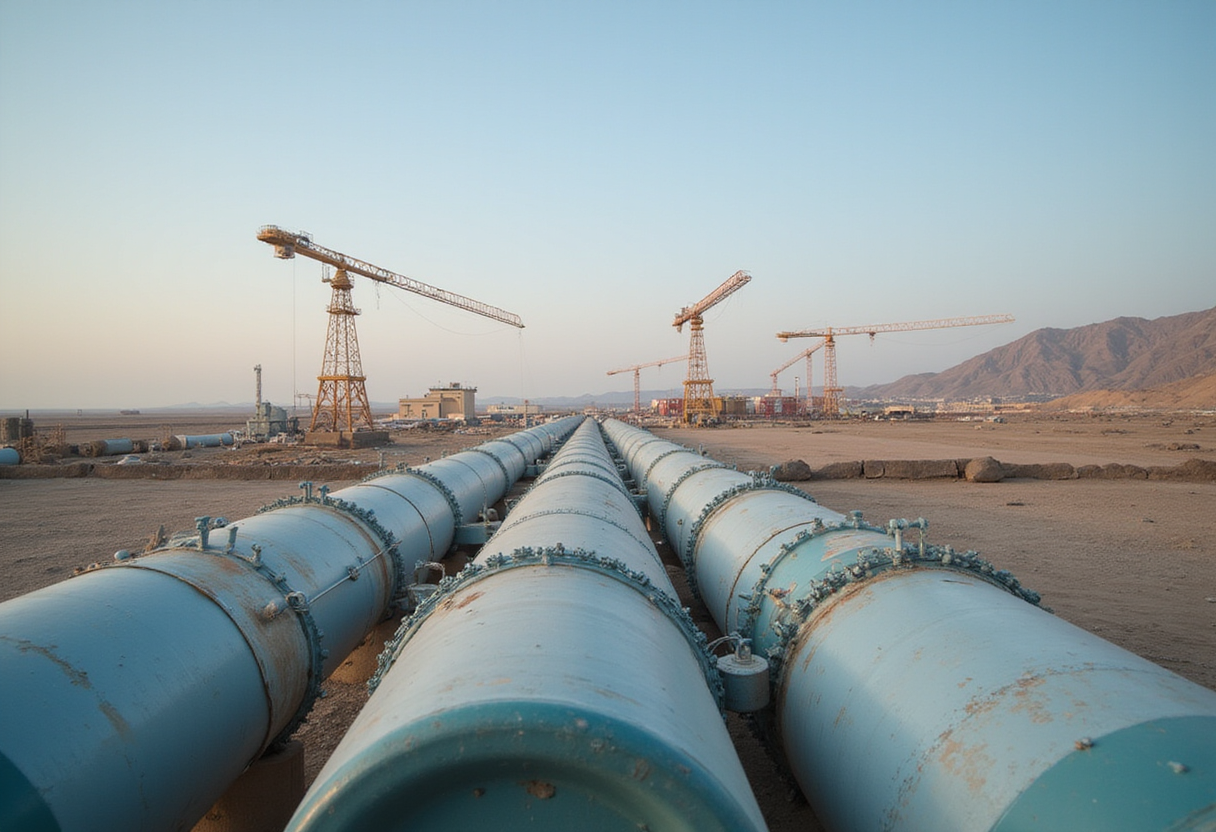
Saudi Arabia aims to lift its oil pipeline capacity to 10 million bpd within two to three years, Energy Minister Prince Abdulaziz bin Salman said, signalling a sustained build-out of the kingdom's crude transit network alongside its East-West pipeline and export terminal system.
The minister's timeframe puts the target within reach by 2027 or 2028, depending on when the clock starts on individual expansion packages. The statement is the first public indication from the energy ministry that Riyadh is planning pipeline capacity growth on this scale and on this schedule.
What did the energy minister actually say?
Prince Abdulaziz framed the 10 million bpd pipeline figure as a national infrastructure goal rather than a single sanctioned project. The capacity target covers the kingdom's crude pipeline network, the arteries that move barrels from production points in the east toward domestic refineries and export loading facilities.
The minister did not attach a capital budget, a contractor list, or a project-by-project breakdown to the announcement. That leaves the 10 million bpd figure as a stated government objective, not yet a fully itemized construction program with sanctioned line items.
Trade readers will want to distinguish carefully here: a capacity target announced by a minister is an intention with political weight behind it. A sanctioned project, by contrast, carries engineering, procurement and construction commitments. The Saudi statement sits in the first category for now.
Why does pipeline capacity matter to the export picture?
Pipeline throughput capacity sets the physical ceiling on how quickly Saudi Arabia can move crude from fields and storage to tankers. For a kingdom that pairs its production policy with OPEC+ quota decisions, transit capacity is the infrastructure hedge that lets barrels flow when export windows open.
A 10 million bpd pipeline system would give Riyadh substantial flexibility in routing crude — between domestic refining demand, terminal loading, and any future shifts in production levels under the OPEC+ framework.
Any read-through for crude markets from this announcement should be treated as analysis rather than fact. The capacity target does not by itself signal a change in Saudi production policy, in OPEC+ output quotas, or in the kingdom's export volumes. It signals infrastructure ambition.
What is the watch item?
The concrete milestones to track are these:
- Confirmation of which pipeline segments and expansion packages fall under the 10 million bpd program
- Contract awards or tenders that convert the ministerial target into sanctioned engineering work
- A stated in-service date for the first capacity increments
- Any parallel announcements on storage or terminal loading capacity, which pipeline expansions usually accompany
The two-to-three-year window the minister cited is the schedule to hold him to. If tenders and awards surface over the next several quarters, the 10 million bpd pipeline target moves from stated intent to executable program. If they do not, the number joins the queue of long-cycle infrastructure goals awaiting project definition.
For downstream planners and crude traders, the operative question is sequencing: pipeline capacity additions on this scale would land just as the market digests the next rounds of OPEC+ supply decisions and refinery demand evolution into the late 2020s. The kingdom has now put its transit infrastructure ambitions on the record. The next data point that matters is a contract award.
via Google News: Pipelines and midstream (Source)
More from Daniel Okafor
Show full bio
Market editor covering consumer brands and retail at Rig & Refinery.
356 articles
Adjoining reports
- Saudi Arabia Targets 10 Million Bpd of Oil Pipeline Capacity
- Saudi Pipelines Need 2-3 Years to Reach 10 Million BPD
- Saudi Minister Puts East-West Pipeline Throughput at 5.8 Million bbl
- Saudi East-West Pipeline Now Pumping 5.8M bpd, Minister Reports
- Saudi Crude Pipeline Flows Hit 5.8 Million bpd, Minister Says