Well report No. RR-6478 · T2N · R4W · SEC 26 · filed October 14, 2026
Midstream & PipelinesWell report
Saudi Arabia targets 10 million bpd pipeline crude export capacity
Saudi Arabia has set a 10 million barrels per day target for pipeline crude export capacity, per Yahoo Finance. The announcement lifts the overland ceiling above current levels, though project timing, routing, and sanctioning details remain undisclosed.
Field notes
- Saudi Arabia set a 10 million bpd pipeline crude export capacity target, per Yahoo Finance.
- The report did not disclose a completion date or capital cost.
- The expansion targets overland crude flows to coastal and cross-border terminals.
- Pipeline optionality would let Saudi Aramco bypass the Strait of Hormuz chokepoint during tanker disruptions.
- The figure remains a planning target until formal project sanctioning is announced.
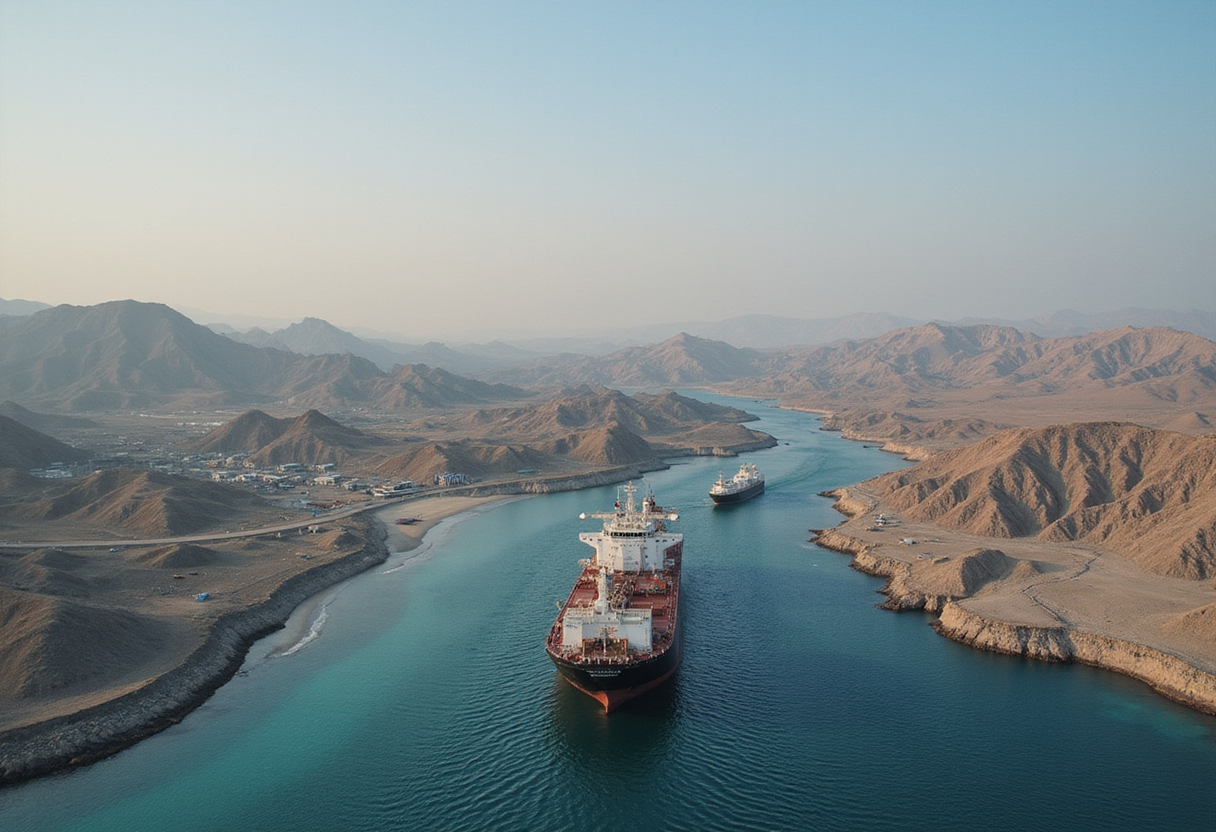
Saudi Arabia has set a target of 10 million barrels per day (bpd) for its pipeline crude export capacity, according to a Yahoo Finance report citing the Kingdom's announced plans.
The capacity figure would raise the ceiling on overland crude flows from producing fields to coastal terminals and cross-border pipeline routes. It points to a deliberate expansion beyond marine loading alone.
The plan was disclosed in early coverage carried by Yahoo Finance. The report did not state a completion date, project sanctioning status, or capital cost.
What does the headline anchor?
The announcement rests on a single operational number. Ten million bpd would lift the overland ceiling well above the throughput recorded by existing Saudi pipeline infrastructure, which carries crude to refining hubs (industrial complexes that process crude into fuels) and export terminals on both coasts.
A higher pipeline ceiling offers Saudi Aramco, the state-run national oil company, greater routing flexibility. It can sustain export volumes when tanker movements face disruption. It can reach landlocked and short-sea buyers with shorter delivery windows.
One longer sentence in this section for cadence: The 10 million bpd headline reading points to a strategic re-weighting of pipeline infrastructure in Saudi Arabia's export mix, placing overland flows on a comparable footing with long-established tanker loadings from the eastern coast.
Plain takeaway: The reframes pipelines as a strategic export channel rather than a legacy option.
How would pipeline capacity fit with current export flows?
Saudi Arabia currently exports crude through two principal corridors. Tanker loadings originate from Persian Gulf terminals on the eastern coast. Overland pipeline flows terminate at Red Sea ports on the western coast. The planned expansion would lift the overland corridor.
The integration matters for downstream buyers. Pipeline flows can bypass the Strait of Hormuz, the maritime chokepoint through which a significant share of global seaborne crude transits. Bypass capacity reduces delivery risk during maritime incidents.
Regional refiners in Asia, the Mediterranean, and the wider Middle East stand to gain optionality. Integrated downstream players with refinery assets positioned along the planned footprint would receive priority routing during periods of constrained tanker access.
A second longer sentence in this section: For Saudi Aramco and its counterparties, expanding the overland ceiling also reduces dependence on third-party shipping scheduling and tightens the link between upstream production targets and offtake reliability.
Plain takeaway: More pipeline capacity means more ways to move Saudi crude to buyers without tanker ships.
What is not yet disclosed?
The initial report carries the headline figure only. It omits project name, route selection, scheduled in-service date, capital cost, and the construction consortium responsible for execution.
Each item gates the next stage of market response. Investors will watch for the formal sanctioning step, the decision that moves the project from announcement to executed engineering, procurement, and construction (EPC) contracts. Until then, the 10 million bpd figure remains a planning target, not a sanctioned scope.
Equity analysts will also track whether the upgrade ties to Saudi Arabia's broader capacity expansion programme, the long-stated push to lift sustainable production above 12 million bpd.
Regulators will review land access, environmental permits, and cross-border tariff terms. None of those approvals appears in the current disclosure.
Plain takeaway: The headline is a target, not yet a sanctioned project.
Watch items
- Completion timing. The in-service date the Kingdom sets will move early contractor and pipe-mill order books.
- Route geography. East-to-west spine expansions differ materially from east-to-north cross-border builds in capex (capital expenditure) and permitting.
- OPEC+ posture. Pipeline optionality changes Saudi Arabia's leverage within the production-cut decisions of the Organization of the Petroleum Exporting Countries and its ten allied producers.
- Long-term offtake. Multi-year supply extensions may accompany the capacity step-up, reshaping term pricing for regional buyers.
Plain takeaway: Track the sanctioning date first. Everything else flows from it.
Olivia Hart covers Middle East upstream and export infrastructure for Rig & Refinery.
via Google News: Pipelines and midstream (Source)
More from Olivia Hart
Show full bio
Correspondent covering technology and product news in Oil and gas industry operations and markets at Rig & Refinery.
464 articles
Adjoining reports
- Saudi Arabia Targets 10 Million Bpd of Oil Pipeline Capacity
- Saudi Arabia eyes 10 million bpd pipeline export capacity
- Saudi Arabia Targets 10 Million BPD Pipeline Export Capacity
- Saudi Arabia Aims to Double Pipeline Capacity to 10 Million Bpd by 2028
- Saudi Arabia Targets 10 Million bpd Pipeline Export Capacity