Well report No. RR-3383 · T3N · R22W · SEC 27 · filed October 10, 2026
Midstream & PipelinesWell report
Saudi East-West Pipeline Back to Normal, Flows Exceed 80% Capacity
Bloomberg reports Saudi Arabia's East-West pipeline flowing normally at over 80% of 7 million bpd capacity, contradicting claims of a fresh Khurais pumping station attack.
Field notes
- East-West pipeline operating at more than 80% of its 7 million bpd capacity, leaving ~4.5 million bpd available for export
- Oil prices rose as much as 1.2% on the attack report, then pared gains after Bloomberg's denial
- Sept. 10 attacks on the pipeline in Riyadh and Medina regions triggered a precautionary shutdown
- Earlier report claimed a fresh attack on a Khurais pumping station caused extensive damage and halted flows
- Aramco and the Saudi Energy Ministry did not immediately respond to requests for comment
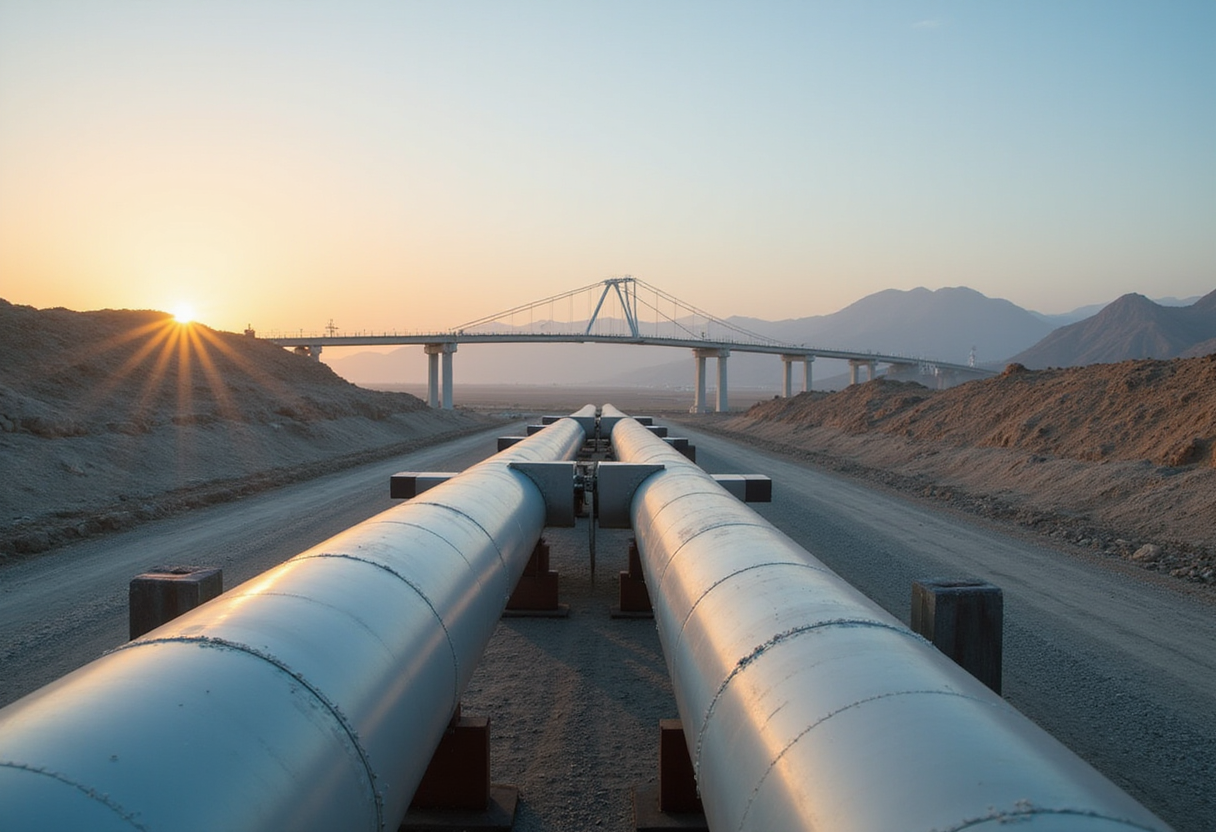
Oil is flowing normally through Saudi Arabia's East-West pipeline, Bloomberg reported Monday, after earlier reports that a fresh attack on a pumping station east of Riyadh had halted operations on the kingdom's key crude export route.
Bloomberg cited people familiar with the matter. Saudi Aramco and the Saudi Energy Ministry did not immediately respond to the news agency's requests for comment.
The conflicting reports moved markets. Oil prices had risen as much as 1.2% after the initial claim of a new attack, then pared those gains once Bloomberg reported the pipeline was operating normally.
What is the pipeline's current throughput?
Aramco had pushed flows through the line to more than 80% of its 7 million bpd capacity by late last week, according to Bloomberg. After supplying refineries on Saudi Arabia's west coast, roughly 4.5 million bpd remained available for export.
Those numbers matter because the East-West pipeline is the kingdom's Hormuz bypass. It connects eastern production facilities with Red Sea terminals, allowing crude to load without transiting the Strait of Hormuz.
What did the earlier reports claim?
Other media outlets reported Monday that a new attack on a pumping station at Khurais, east of Riyadh, had caused extensive damage and stopped flows. The claim rested on a single unnamed source working in Saudi Arabia's energy sector.
Bloomberg's account, built on multiple sources, contradicted that report on the central operational point: the crude keeps moving.
Neither Aramco nor the Energy Ministry has publicly confirmed or denied the reported Khurais incident.
What is the recent damage history?
The Saudi Energy Ministry previously confirmed that attacks on Sept. 10 targeted the pipeline in the Riyadh and Medina regions, prompting a precautionary shutdown. Operators then restored the line, with throughput climbing past the 80% mark by late last week.
The Khurais pumping station sits on the eastern leg of the system, in the same corridor as the Sept. 10 strikes in the Riyadh region.
What should traders watch next?
The watch items are straightforward. First, any formal statement from Aramco or the Energy Ministry on the reported Khurais incident — none had been issued when Bloomberg filed. Second, whether throughput on the East-West line holds above the 80% threshold in the coming days, a level that keeps roughly 4.5 million bpd of export capacity available outside Hormuz. Third, the price reaction: a 1.2% intraday swing on an unverified single-source report shows how tightly the market is pricing Red Sea logistics risk.
via aa.com.tr (Original)
More from Daniel Okafor
Show full bio
Market editor covering consumer brands and retail at Rig & Refinery.
321 articles
Adjoining reports
- East-West Pipeline throughput hits 5.8 million bpd
- East-West Pipeline Flows Uninterrupted, Source Tells Reuters
- Saudi East-West Line Carries Near 6 Million Bpd, Bloomberg Says
- Saudi Arabia Halts East-West Crude Pipeline After Drone Strikes
- Saudi Arabia Puts East-West Pipeline Throughput at 5.8 Million Bpd