Well report No. RR-4225 · T21N · R16W · SEC 9 · filed October 10, 2026
Midstream & PipelinesWell report
Saudi pipeline outage puts 4% of world oil supply at risk
Reuters reports a Saudi pipeline outage could remove 4% of global oil supply from the market. Saudi Aramco and the Ministry of Energy had not confirmed the line, the segment, or the restart window at press time.
Field notes
- Reuters reports a Saudi pipeline outage could remove 4% of global oil supply from the market
- Tonnage exposure implied near 4 million bpd depending on the consumption baseline applied
- Affected pipeline, operator, cause, and restart window remain unconfirmed in the alert
- Saudi Aramco and Ministry of Energy had not issued confirmation statements at press time
- Watch items include Brent and Dubai/Oman spread reaction and IEA stock-release coordination
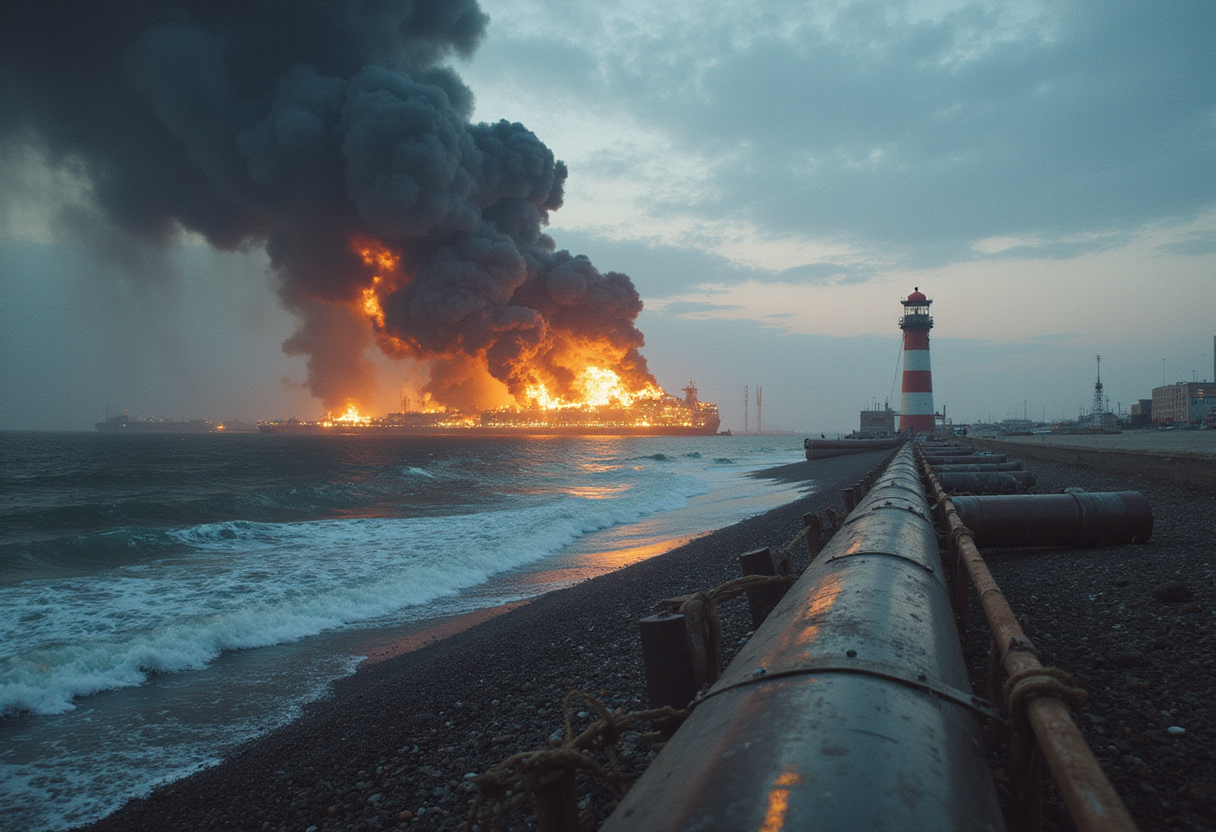
A Saudi Arabian pipeline outage could remove 4% of global oil supply from the market, according to a Reuters report flagged by trade desks. The headline figure — 4% of world supply — places the incident in the category of material supply disruptions that move benchmark crude futures within hours of operator confirmation.
At writing, the Reuters alert available to Rig & Refinery did not identify the affected pipeline, the operator, the cause, or the expected duration. The 4% number is the only quantified element in the headline. Until Saudi Aramco or the Ministry of Energy publishes a statement, traders and analysts should treat the figure as a reported risk assessment rather than a confirmed outage tally.
A 4% slice of global supply, applied to most published baselines for liquids consumption, implies roughly 4 million bpd of physical barrels at risk. The exact denominator Reuters used in its calculation is not stated in the alert.
Which pipeline is at risk?
Saudi Arabia operates two principal crude export corridors from the Eastern Province: the East-West Pipeline (Petroline), which carries crude across the kingdom to Yanbu on the Red Sea coast for export through the Bab el-Mandeb strait, and the marine loading terminals at Ras Tanura and Ju'aymah on the Persian Gulf. A separate domestic product network feeds the kingdom's refineries. Reuters did not name the affected system.
Who confirms Saudi supply disruptions?
Operator confirmation typically comes from Saudi Aramco, the state oil company that owns and operates the kingdom's upstream and midstream infrastructure. The Ministry of Energy issues parallel statements on supply policy. Both communicate through the Saudi Press Agency wire. Confirmation on this incident had not appeared at the time of writing.
How would the market react?
Brent front-month futures and the Dubai/Oman benchmark respond to confirmed Saudi supply changes within the same Asian trading session. A validated 4% headline figure would be sufficient to trigger a single-digit dollar move in front-month ICE Brent. Asian buyer tender activity — Indian state refiners, Japanese utilities, Korean importers — flexes within 48 to 72 hours of a confirmed Saudi disruption as buyers seek replacement cargoes.
Watch items
- Saudi Aramco confirmation naming the line, the segment, and the restart window
- Ministry of Energy or OPEC+ Secretariat statement on supply policy
- Brent and Dubai/Oman spread behaviour in the next trading session
- IEA statement on stock-release coordination, if any
- Asian and European buyer tender response over the following week
This is a developing story. Rig & Refinery will publish an update once Saudi Aramco or the Ministry of Energy confirms the line, the duration, and the supply impact.
via Google News: Pipelines and midstream (Source)