Well report No. RR-7029 · T3N · R4W · SEC 3 · filed October 10, 2026
Upstream Drilling & ProductionWell report
Trump exempts oil drillers from Endangered Species Act review
The Trump administration invoked special executive powers on Wednesday to exempt oil and gas drilling operators from Endangered Species Act review, according to ABC7 San Francisco. The carve-out targets Section 7 consultation on federal upstream permits.
Field notes
- Trump administration invoked special executive powers to exempt oil drillers from ESA review, per ABC7 San Francisco
- Section 7 formal consultation runs 90 days plus 45 days for a Biological Opinion
- Carve-out targets federal permits issued by BLM, BOEM, and the U.S. Forest Service
- White House did not disclose which statutory authority underpins the exemption
- Past ESA rollbacks have triggered injunctions and court filings within weeks of publication
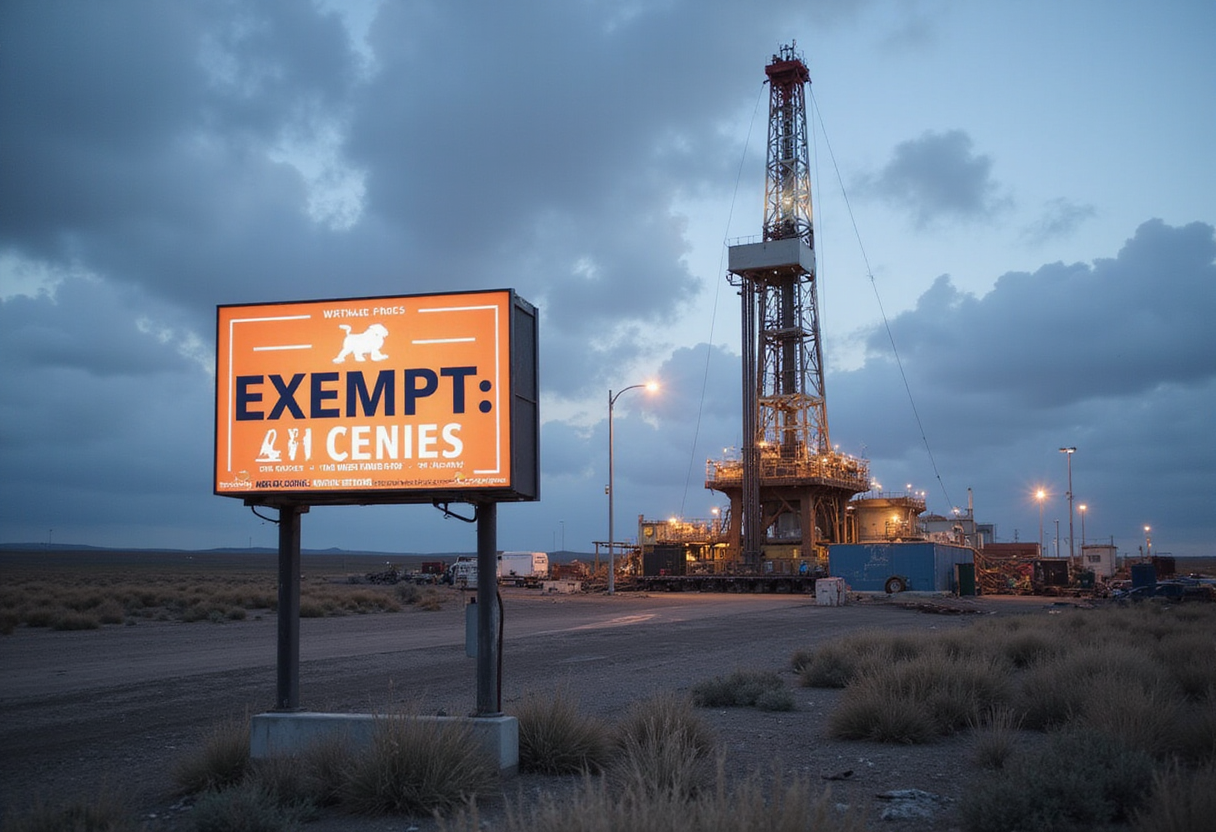
The Trump administration moved on Wednesday to exempt oil and gas drilling operators from Endangered Species Act review by invoking special executive powers, according to ABC7 San Francisco.
The proclamation targets upstream project authorizations that would normally trigger Section 7 consultation between the issuing federal agency — typically the Bureau of Land Management, the Bureau of Ocean Energy Management, or the U.S. Forest Service — and the U.S. Fish and Wildlife Service or NOAA Fisheries. ABC7's initial reporting did not detail which statutory authority the White House is invoking, which companies or basins are affected, or when the exemption takes effect.
What Section 7 consultation actually does
The ESA, enacted in 1973 and amended in 1982, requires every federal agency to ensure its actions do not jeopardize listed species or destroy critical habitat. For oil and gas, the practical lever is informal or formal consultation on:
- Applications for Permit to Drill on federal and split-estate lands
- Exploration and development plans on the Outer Continental Shelf
- Rights-of-way grants for access roads, pipelines, and gathering lines
- Lease sale environmental impact statements under NEPA
The clock starts the day the agency submits its biological assessment. Informal consultation can close in days with a "may affect, not likely to adversely affect" finding. Formal consultation runs 90 days, plus 45 days for the Service to issue a Biological Opinion.
That timeline is the political flashpoint. Industry argues consultation backlogs have cost operators hundreds of millions of dollars in deferred production. Environmental litigants argue it is the only mechanism that has consistently halted ill-considered federal leasing decisions, including the 2008–2014 Mineral Management Service cases and the 2015–2017 Arctic drilling injunctions.
The three plausible authorities
Presidential carve-outs from ESA review for energy projects have historically drawn on:
- The National Emergencies Act, allowing the President to declare an energy supply emergency and direct agencies to bypass conflicting statutes.
- Defense Production Act authorities, used in prior administrations to expedite energy infrastructure deemed essential to national security.
- Statutory waivers within the Energy Policy Act, Mineral Leasing Act, or Outer Continental Shelf Lands Act — narrower in scope and harder to litigate.
The Wednesday announcement most likely relies on the first or second authority, both of which trigger immediate legal vulnerability. Past invocations have been enjoined within weeks when plaintiffs demonstrated no underlying emergency existed.
Litigation risk
Environmental plaintiffs have used Section 7 consultation as a procedural foothold for decades. Exempting oil and gas eliminates that foothold on exempted actions, but it transfers the legal dispute to whether the White House held the underlying authority to issue the exemption. That question turns on statutory text the public has not yet seen.
The Department of Justice's Environment and Natural Resources Division will almost certainly face challenges in U.S. District Court for the District of Columbia within 30 days. Past ESA rollbacks have attracted filings within 72 hours of Federal Register publication.
What operators need next
For upstream operators with active federal drilling programs, three operational items follow:
- BOEM and BLM field-office guidance on processing permits that previously sat in Section 7 queue
- Clarification on whether the exemption applies retroactively to permits already under consultation
- Treatment of state-level ESA analogues, particularly in California, where state law tracks but does not mirror the federal statute
The exemption does not by itself approve any specific well or project. It removes one procedural step in a chain that still includes NEPA review, air-quality permitting, and tribal consultation. Operators should expect shorter permit-to-spud timelines on routine APDs, with contested projects in habitat-dense acreage — sage-grouse range, caribou calving grounds, sea-turtle nesting beaches — moving into litigation rather than agency review.
Watch items
- Federal Register publication of the proclamation text
- District Court filings by environmental plaintiffs in DDC or NDCA
- BOEM and BLM implementation guidance to field offices
The first publication controls. Everything downstream — operator planning, agency workload, court dockets — keys off the actual statutory language.
via Google News: Oil drilling and production (Source)
More from Elena Vasquez
Adjoining reports
- Senate Probe Targets 'God Squad' Waivers for Oil Drilling
- Trump weighs Arctic drilling carve-out from environmental review
- EPA's 'God Squad' Clears Gulf Drilling Past Endangered Species Act
- Conservation Groups Sue Over Pipeline Permit as Offshore Rally Nears
- Trump Moves to Roll Back Obama-Era Arctic Offshore Drilling Rules