Well report No. RR-7281 · T5N · R17W · SEC 5 · filed October 10, 2026
Petroleum MarketsWell report
U.S. Energy Secretary terms Saudi pipeline closure a 'brief interruption'
U.S. Energy Secretary expects a Saudi crude pipeline closure to resolve in days, not weeks, calling the event "a brief interruption" in comments to CNBC. Saudi Aramco has yet to publicly identify the affected line.
Field notes
- A Saudi crude pipeline remains closed as of the CNBC report
- U.S. Energy Secretary characterised the closure as "a brief interruption that will last days"
- Statement was delivered in an interview carried by CNBC
- CNBC did not name the affected pipeline or specify the segment taken offline
- Saudi Aramco is the operator of the kingdom's domestic trunkline network
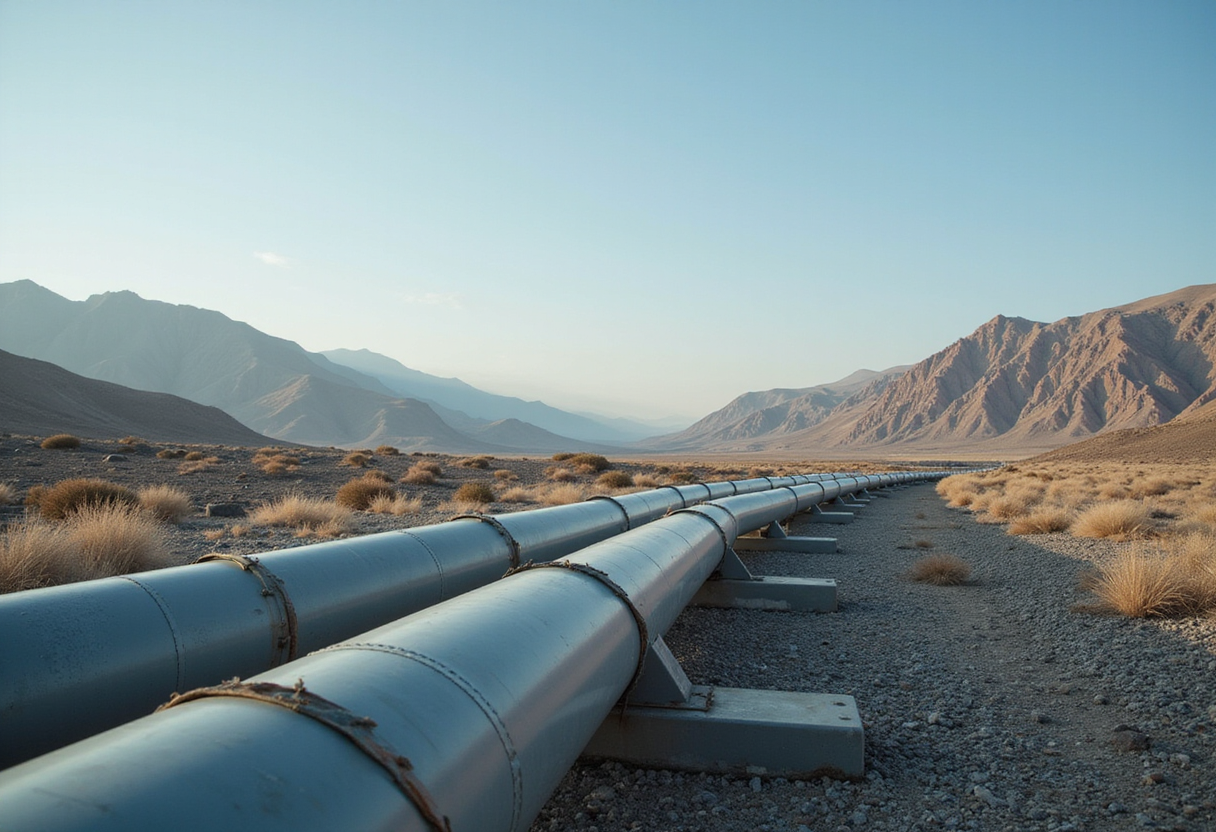
A Saudi crude pipeline remains closed as the U.S. Energy Secretary predicts the outage will resolve "in days" rather than stretch into weeks, calling the disruption "a brief interruption" in comments carried by CNBC.
The cabinet head's framing — delivered in an interview with the network — is the first official U.S. read on the duration of the shutdown. It lands while traders weigh whether the affected line returns inside a maintenance window or stretches into a longer outage that affects loadings at Saudi export terminals on the Red Sea and the Persian Gulf.
How did the secretary frame the closure?
The secretary characterised the event as "a brief interruption that will last days" in his CNBC appearance. He signalled an expectation that operators restore service on a compressed schedule rather than carry out a multi-week repair that would push the line into a longer absence.
The wording matters because pipeline incidents on the kingdom's domestic network carry different implications depending on cause. A controlled-maintenance window, a localised mechanical issue, and an attack-related closure each position an outage on a different point of the duration spectrum, with a different read-through to the seaborne crude balance.
By anchoring the event at "days" rather than "weeks," the secretary placed the shutdown at the short-duration end of that range.
The CNBC report did not name the affected pipeline or specify which segment has been taken out of service. That detail sits with Saudi Aramco, the operator of the kingdom's trunkline network.
What is the network at issue?
Saudi Aramco's domestic pipeline system moves crude eastward and westward to export facilities on both coasts. Eastern trunklines feed Gulf-loading terminals that supply Asian and Atlantic-basin buyers with Arab Light and Arab Medium grades. Western trunklines deliver barrels to Red Sea terminals served by smaller tankers that bypass the Strait of Hormuz chokepoint.
A pipeline event that confines itself to a single segment and resolves on a days-long schedule would not, on its own, force a rerouting of cargoes.
An outage that extends, or that hits a chokepoint segment on either coast, would tighten the physical market by removing barrels from a specific loading programme. The secretary's framing points toward the first outcome.
What are traders watching next?
- Saudi Aramco statement: the operator's confirmation of the pipeline name, the cause of the shutdown, and an expected restart date is the single most important near-term print.
- Terminal loadings: confirmation that scheduled cargoes at the affected and adjacent terminals continue on programme will reinforce the short-event read.
- Follow-up U.S. Energy Department comment: any narrowed definition of "days" — whether closer to two or closer to ten — will reset the duration assumption.
- Brent–Dubai spread: widening would imply traders pricing absence of light-sour barrels; sideways action confirms the short-event read.
- OPEC+ ministerial calendar: the next ministerial agenda and any communique language touching Saudi infrastructure are the longer-dated markers.
What changes for upstream and downstream desks?
For upstream desks, a days-long pipeline event does not by itself change the kingdom's posture within the OPEC+ supply framework. Saudi oil policy moves on ministerial communiques and voluntary production decisions, not on trunkline incidents that resolve inside a planned-maintenance cycle.
For downstream desks, the question is whether the affected line ties to a specific grade and a specific loading terminal. Once Aramco publishes the operator statement, crude buyers can adjust spot-tender exposure and reroute cargoes through alternative loading points on the same coast.
Until that operator print, the market trades the secretary's framing.
What is the watch item?
Saudi Aramco's next operator statement is the cleanest signal in the pipeline. A confirmed pipeline name, cause, and restart date will either validate the Energy Secretary's "days" framing or expose it as an optimistic read. The OPEC+ calendar and the next Brent–Dubai spread print will then carry the trade into the following session.
via Google News: Pipelines and midstream (Source)
More from James Calloway
Show full bio
Staff writer covering industry trends and analytics at Rig & Refinery.
400 articles
Adjoining reports
- Drone-Hit Saudi Pipeline Faces Weeks Offline, Curbing Oil Flows
- Saudi key oil pipeline shut for weeks, MBS under pressure
- Crude Slips as US Says Stricken Saudi Pipeline to Restart in Days
- Saudi Arabia says key Red Sea oil pipeline is back online
- Drone Attack Forces Saudi Arabia to Shut Critical Oil Pipeline