Well report No. RR-3140 · T10N · R19W · SEC 34 · filed October 9, 2026
Refining & PetrochemicalsWell report
Ukraine Reports Strike on Fourth Russian Refinery in a Week
Ukraine says it struck a fourth Russian refinery in one week, extending its drone campaign against Russian downstream capacity. Facility name and outage scope remain unconfirmed.
Field notes
- Ukraine claims it attacked a fourth Russian refinery within a single week
- Kyiv frames the strikes as pressure on Russian fuel-export revenue and military logistics
- Independent confirmation of damage and outage duration remains unavailable
- Russia's refining sector had roughly 6-7 million bpd of installed capacity before the campaign
- Watch items: facility identification, any Russian fuel-export restrictions, and reduced product loadings
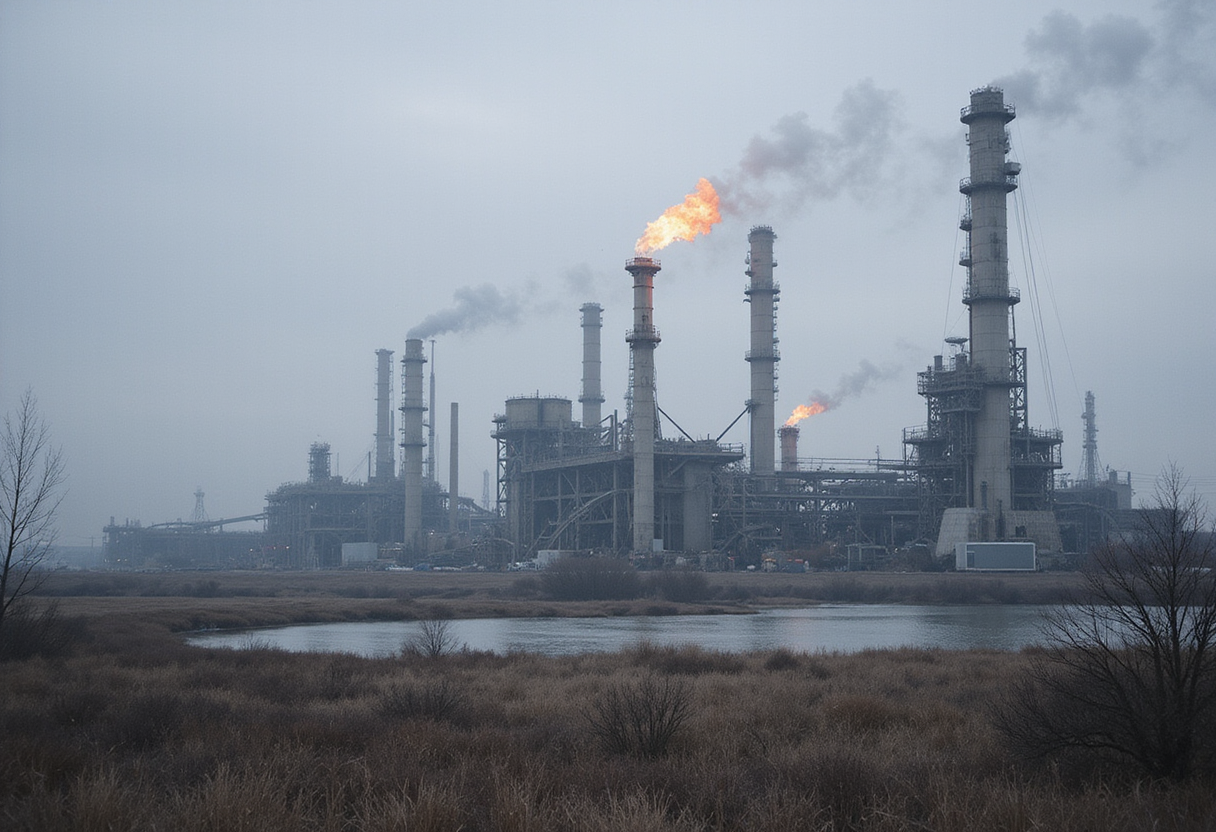
Ukraine said it attacked a fourth Russian refinery this week, extending what Kyiv presents as a sustained campaign against Russia's downstream sector even as Moscow has yet to confirm the full extent of the damage.
The claim, reported by Rigzone, puts the number of Russian refineries Kyiv says it has struck within a single week at four. Ukrainian officials have framed the strikes as pressure on Russia's fuel-export revenue and its military logistics. As with previous attacks, independent verification of damage and outage duration remains limited, and Russian authorities have not released a consolidated accounting of affected capacity.
What does the claim signal about the campaign's pace?
A four-strike week, if confirmed, would mark an intensification of the drone campaign that has targeted Russian refining assets since early 2024. Ukraine's security service (SBU) and defense intelligence have repeatedly claimed responsibility for long-range strikes on refineries across western and southern Russia.
The operational significance for oil markets lies in run cuts. Each damaged crude distillation unit or hydrotreater takes weeks to months to repair, depending on whether the hit affected a furnace, a column, or ancillary units. Russian refineries hit earlier in the campaign — among them facilities in the Volga and southern districts — have oscillated between partial runs and full shutdowns during repair windows, according to company statements and Russian government export bans on gasoline at various points.
For a fourth strike in one week, the market-relevant questions are straightforward:
- Which refinery was hit, and at what crude capacity?
- Did the strike force a full or partial run cut?
- Will the outage trigger another Russian fuel-export restriction?
None of those answers was immediately available from the Ukrainian claim as reported.
How have previous refinery strikes moved the balance?
Russia's refining sector — roughly 6-7 million bpd of installed capacity before the campaign began, according to industry statistics — has absorbed repeated strikes over the past two years. The consequences have shown up in export patterns: Russia has banned gasoline exports temporarily in past periods of refinery disruption and leaned on its crude-export flexibility, selling barrels that cannot be processed at home.
That dynamic matters for diesel and fuel oil traders. Russian refinery outages historically tighten the global middle-distillate balance, supporting refining margins in Northwest Europe and the US Gulf Coast, which compete with Russian export barrels. Analysts attribute the margin impact on a case-by-case basis; the size of any single outage, not the strike count alone, drives the price response.
"Ukraine says it attacked" is the operative framing. Kyiv's strike claims have sometimes overstated damage, and Russian confirmations tend to lag or minimize. Trade-press practice is to treat both sides' claims as data points, not verified outages.
What is the watch item?
Watch for three things in the coming days. First, satellite imagery or Russian regional statements that confirm fire or damage at the named facility. Second, any Russian government move to adjust fuel-export quotas or reimpose export bans, which would signal domestic supply stress. Third, cargo-tracking data showing diversions or reduced product loadings from the affected refinery's nearest port.
Until a facility is named and a capacity figure attached, the fourth-strike claim remains a tactical signal rather than a market event. The margin implication will be measurable only once run cuts — if any — translate into fewer export barrels.
via Google News: Refineries and petrochemicals (Source)
More from James Calloway
Show full bio
Staff writer covering industry trends and analytics at Rig & Refinery.
175 articles
Adjoining reports
- Ukraine Hits Six Russian Refineries and a Defense Plant in One Week
- Ukraine hits Russian defense plants, oil sites in overnight strike
- Ukraine Strikes Fourth Russian Refinery in a Week
- Ukrainian Drones Hit Major Russian Refineries and Defence Plant
- Drone Strike Halts Operations at Another Russian Refinery