Well report No. RR-2038 · T8N · R13W · SEC 8 · filed October 10, 2026
Midstream & PipelinesWell report
WBI Energy Sanctions $3 Billion Bakken East Gas Pipeline
WBI Energy reaches FID on the $2.7-3.2 billion Bakken East Pipeline, a 350-mile, 1.4 Bcf/d gas line from Watford City to Fargo, with first service targeted for late 2029.
Field notes
- MDU Resources board reached positive FID on the $2.7-3.2 billion Bakken East Pipeline
- The 350-mile line will carry 1.4 Bcf/d of natural gas from the Bakken to the Fargo area
- First phase targets late 2029 startup; full completion expected late 2030
- North Dakota committed up to $50 million annually for 10 years for about 11% of initial capacity
- FERC pre-filing environmental review is still pending before construction can begin
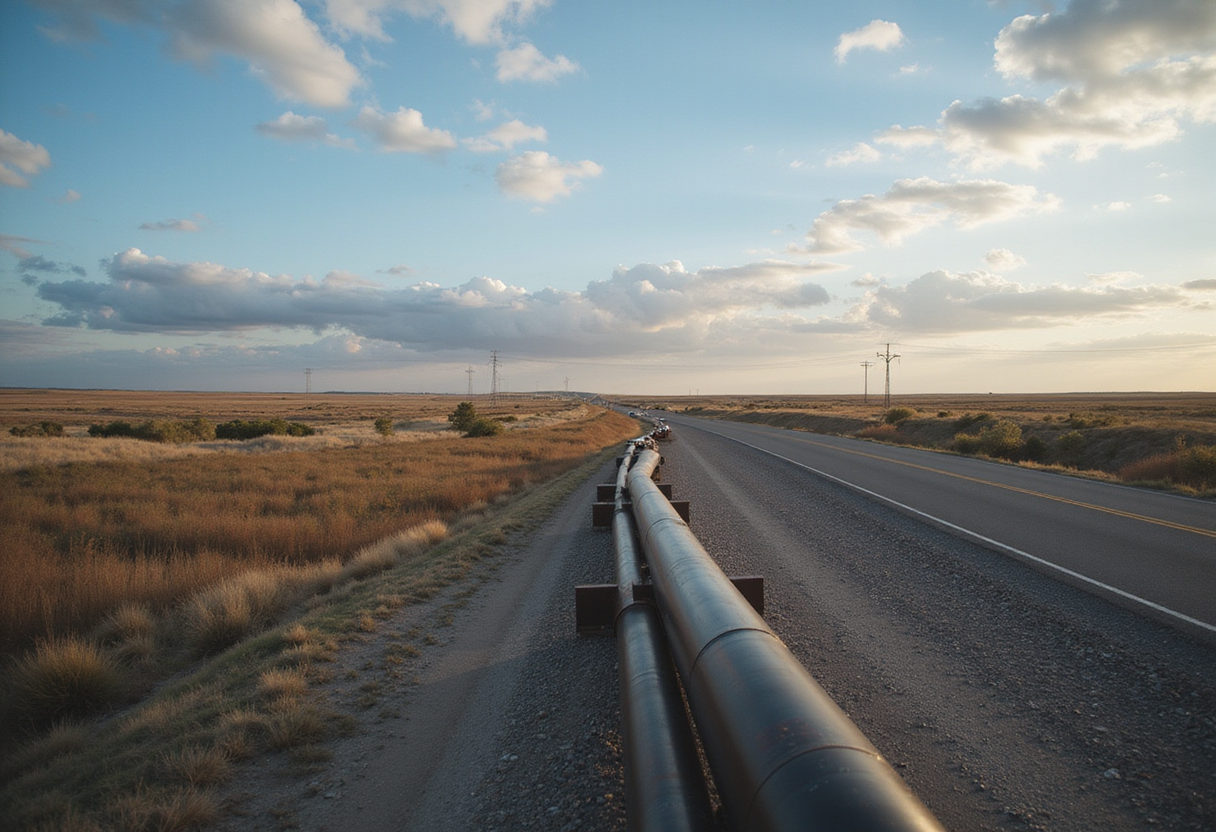
WBI Energy has sanctioned a $2.7-3.2 billion pipeline designed to move 1.4 billion cubic feet of natural gas per day roughly 350 miles across North Dakota, from the Bakken near Watford City to the Fargo area. MDU Resources Group, WBI's parent, announced Wednesday that its board reached a positive final investment decision on the Bakken East Pipeline — one of the largest energy infrastructure projects proposed in the state in recent years.
The company is evaluating debt and equity financing structures, including potential partnership agreements, to fund the build.
"Reaching FID on the Bakken East Pipeline Project marks a significant milestone in our commitment to expanding critical natural gas infrastructure in the region," MDU Resources President and CEO Nicole Kivisto said.
What does the project include?
- Approximately 350 miles of 36- or 42-inch mainline pipeline
- About 21 miles of lateral pipelines
- New or modified compressor facilities
The route begins near Watford City and runs east to WBI Energy's existing compressor station near Mapleton, west of Fargo. Construction is phased between 2028 and 2030. The first phase, from the Bakken to central North Dakota, targets entry into service in late 2029. The eastern portion should be complete in late 2030.
WBI Energy designed the system to accommodate additional capacity if future demand warrants expansion.
How is the state backing the project?
North Dakota has already committed public money. The North Dakota Industrial Commission voted unanimously in August 2025 to participate through the state's pipeline capacity purchase program, a program the Legislature expanded during the 2025 session.
Under the agreement, the state committed to purchase roughly 11% of the pipeline's initial transportation capacity at a cost of up to $50 million annually for 10 years. The program lets the state buy pipeline capacity to help major infrastructure projects secure the long-term commitments needed to proceed.
The commission — Gov. Kelly Armstrong, Attorney General Drew Wrigley and Agriculture Commissioner Doug Goehring — praised WBI Energy's decision Wednesday.
"As North Dakota's natural gas production continues to grow, projects like Bakken East are important to supporting long-term oil development, improving statewide energy reliability, and creating new opportunities for consumers, industry, electric generation, and value-added manufacturing across our state," the commission said in a joint statement.
Why does the Bakken need the capacity?
The pipeline addresses growing associated gas production from oil development in western North Dakota. Natural gas comes out of the ground alongside oil from Bakken wells, forcing producers to capture, process and transport rising volumes as development continues.
North Dakota Pipeline Authority Executive Director Justin Kringstad said the additional transportation capacity would support continued natural gas capture while expanding access to Bakken gas for communities and businesses statewide.
What stands between FID and construction?
Federal approval. The Federal Energy Regulatory Commission accepted Bakken East into its pre-filing environmental review process earlier this year, and WBI Energy must complete the federal regulatory and environmental review before construction can proceed.
The company said it will continue working with landowners, regulators and other stakeholders as the project advances.
If regulatory approvals come through and the current schedule holds, the first phase could begin transporting natural gas in late 2029, with the full pipeline reaching eastern North Dakota in late 2030. The watch item: FERC's environmental review timeline, which will determine whether that phased construction window survives intact.
via Google News: Pipelines and midstream (Source)