Well report No. RR-8034 · T6N · R29W · SEC 6 · filed October 13, 2026
Midstream & PipelinesWell report
$15 Billion Hormuz-Bypass Pipeline Plan Tied to Envoy's Finances
U.S. News & World Report says a Trump envoy kept financial ties to the firm behind a $15 billion pipeline meant to bypass the Strait of Hormuz. No capacity disclosed.
Field notes
- $15 billion reported capital cost of the Hormuz-bypass pipeline plan
- U.S. News & World Report alleges a Trump envoy kept financial ties to the sponsoring firm
- No capacity, route, or timeline disclosed in the reporting
- Allegation rests on a single outlet's account as of publication
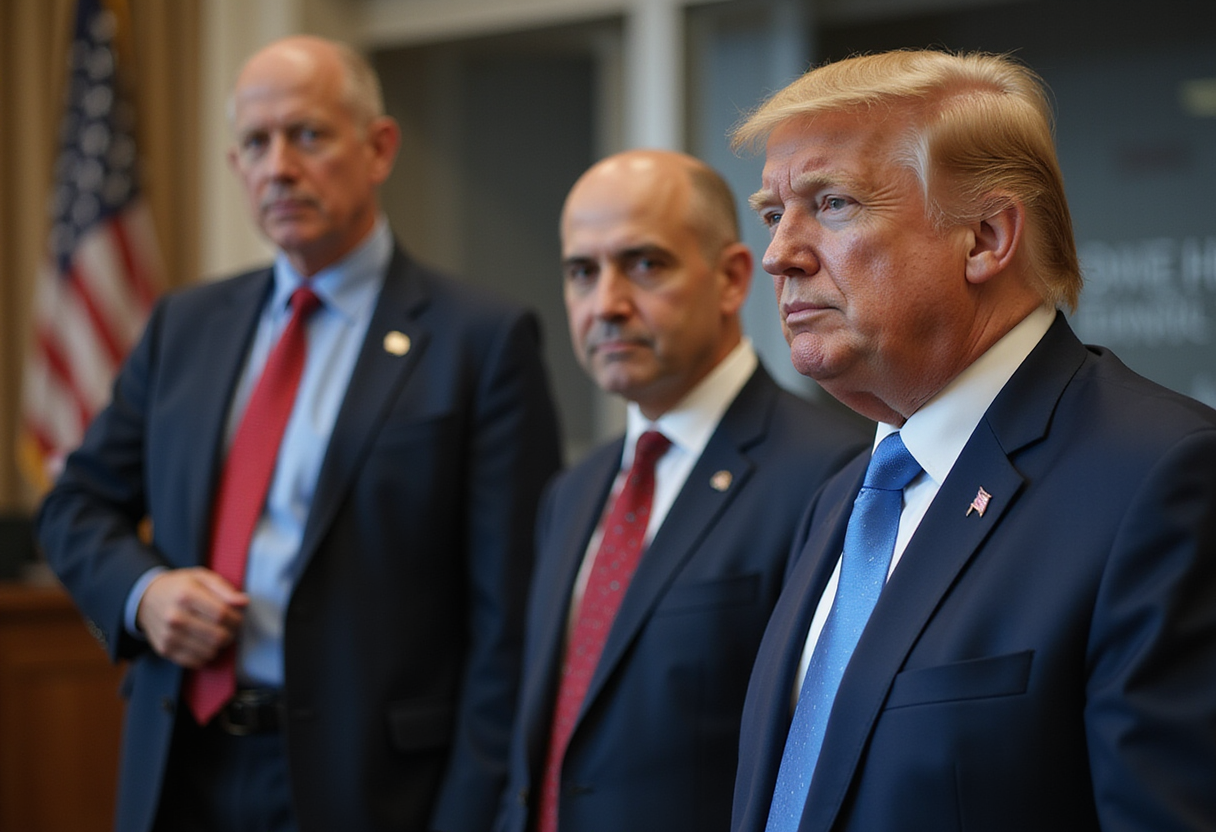
A $15 billion oil pipeline designed to bypass the Strait of Hormuz sits at the center of a disclosure controversy. U.S. News & World Report reports that a Trump administration envoy retained financial ties to the firm behind the plan.
The number matters. Fifteen billion dollars is the reported capital cost of a route meant to move crude around the world's most trafficked oil chokepoint. The Strait of Hormuz handles roughly a fifth of global oil supply, so any bypass carries strategic weight far beyond its barrels-per-day figure — which the reporting does not specify.
What does the report actually allege?
The core claim is conflict-of-interest adjacency. An envoy tasked with regional diplomacy kept a financial relationship with a company pursuing the pipeline. U.S. News & World Report's reporting is the source for the allegation, and this desk treats it as an allegation until corroborated.
What the report does not say is equally important:
- It does not name the envoy's specific holdings or their value.
- It does not state whether the ties were disclosed in ethics filings.
- It does not give the pipeline's route, capacity in barrels per day, or construction timeline.
- It does not say whether the project has any sanctioning government body behind it.
That's a thin factual base for a $15 billion story. But conflict questions of this type have derailed bigger projects.
Where does this fit on the map?
A Hormuz bypass means one of two geographies in practice. Either an overland line from the Gulf side of the strait to an export terminal on Oman's Arabian Sea coast, or a route across the United Arab Emirates to Fujairah — the existing crude terminal that already sits outside the chokepoint.
The report does not specify which. Readers should not assume the Fujairah corridor; that's the historical precedent, not the reported plan. Pipelines pitched at $15 billion imply something far larger than the UAE's existing 1.8-million-bpd Habshan-Fujairah line, though again, no capacity figure appears in the reporting.
How does the pipeline business treat this?
Sanctioned megaprojects and paper pipelines live in different universes. Until an operator files front-end engineering, locks an offtake structure, and names an EPC (engineering, procurement and construction) contractor, a $15 billion figure is a promoter's number. Appraisal-stage speculation is exactly that.
The envoy's alleged financial tie matters because envoy-level diplomacy is often what moves such paper projects toward host-government agreements. If the envoy held a stake in the sponsoring firm, that diplomacy acquires an asterisk.
U.S. News & World Report's account is the sole sourcing here. No company statement, no envoy response, and no regulatory filing confirmation appears in the material this desk has reviewed.
What is the watch item?
Watch for three things. First, any ethics-filing or Office of Government Ethics record clarifying the envoy's holdings. Second, any host government — Oman, the UAE, or Saudi Arabia — acknowledging the route. Third, a capacity number in barrels per day, without which the $15 billion sticker cannot be stress-tested against comparable lines.
Until one of those lands, the story is a governance question, not a construction story.
By Priya Raman
via Google News: Pipelines and midstream (Source)
More from Priya Raman
Show full bio
Senior reporter covering technology and product news in Oil and gas industry operations and markets at Rig & Refinery.
471 articles
Adjoining reports
- Trump envoy held ties to $15bn Hormuz-bypass pipeline firm
- Envoy kept financial ties to firm behind $15bn Hormuz-bypass pipeline
- Iran Conflict Drives Billions Into New Oil Pipeline, Port Projects
- Oil Slides as Saudi Pipeline Plans, Hormuz Talks Weigh on Market
- Oil Prices Climb as Hormuz Standoff and Trump Attack Threat Weigh