Well report No. RR-8479 · T11N · R40W · SEC 11 · filed October 10, 2026
OffshoreWell report
Alaska Court Rejects Challenge to Offshore Drilling Expansion Plan
Judge Sharon Gleason dismissed an early-stage challenge to Trump's offshore leasing push; Gulf bids of $83 million trail December's $279 million as output is set to fall 4.5% annually.
Field notes
- U.S. District Judge Sharon Gleason dismissed the offshore drilling lawsuit on Monday, ruling drilling has not yet begun.
- Gulf of Mexico lease bids reached nearly $83 million this month, versus $47 million in March and $279.4 million in December.
- DOE projects offshore production declining about 4.5% annually to average 1.89 million bpd next year.
- Santos loaded 450,000 barrels from the Pikka development on the North Slope earlier this month.
- Active Alaska oil and gas production projects carry a combined investment value of about $32 billion, per IIR.
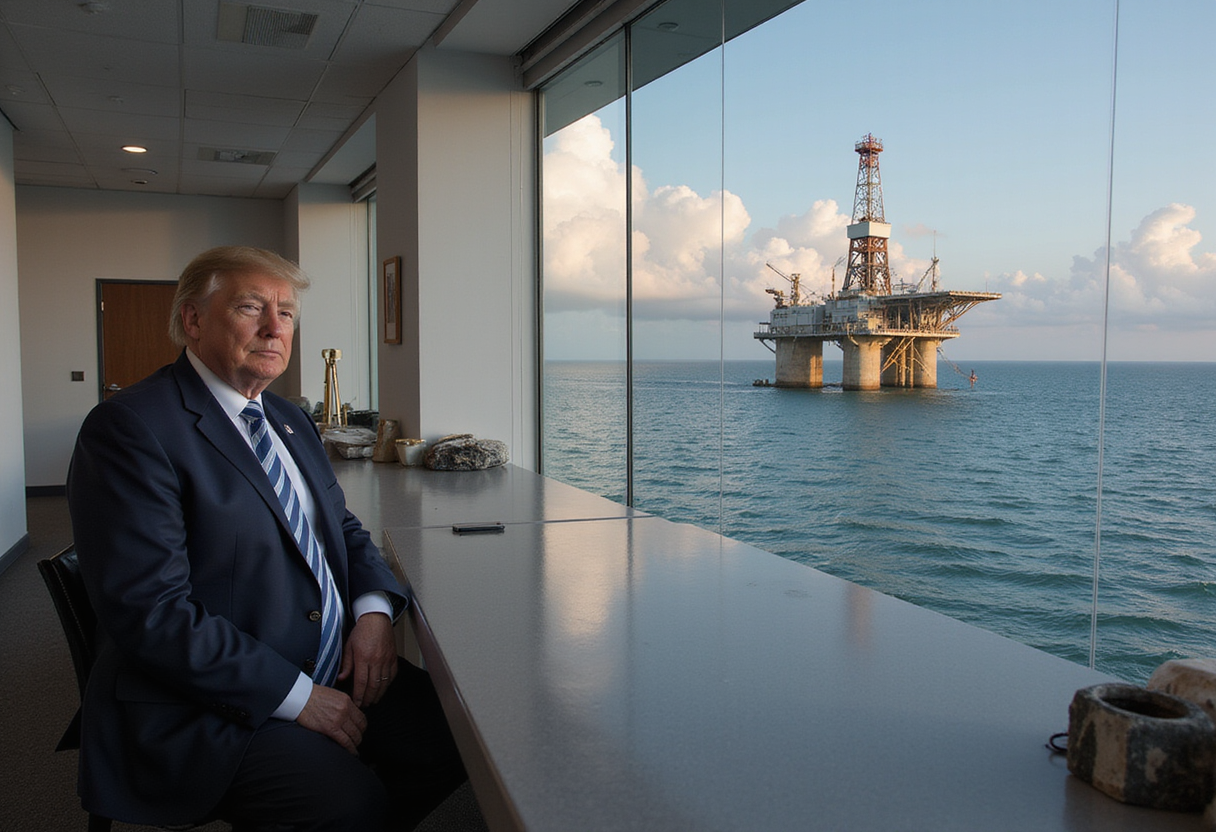
A U.S. district court judge in Alaska on Monday dismissed a lawsuit by environmental groups against the Trump administration's offshore drilling push, ruling that the challenge came too early because no drilling has started and no specific lease sales include the contested acreage yet.
Judge Sharon Gleason of the U.S. District Court for the District of Alaska found that while the federal government will likely keep issuing offshore permits, several steps remain before any drilling begins. "Presently, the Court can only speculate as to whether any of the previously withdrawn (outer continental shelf) acreage will be included in any new oil and gas leasing program or proposed lease sale," she wrote, according to Reuters.
What does the ruling change?
In practical terms, the decision removes one legal obstacle to the administration's plan to open previously withdrawn outer continental shelf areas — including Arctic waters off Alaska and the eastern Gulf of Mexico off Florida — to leasing. But it does not accelerate any specific sale. The acreage still has to pass through a new five-year leasing program before it reaches the auction block.
Earthjustice, the advocacy group behind the suit, said it was disappointed by the decision, arguing the administration has done "everything in its power" to open the shelf to drillers. President Donald Trump overturned offshore drilling moratoriums enacted by his predecessors in one of his first acts of his second term.
The plaintiffs had argued that harm begins before the drill bit turns — marine species face risk from seismic surveys that precede upstream activity. The court declined to weigh that claim at this stage.
Is there commercial appetite for the acreage?
Recent Gulf of Mexico lease results suggest qualified interest at best. Bidders put forward nearly $83 million in high bids at a sale earlier this month, up from $47 million at the March auction — but far below the $279.4 million in high bids drawn at a December sale.
Political friction is also building on the Florida side of the eastern Gulf. In December, the state's entire congressional delegation, including its Republicans, warned against drilling off the Florida coast, and Governor Ron DeSantis urged the administration to honor a ban on drilling off the state's western shores until 2032.
The production backdrop complicates the sales pitch. U.S. territorial waters of the Gulf of Mexico account for roughly 15% of domestic crude output, and the U.S. Department of Energy's monthly report projects offshore production will decline about 4.5% annually to average 1.89 million bpd next year.
Where does Alaska stand?
Alaska's production peaked at 2 million bpd in 1998 and has averaged below 1 million bpd since 2003. Proved reserves stand at more than 3.1 billion barrels, the fourth-largest of any U.S. state.
Onshore, Industrial Info Resources (IIR) counts active oil and gas production projects in Alaska with a combined investment value of about $32 billion. ConocoPhillips leads the largest: the Willow Bear Tooth development in the National Petroleum Reserve-Alaska, which calls for a central processing facility, five drill sites, five infield pipelines and associated infrastructure. Ice roads and a temporary island are required to work the tundra in the far north, and IIR says Willow could be completed before the end of the decade.
The North Slope already has new barrels moving. Australian operator Santos loaded 450,000 barrels of oil from the Pikka development onto the Polar Resolution earlier this month — the project's inaugural cargo, bound for the U.S. West Coast.
The watch item
The next signal for the offshore push is procedural, not judicial: whether the administration's next five-year leasing program actually lists any of the previously withdrawn Arctic or eastern Gulf acreage for a proposed sale — and whether future Gulf auctions draw bids closer to December's $279 million than March's $47 million.
via iir.link (Original)
More from Priya Raman
Show full bio
Senior reporter covering media and advertising at Rig & Refinery.
381 articles
Adjoining reports
- US Judge Dismisses Challenge to Offshore Drilling Expansion Plan
- Alaska Refuge Lease Auction Opens Coastal Plain Acreage to Drilling
- US Government Appeals Ruling That Halted Alaska Caribou-Area Drilling
- US Judge Dismisses Challenge to Offshore Drilling Expansion Plan
- Enviros sue Trump over Gulf of Mexico drilling approval