Well report No. RR-9657 · T19N · R49W · SEC 31 · filed October 14, 2026
Refining & PetrochemicalsWell report
Amiral: TotalEnergies Bets on Refinery-Linked Petrochemicals at Jubail
TotalEnergies has detailed Amiral, a petrochemical complex drawing feedstock directly from the 400,000-bpd SATORP refinery at Jubail, extending the Aramco venture into polymers.
Field notes
- Amiral is a petrochemical complex integrated with the SATORP refinery at Jubail, Saudi Arabia.
- SATORP operates a 400,000-barrel-per-day refinery processing primarily Arabian heavy crude.
- The complex will take feedstock directly from refinery streams rather than purchased naphtha.
- The project is structured as a joint venture between TotalEnergies and Saudi Aramco.
- Startup timing and polymer capacity details remain the key watch items for the market.
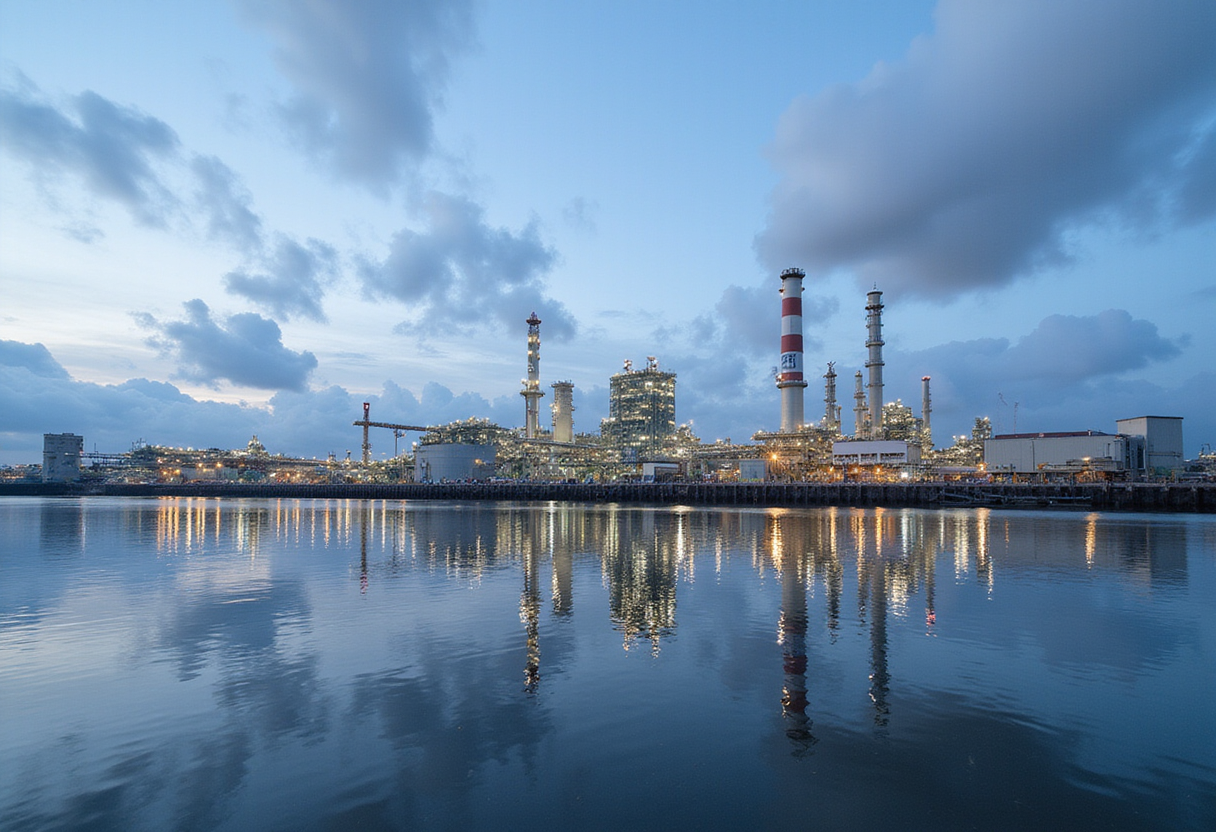
TotalEnergies has detailed Amiral, a petrochemical complex designed to operate as a fully integrated extension of the SATORP refinery at Jubail on Saudi Arabia's eastern coast. The project's defining feature is structural, not incremental: the complex will draw its feedstock directly from the adjacent refinery rather than from imported naphtha or purchased ethane.
SATORP (Saudi Aramco TotalEnergies Refining and Petrochemical Company) operates the 400,000-barrel-per-day refinery at Jubail, itself a joint venture in which TotalEnergies holds a minority stake alongside Saudi Aramco. Amiral extends that partnership downstream into polymers.
What does integration with SATORP actually change?
Integration means the petrochemical cracker consumes refinery streams — primarily naphtha and other liquid feedstock — as they leave the crude units, with no intermediate market transaction. This shortens the value chain from crude barrel to polymer pellet and shields the cracker from a portion of feedstock price volatility.
The configuration follows a model TotalEnergies has applied elsewhere: co-locate conversion capacity with an existing refinery, share utilities and logistics, and let the refinery supply the chemicals plant at transfer cost. For Jubail, the petrochemical complex is the second phase of a site originally built to process Arabian heavy crude.
The takeaway: Amiral converts SATORP from a fuels refinery into a crude-to-chemicals platform, the strategy Gulf operators have pursued to capture petrochemical margins as transport-fuel demand growth slows.
Who holds what, and where the project stands
SATORP itself is majority-controlled by Saudi Aramco, with TotalEnergies as the principal international partner. Amiral follows the same ownership logic, structured as a joint venture rather than a wholly owned TotalEnergies asset.
The company has presented the project as a sanctioned development tied to the existing site, not an appraisal-stage concept. TotalEnergies positions Amiral within its broader strategy of growing integrated petrochemicals — a segment the company treats as counter-cyclical to its upstream and fuel-marketing businesses.
The takeaway: the project's risk profile rests on the SATORP joint-venture structure, which spreads capital exposure across two of the world's largest energy companies.
Why refiners are chasing petrochemical integration
Industry analysts attribute the push toward crude-to-chemicals capacity to a structural divergence: global demand for plastics and polymer feedstock continues to grow while gasoline and diesel demand growth is projected to plateau later this decade. That attribution belongs to forecasters, not to measured fact, and refiners on the Gulf coast have responded by converting incremental barrel volumes into chemical feedstock.
Integrated complexes gain two measurable advantages. First, feedstock cost reflects refinery economics rather than spot naphtha prices. Second, shared infrastructure — power, steam, docking, storage — reduces unit operating costs against standalone crackers.
The takeaway: integration is a margin play, and its value depends on the spread between crude input costs and polymer prices.
What to watch next
The watch items for Amiral are construction milestones at Jubail, the mechanical-completion schedule for the cracker and downstream polymer units, and the commercial startup date that will determine when SATORP's barrels begin converting to chemicals at scale. Market participants will also track polymer margin trends in Asia, the principal export destination for Saudi petrochemical output, as the gauge of whether the integration thesis pays out.
via Google News: Refineries and petrochemicals (Source)
More from Olivia Hart
Show full bio
Correspondent covering technology and product news in Oil and gas industry operations and markets at Rig & Refinery.
457 articles
Adjoining reports
- TotalEnergies Plans Oil and Gas Production Growth Through 2030
- Gujarat refinery to begin polypropylene output for domestic market
- Pakistan refiners sign $5bn upgrade deals to lift quality, output
- Technip Energies Wins Petkim Engineering Contracts for Türkiye Petchem Push
- Technip Energies Wins Petkim Contracts for Turkish Petrochemical Complex