Well report No. RR-7161 · T5N · R13W · SEC 17 · filed September 30, 2026
Refining & PetrochemicalsWell report
At Least 2 Killed as Ukraine Strikes Industrial Sites Across Russia
At least two people died as Ukrainian strikes hit industrial sites across Russia, The Moscow Times reported. The report names no facilities, leaving any downstream impact unpriced.
Field notes
- At least two people died as Ukrainian strikes hit industrial sites across Russia, The Moscow Times reported.
- The report names no facilities, operators, or damage assessments, so no downstream impact can be sized yet.
- Watch items: site identification, casualty revisions, and any operator outage or force-majeure notices.
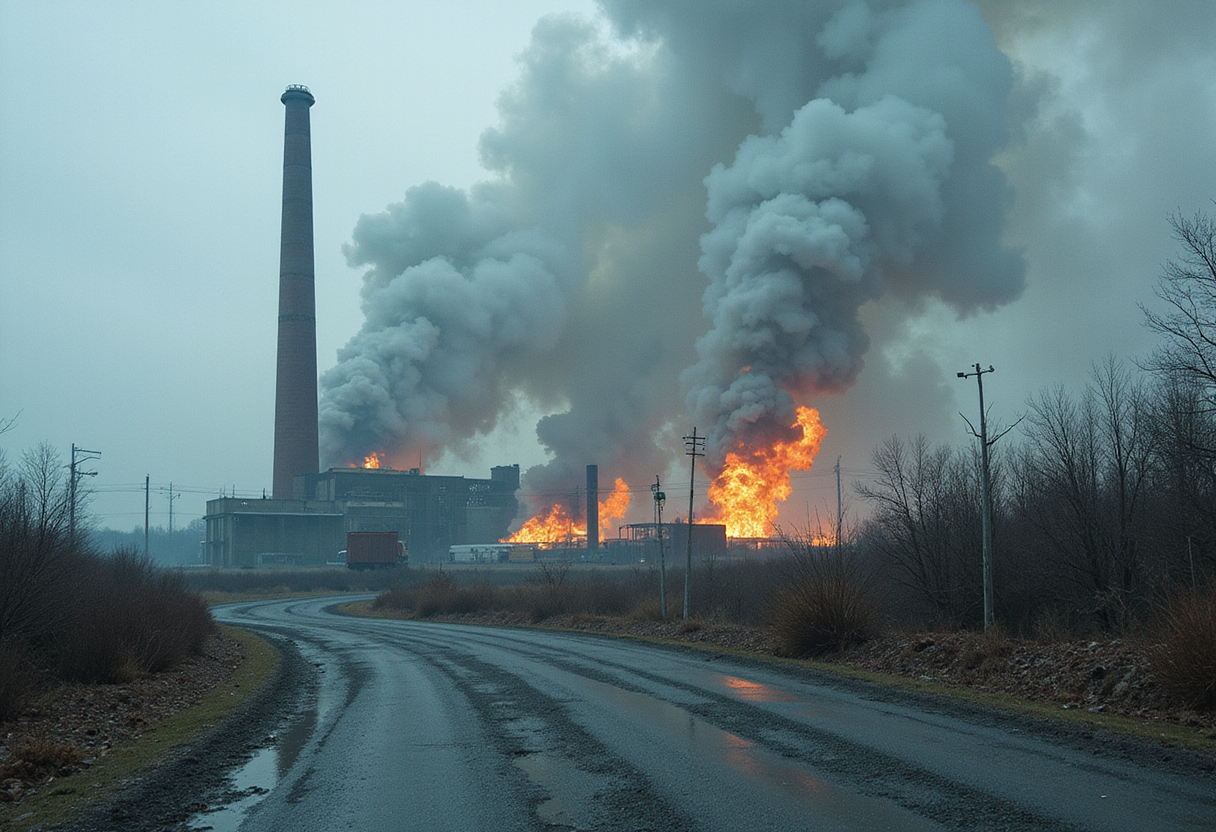
At least two people died as Ukrainian strikes hit industrial sites across Russia, The Moscow Times reported. The report named no refinery, terminal, plant, or depot. It carried no capacity figures, no operator identities, and no damage assessment. That absence of specificity is the market's first problem, because a headline without a facility list supports no price, no plan, and no hedge.
Here is what the report does establish. Ukrainian forces struck more than one industrial site. The strikes hit multiple regions — "across Russia," in the outlet's phrasing. The confirmed death toll stands at a minimum of two, and the "at least" construction leaves that count open to upward revision. Attribution of the strikes to Ukraine comes from the report itself.
Here is what it does not establish. The facility type remains unknown. The location remains unknown beyond the national border. Nobody has said whether a struck asset sits in the crude, refining, storage, petrochemical, or power chain, or whether operators cut runs, interrupted exports, or shut units. Any claim along those lines that circulates now is speculation, and this desk will not book it as fact.
For downstream readers, the operative question is narrow: did any of the struck sites handle hydrocarbons? A refinery outage moves diesel and gasoline balances and export nominations. A fuel-storage hit moves terminal inventories and freight. A strike on non-fuels manufacturing — steel, machinery, chemicals outside the fuels chain — moves none of those curves. The Moscow Times report does not separate the categories, so no reader can size the impact yet.
"Across Russia" is the report's only geographic anchor, and it narrows nothing. A dispersed, multi-site strike pattern widens the candidate set of facility types rather than shrinking it. Russia's industrial base spans fuels, metals, machinery, and chemicals, and the headline does not say which of those categories absorbed the hits. The probability question — whether at least one site touches the hydrocarbon chain — stays open until names land.
The confirmation sequence, when it starts, is standard. Regional administrations typically speak first, often within hours. Operators follow with outage or force-majeure notices if the strikes touched their assets. Satellite imagery settles questions of visible damage. Export nominations and official run statistics settle the question of lost barrels weeks later. The report carried none of the first three, so the sequence has not started, or at least has not reached the trade press.
The casualty figure carries operational weight beyond the human cost. Where responders confirm fatalities, site access stays restricted while emergency services and investigators work. Restart planning follows that clearance rather than preceding it. Two deaths, at minimum, start that clock at every affected site.
The report carried no market data. Any move in Urals differentials, diesel cracks, or freight rates on this news would count as commentary to attribute, not fact to assert. This desk holds no such attribution, and it will not manufacture one.
For supply planners, the correct posture is monitoring, not hedging. A headline without a facility list cannot support a cargo rerouting, a nomination change, or a hedge adjustment. It can support a watch brief: line up the counterparty list, the terminal schedules, and the nomination calendar now, so the desk can move the moment facility names land.
The watch items, in order: site identification first — the facility list is the story, and until it lands, "industrial sites" is a placeholder. Casualty revisions come second; the "at least" framing invites them. Third, any operator or regional statement confirming or excluding energy assets. Fourth, if authorities confirm a refinery or terminal, watch for the run-cut or outage notice and the export-nomination changes that follow. The Moscow Times headline marks the event. The facility list will move the market.
via Google News: Refineries and petrochemicals (Source)