Well report No. RR-7495 · T21N · R24W · SEC 33 · filed October 10, 2026
Refining & PetrochemicalsWell report
Azikel's $1 Billion, 25,000-bpd Yenagoa Refinery Draws Jonathan's Praise
Former President Goodluck Jonathan toured Azikel's $1 billion, 25,000-bpd hydro-skimming refinery in Yenagoa, backed by Afreximbank and AFC, with a 125,000-bpd expansion planned.
Field notes
- Azikel's Yenagoa refinery is designed for 25,000 bpd at a $1 billion investment, with a planned expansion to 125,000 bpd.
- Afreximbank approved up to $130 million of a $168 million senior secured loan in November 2023; the AFC provided $60 million.
- The plant is a hydro-skimming refinery producing petrol, diesel, jet fuel, kerosene and LPG to Euro V standard from crude or condensate.
- Azikel expects more than 3,000 direct jobs and says over 80,000 indirect jobs have already been created.
- The company has not announced a production start date.
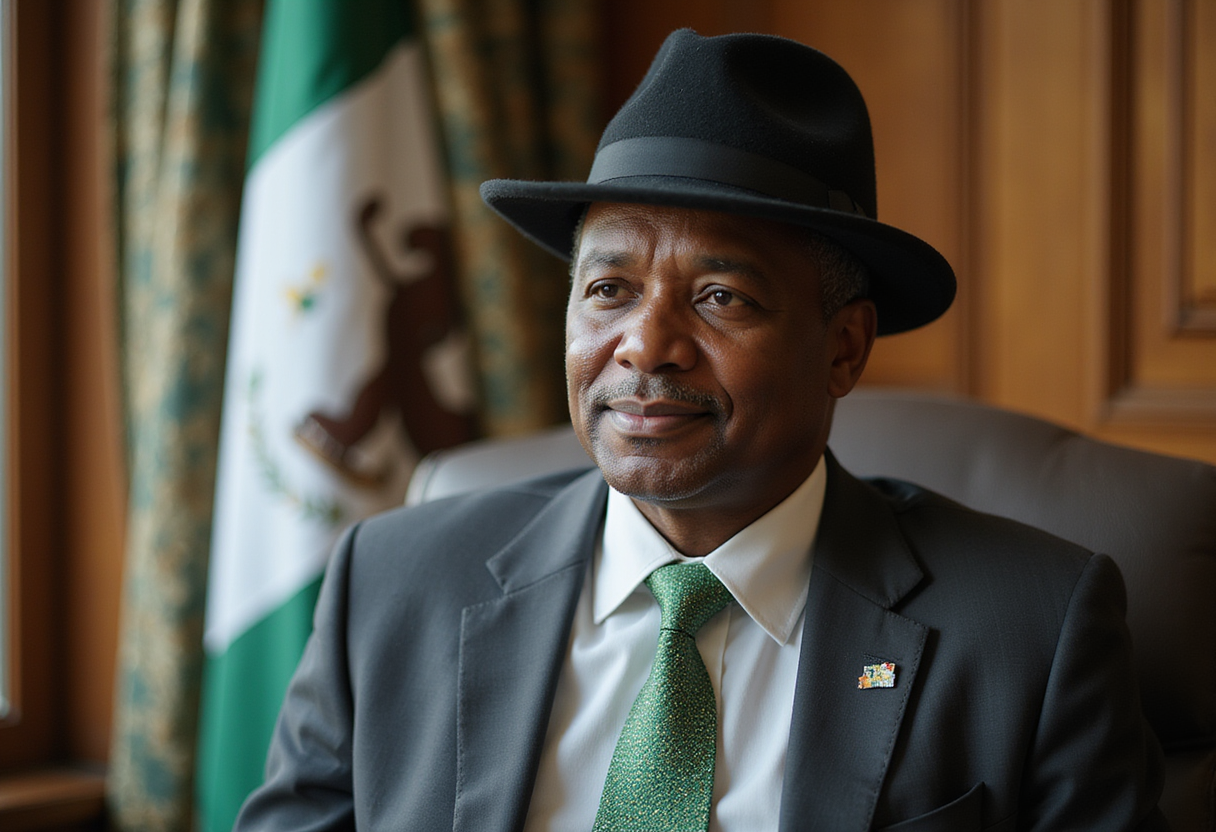
A $1 billion, 25,000-bpd refinery under construction in Yenagoa, Bayelsa State, drew an endorsement this week from former Nigerian President Goodluck Jonathan, who toured the Azikel Petroleum plant on Tuesday and called it a hub of new industrialization in the Niger Delta.
Jonathan, who led Nigeria from 2010 to 2015 and hails from Bayelsa, framed the project alongside the Dangote refinery in Lagos as a step toward local content and energy security. "I was pleased to visit the Azikel Refinery in Yenagoa, Bayelsa State, and to see first-hand the progress being made on this important project," he said.
The plant's owner, Azikel Petroleum — part of the Azikel Group founded by businessman Azibapu Eruani in 2008 — first obtained its licence in 2015 and has since redesigned the facility from an originally planned 12,000 bdp to its current 25,000-bpd configuration. Total investment now stands at roughly $1 billion. Azikel plans a future expansion to 125,000 bpd, though the company has not announced a startup date.
What kind of refinery is it?
Azikel distinguishes itself from most of Nigeria's licensed modular refineries, which are topping plants focused mainly on diesel. The Yenagoa facility is designed as a hydro-skimming refinery able to process crude or condensate into petrol, diesel, aviation fuel, kerosene and LPG to Euro V specification. Eruani has described it as the only refinery in Africa designed to turn condensate into a full slate of products.
Azikel expects the plant to employ more than 3,000 people once operational and says construction has already generated more than 80,000 indirect jobs. Eruani has attributed the long construction timeline to deliberate engineering choices, including the redesign that more than doubled planned capacity.
Who is financing it?
Two development-finance institutions anchor the project:
- Afreximbank approved up to $130 million of a $168 million senior secured term loan in November 2023, when the plant was still scoped at 12,000 bpd and $259 million. Eruani signed the agreement at the bank's Intra-African Trade Fair in Cairo, with Helen Brume, the bank's director of project and asset-based finance, in attendance alongside then-president Benedict Oramah and former President Olusegun Obasanjo.
- Africa Finance Corporation, the Lagos-based multilateral lender, provided $60 million — a deal named Best Energy Infrastructure Deal at the 2024 EMEA Project Finance Awards.
Jonathan thanked Afreximbank President George Elombi, AFC President Samaila Zubairu and both institutions' boards for their support. He also credited Eruani's "vision, resilience and substantial investment."
How does it fit Nigeria's refining build-out?
Azikel sits in Afreximbank's broader Nigerian refining portfolio. Speaking at Africa Energy Week in Cape Town in November 2024, Oramah said the bank was supporting more than 1 million bpd of refining capacity in Nigeria with roughly $4 billion in aggregate investment — a total spanning the Dangote refinery, the state-owned Port Harcourt refinery redevelopment, BUA's planned refinery and Azikel's modular plant.
When Afreximbank launched a $3 billion program in April 2025 to finance intra-African fuel trade, it again listed Azikel among recently approved refinery financings. Oramah said the program "would galvanise efforts towards making the Gulf of Guinea a key refining hub."
Elombi, who succeeded Oramah in October 2025, has defended the bank's concentration in Nigerian refining, arguing this year that its Dangote financing had paid off despite early fears the $20 billion project "could break Afreximbank." Zubairu has made similar arguments, saying refinery projects such as the AFC- and Afreximbank-financed Cabinda plant in Angola create jobs and "spin-off industries that rely on the output of the refinery."
What's the watch item?
The open question is timing. Azikel has not announced a production start date, leaving the commissioning schedule for the 25,000-bpd Yenagoa plant — and the pace of the planned 125,000-bpd expansion — as the metrics the market will track next.
via Google News: Refineries and petrochemicals (Source)
More from Olivia Hart
Adjoining reports
- Dangote sets groundbreaking for $16 billion Kenyan refinery
- Dangote Refinery Nears Startup as Kenya Weighs $100 Million Project
- Dangote, Ruto Break Ground on $16 Billion Refinery at Kenya's Lamu Port
- Dangote Targets $36bn Revenue as Kenya Backs $17bn Refinery Plan
- Dangote Plans 1,000 MW Power Plant at Kenya Refinery Site