Well report No. RR-1225 · T3N · R19W · SEC 3 · filed October 10, 2026
Refining & PetrochemicalsWell report
Israeli Strikes Shut Iran's 72 Mt/y Bandar Imam Petrochemical Complex
Israeli airstrikes on April 4, 2026 took Iran's 72 Mt/y Bandar Imam Petrochemical Complex offline after hitting two utility plants. Tehran puts full restart at two years; ~25% of national exports are exposed.
Field notes
- April 4, 2026 — Israeli airstrikes took offline Iran's 72 Mt/y Bandar Imam Petrochemical Complex in Mahshahr
- Strikes hit Fajr 1 and Fajr 2 utility plants serving more than 50 petrochemical plants on site
- Iranian oil ministry officials estimate a roughly two-year timeline to rebuild utilities and restart production
- Iranian petrochemicals generate $10–15 billion in annual revenue and reach about 60 destination countries
- Khuzestan governor's office confirms five fatalities and 170 injuries from the attack
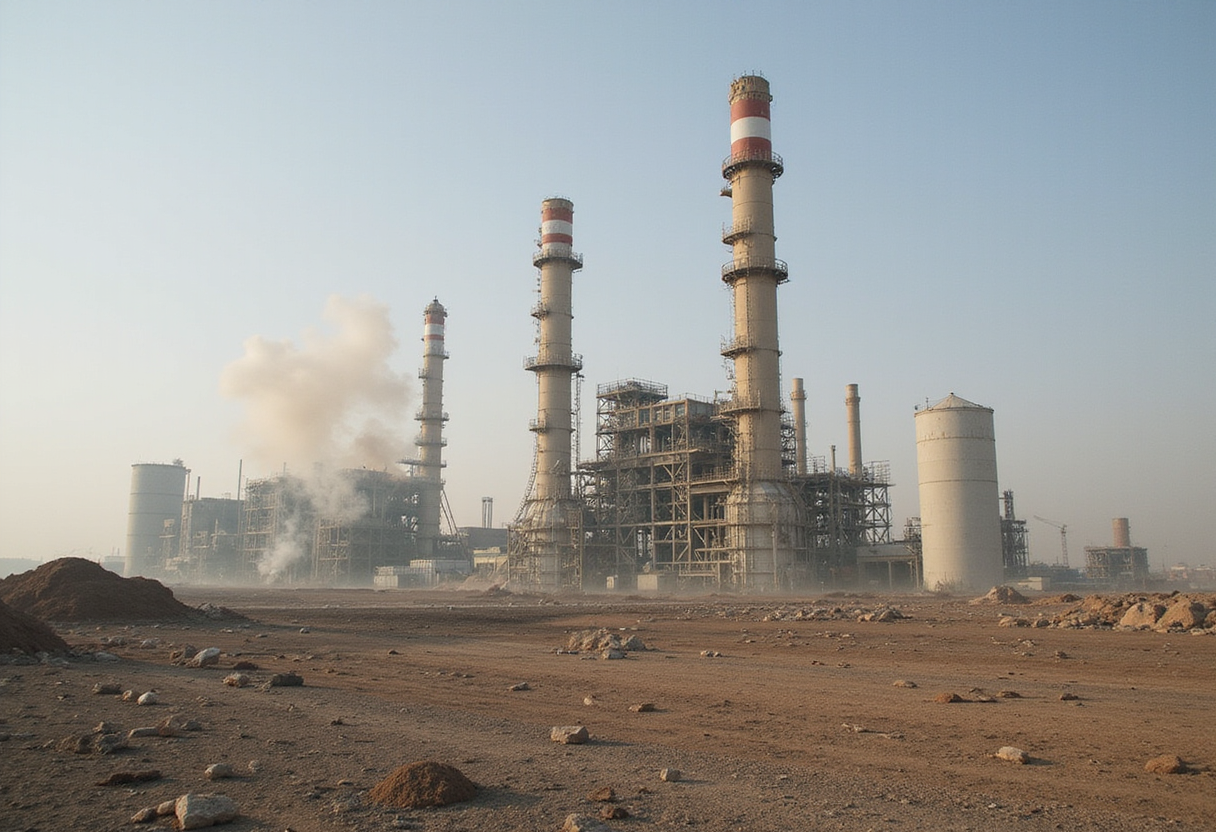
Israeli strikes knock out 72 Mt/y Bandar Imam complex
The 72 million-tonne-per-year Bandar Imam Petrochemical Complex in Mahshahr went offline on April 4, 2026 after Israeli airstrikes took out two utility plants supplying gas, power, and industrial water to more than 50 petrochemical facilities on site, according to two senior Iranian oil ministry officials.
The strikes hit Fajr 1 and Fajr 2, the gas, power, and water backbone that supports every production line inside the complex. Output had spanned polymers, base chemicals, fertilizers, and feedstocks feeding plastics, textiles, and medical equipment. The site functions as the anchor employer for the area's estimated 300,000 residents.
What did Israel strike?
The Israeli military said it targeted the complex because it was "responsible for the production of chemical materials used for weapons" and "central to producing materials for explosives, ballistic missiles and additional weaponry."
Iranian officials disputed that framing. "These are civilian industries that had nothing to do with military use and should not have been attacked," Hamid Hosseini, an oil and energy expert and member of Tehran's Chamber of Commerce, said in an interview. "This is people's livelihoods. Social security funds have big shares in these companies, and so do many ordinary people."
Additional hits were recorded at the parallel Razi, Karoun, and Bandar Imam petrochemical plants inside the zone, according to Khuzestan Province governor Seyed Mohammadreza Mavalizadeh.
What is the downstream exposure?
Petrochemicals account for roughly 25% of Iran's total exports, with shipments reaching about 60 countries and generating $10 billion to $15 billion in annual revenue, according to Iranian media reports. Hamed Shams, head of marketing and communications for the oil ministry's petrochemical division, posted on social media that the Fajr utilities "play a key role in providing electricity to 500,000" people in Khuzestan Province.
The Mahshahr cluster feeds several downstream channels:
- Food processing
- Automotive manufacturing
- Textile production
- Fertilizer supply
- Medical device fabrication
Hosseini warned those buyers will eventually face a crisis when active fighting ends. "Downstream industries, like food production, car manufacturing, and textiles, will face a crisis when the war is over," he said.
How badly was the site damaged?
The governor's office confirmed five fatalities and 170 injuries. State media showed rescue crews working through heavy smoke; the complex was fully evacuated. Iranian oil ministry officials said rebuilding the utility plants and bringing all 50-plus production lines fully back online could take about two years.
Mehdi Bostanchi, head of a private industrial complex and a representative for a group of Iranian industrial leaders, captured the domestic framing in a social media post: "Attacking Mahshahr's petrochemical plants means attacking the heart of Iran, the vital arteries of Iran's economy."
What is the wider campaign picture?
Israel and the United States have widened the target set inside Iran over recent days, hitting two main steel plants, pharmaceutical and scientific research centers, airports, and seaports, according to Iranian state media. Israeli military statements have characterized struck facilities as "dual use," tied to both civilian industry and armed forces applications.
What to watch
- Restart progress at Fajr 1 and Fajr 2 against the two-year rebuild estimate from Iranian officials
- Force majeure or supply allocation notices from Iranian petrochemical exporters to roughly 60 destination markets
- Independent damage assessment at the parallel Razi, Karoun, and Bandar Imam petrochemical plants
- Any third-party reconstruction financing arrangements once active operations cease
- Spillover effect on Iranian petchem revenues and the broader $10–15 billion export stream
via static01.nyt.com (Original)
More from Elena Vasquez
Adjoining reports
- Israeli Strike Halts Production at Iran's Mahshahr Petrochemical Complex
- Israeli Strike Hits Iran's Karoon Petrochemical Complex
- Israel Strikes Iranian Petrochemical Plant as Conflict Escalates
- Gulf oil keeps flowing through Iran conflict, but war costs mount
- Houthis strike Saudi refinery hours after kingdom signs defence pact