Well report No. RR-8179 · T19N · R47W · SEC 19 · filed October 10, 2026
Midstream & PipelinesWell report
Canada Clears Pacific Link Pipeline; South Korean Crude to 2032
Canada's federal regulator has approved the Pacific Link crude export pipeline, confirming a 2032 startup window that defers additional Canadian crude flows to South Korean refiners.
Field notes
- Canada's federal regulator approved the Pacific Link crude export pipeline project
- The decision confirms a startup window no earlier than 2032 for South Korean liftings
- Pacific Link would route western Canadian crude to a Pacific coast marine terminal
- Existing pipeline networks continue to clear Canadian heavy barrels into U.S. Midwest and Gulf Coast markets
- Korean refiners have signaled interest in Canadian heavy and medium-sour crudes for resid upgrading capacity
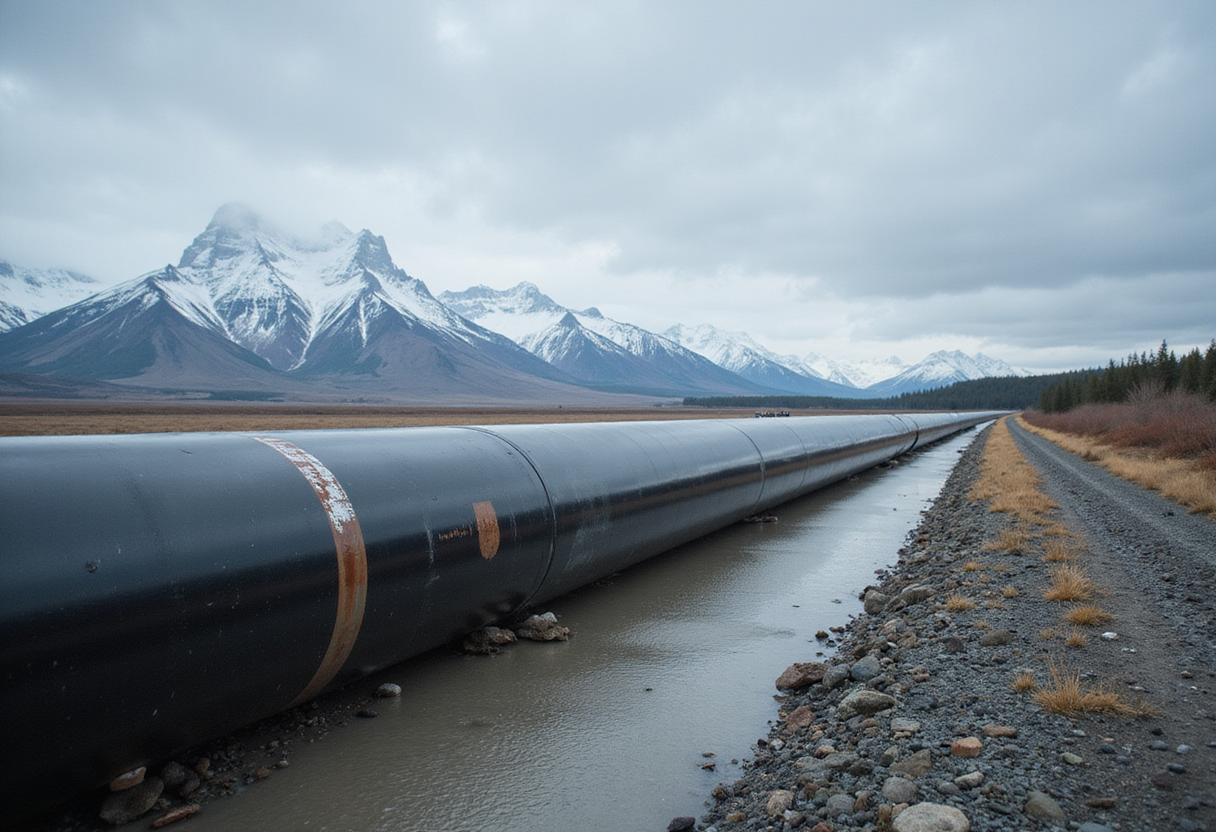
Canada's federal regulator has approved the Pacific Link pipeline, a proposed crude export corridor routing western Canadian production to a Pacific coast marine terminal. The decision confirms a startup window that defers additional Canadian oil flows to South Korea until 2032.
The approval marks a significant regulatory milestone for a Pacific-bound crude pipeline out of British Columbia. Canada's existing network funnels Alberta crude south and east to U.S. Midwest and Gulf Coast markets, leaving Asian refiners reliant on Middle Eastern, West African and Atlantic Basin grades. A Pacific corridor offers producers direct tidewater access to North Asian demand centers and a structural alternative to U.S.-bound flows.
The 2032 South Korean delivery horizon signals the project still faces a multi-year engineering, procurement, construction and offtake contracting phase. Long-haul Canadian export pipelines historically require several construction seasons between regulatory clearance and commercial flows, with binding shipper commitments needed before final investment decision.
Right-of-way negotiations with Indigenous communities along the British Columbia route add further schedule risk.
For South Korean refiners, the 2032 timeframe reinforces an extended reliance on Middle Eastern, West African and U.S. Gulf barrels. Korean processing complexes, among Asia's largest refining clusters, have signaled interest in Canadian heavy and medium-sour crudes as a structural fit for secondary conversion capacity. The deferral pushes any feedstock diversification outside the current planning window.
For Western Canadian producers, the approval adds a second westbound export option, complementing the existing Trans Mountain system that recently completed its expansion. Pacific Link, once constructed, would supply incremental Pacific Basin liftings at a time when U.S. Gulf Coast export terminals absorb growing Permian and Eagle Ford volumes.
The decision also reframes basin egress economics. Western Canadian Select differentials, which historically price below WTI when tidewater capacity is constrained, may face renewed upside once additional Pacific routes reach commissioning. Producers and traders will watch for the first disclosed offtake terms as a leading indicator of how Pacific barrels compete with Middle Eastern medium-sour grades in Korean and Chinese refineries.
Commercial terms underpinning the South Korean allocation remain undisclosed in the available reporting. The watch items going forward include the formal approval certificate, the offtake counterparty structure, and any environmental or Indigenous consultation conditions attached to the federal decision.
What is the project's nameplate capacity?
The headline approval does not specify throughput. Industry filings and engineering disclosures typically follow regulatory clearance by months, providing the first view of design capacity and any phase expansion schedule.
Which company or consortium is developing the pipeline?
The project sponsor has not been named in the available reporting. Major Canadian midstream operators and Asian national oil companies have historically pursued tidewater capacity, with bidder lists expected to surface in subsequent regulatory and commercial filings.
How does this affect current Western Canadian Select pricing?
The 2032 start-up places Pacific Link outside the present WCS pricing window. Existing pipeline networks continue to clear Canadian heavy barrels into U.S. Midwest and Gulf Coast markets, with no immediate change to spot differentials.
What timing drove the 2032 horizon?
The startup implies a multi-year window between regulatory approval and commercial operations, in line with multi-season construction of long-haul Canadian pipeline projects. The timeline also coincides with the next Korean refinery configuration cycle, when secondary unit conversions at major complexes are scheduled for crude diet changes.
What does the 2032 horizon mean for Korean refining strategy?
Korean refiners have publicly targeted feedstock diversification away from Middle East sour grades, with Canadian heavy and medium-sour crudes identified as a structural fit for resid upgrading capacity. The deferral lands outside the current five-year capex window at major Korean complexes, keeping mid-term spot procurement anchored to traditional Middle Eastern suppliers.
via Google News: Pipelines and midstream (Source)
More from James Calloway
Show full bio
Staff writer covering industry trends and analytics at Rig & Refinery.
400 articles
Adjoining reports
- Asia Set to Absorb 70% of Canadian Oil Exports, Pipeline Executive Says
- Canada Moves to Fast-Track Pacific Oil Pipeline for Non-US Exports
- Ottawa Fast-Tracks Pacific Oil Pipeline as Alberta Separation Vote Nears
- Canada Fast-Tracks 1 Million-Bpd Alberta-to-Pacific Oil Pipeline
- Ottawa Fast-Tracks Pacific Oil Pipeline as Alberta Separation Vote Nears