Well report No. RR-5777 · T11N · R42W · SEC 11 · filed October 2, 2026
Midstream & PipelinesWell report
Ottawa Fast-Tracks Pacific Oil Pipeline as Alberta Separation Vote Nears
Canada is fast-tracking a new Pacific oil pipeline to cut reliance on US export routes as Alberta prepares a separation vote, following Trans Mountain's 590,000-bpd expansion.
Field notes
- Canada is fast-tracking approval for a new Pacific Coast oil pipeline to reduce dependence on US export routes
- The push comes as Alberta nears a separation referendum vote
- The Trans Mountain expansion added 590,000 bpd of West Coast capacity in May 2024, the template for the new initiative
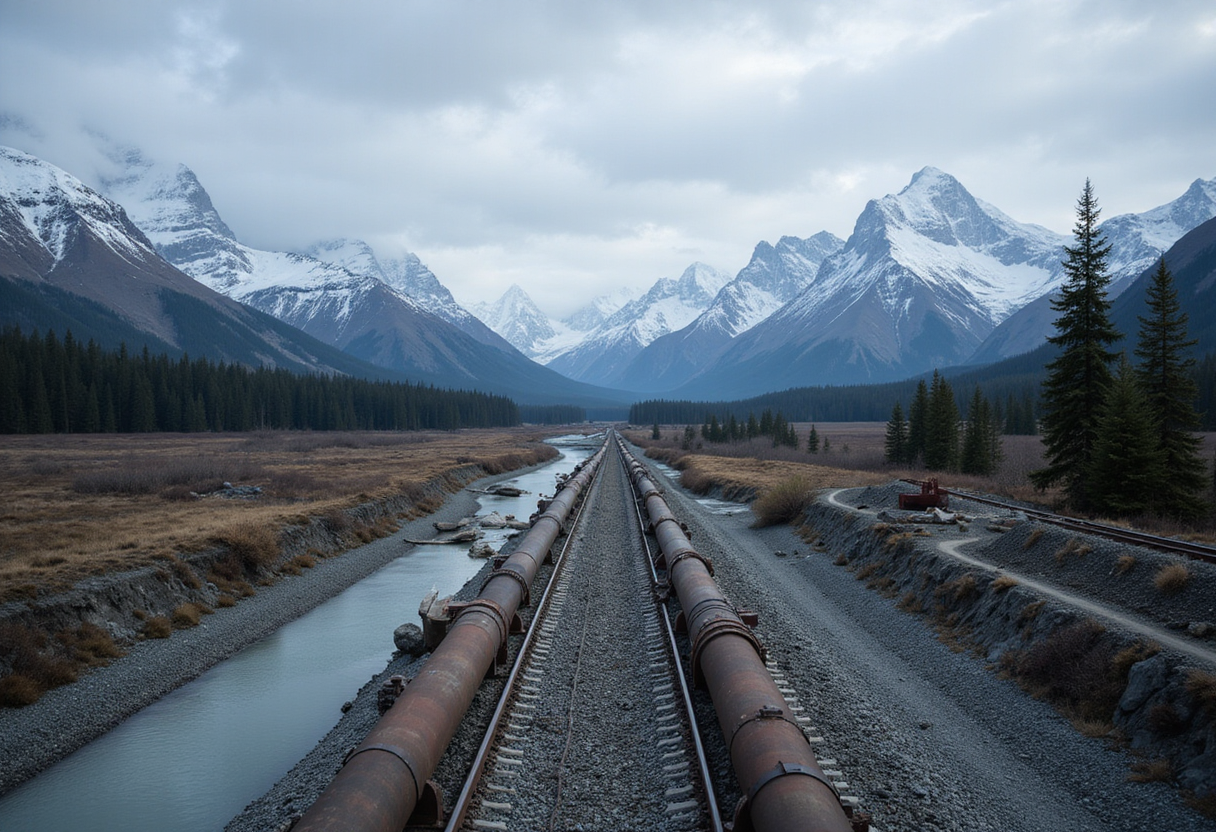
Canada is accelerating approval for a new Pacific Coast oil pipeline, a move designed to reduce the country's dependence on US-bound export infrastructure at a moment when Alberta is preparing a separation referendum vote.
The fast-track decision, reported by the Beaumont Enterprise, signals Ottawa's intent to open an additional crude outlet to markets beyond the United States, which currently takes the overwhelming share of Canadian production through Midwest and Gulf Coast pipeline and refinery networks.
The timing is political as much as commercial. Alberta's provincial government has set the stage for a separation vote, and Premier Danielle Smith's government has made expanded export capacity — particularly tidewater access on the West Coast — a core demand in its disputes with the federal government over resource policy.
The initiative follows the template established by the Trans Mountain expansion, which in May 2024 added 590,000 bpd of capacity from the Edmonton area to a terminal at Burnaby, British Columbia. That project, completed after repeated delays and a federal purchase of the pipeline system in 2018, gave Canadian producers their first meaningful direct access to Asia-Pacific buyers.
A second Pacific line would deepen that access. For producers in the oil sands, additional egress would ease the pipeline apportionment and discount pressures that have historically flared when export capacity tightened against rising heavy-crude output.
For US Gulf Coast and Midwest refiners, the calculus runs the other way. Canadian heavy blends are a core feedstock for coker-based complexes from Whiting to Port Arthur, and any diversion of barrels to West Coast docks would tighten a supply relationship those refiners have built their slates around.
The Beaumont Enterprise report did not specify a route, capacity, or operator for the fast-tracked line, and no sanctioned project has been announced. The federal designation applies to the regulatory pathway, meaning cabinet-level approval support and compressed review timelines rather than a construction commitment.
Industry groups have long argued that Canada's takeaway capacity lags its production, which has climbed past 5 million bpd. Any new corridor to the Pacific would require First Nations consultation, provincial permits in British Columbia or Alberta depending on routing, and likely BC environmental review — the same friction points that stretched Trans Mountain's timeline and cost.
The political clock is short. A separation referendum in Alberta would put constitutional pressure on Ottawa, and pipeline concessions are among the levers the federal government can pull without legislation.
Watch items: the regulatory docket for the proposed line, including any designated route and capacity figures; the Alberta referendum date and ballot question; and any memoranda from Asian refiners signaling uptake commitments for West Coast-loaded Canadian crude.
via Google News: Pipelines and midstream (Source)
More from Olivia Hart
Adjoining reports
- Ottawa Fast-Tracks Pacific Oil Pipeline as Alberta Separation Vote Nears
- Ottawa fast-tracks Pacific oil pipeline as Alberta separation vote nears
- Canada Fast-Tracks 1 Million-Bpd Alberta-to-Pacific Oil Pipeline
- Canada Moves to Fast-Track New West Coast Oil Pipeline
- Canada Fast-Tracks Pacific Oil Pipeline as US Reliance Questioned