Well report No. RR-8800 · T6N · R24W · SEC 6 · filed October 3, 2026
Midstream & PipelinesWell report
Canada Fast-Tracks 1 Million bpd Pacific Link Pipeline to B.C. Coast
Ottawa's national-interest designation accelerates the 775-mile, 1 million bpd Pacific Link pipeline and Roberts Bank supertanker terminal, drawing protests from Washington's governor.
Field notes
- Pacific Link: 775-mile, 1 million bpd crude pipeline from Edmonton to a proposed supertanker terminal at Roberts Bank, Port of Vancouver, B.C.
- National-interest designation by PM Mark Carney could put design and construction under way by next fall; oil could flow by the early 2030s.
- Washington Gov. Bob Ferguson says planned VLCCs carry 92 million gallons — eight times the Exxon Valdez spill — and demands spill-response commitments from Ottawa.
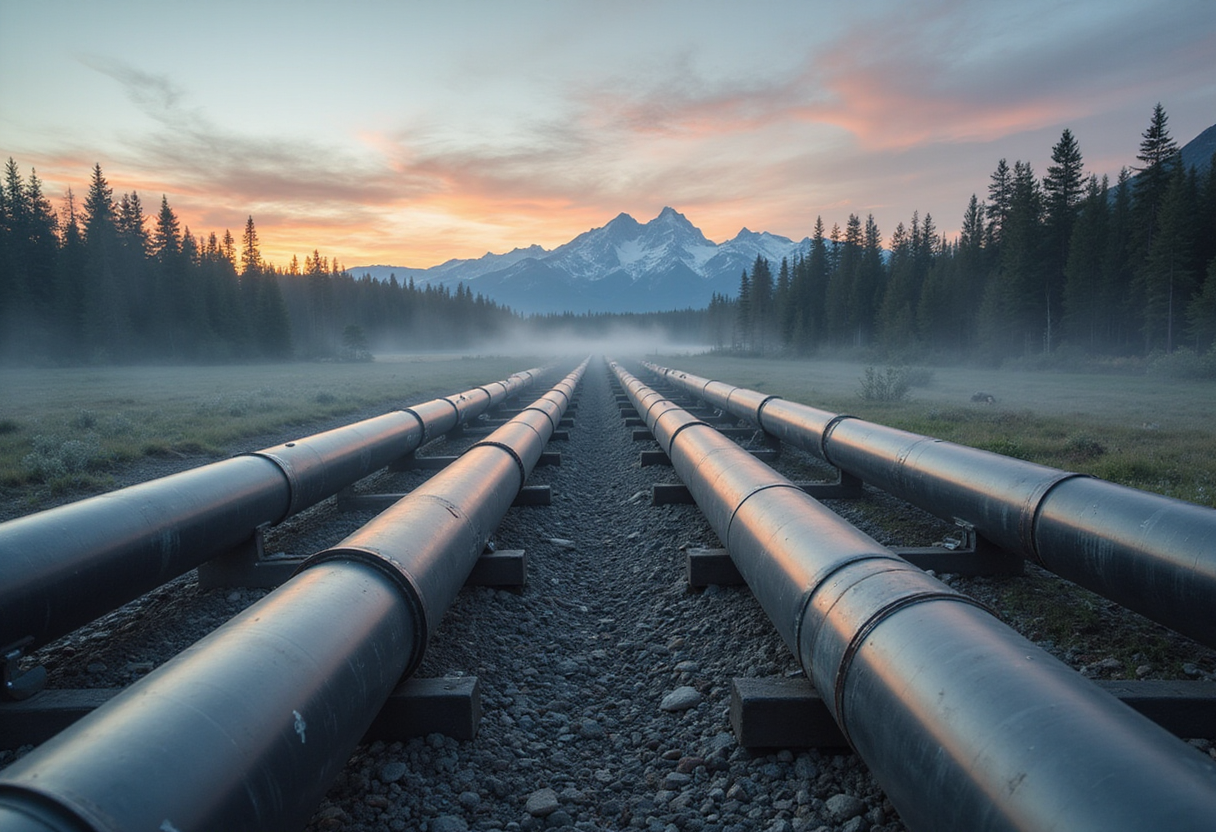
Canadian Prime Minister Mark Carney on Thursday designated the West Coast Oil Pipeline — now branded Pacific Link — a project of national interest, opening an accelerated regulatory review that could put pipeline design and construction under way by next fall.
The line is designed to move 1 million bpd of crude roughly 775 miles from the Edmonton region to a new supertanker export terminal proposed at Roberts Bank, part of the Port of Vancouver in British Columbia, just north of the U.S. border. Crude could flow by the early 2030s, according to the project timeline. Alberta's government says the southern routing was chosen because it can use the existing Trans Mountain Pipeline corridor and draw on established relationships with First Nations along the right-of-way.
The fast-track designation did not come out of nowhere. Carney and Alberta Premier Danielle Smith discussed expediting the project in July, when the two governments first floated the 775-mile, million-barrel configuration.
For West Coast refiners and crude traders, the project signals a second major Canadian export conduit to the Pacific after the Trans Mountain expansion, tied to Ottawa's stated ambition — in Carney's words — of making Canada an "energy superpower" and diversifying crude sales beyond the U.S. market. Once the Roberts Bank terminal is operating, supertanker traffic bound for Asia would transit the Strait of Juan de Fuca past the San Juan Islands and the Olympic Peninsula.
That prospect drew a sharp response from Washington Gov. Bob Ferguson on Friday, in his first public comments on the project. Ferguson said he was "disappointed" in the decision because current resources cannot handle a major spill in the Salish Sea.
"If a project of this scale is going to proceed, it needs to come with a corresponding commitment to also increase our region's capacity to prevent and respond to a catastrophic spill," Ferguson said in a joint statement with Casey Sixkiller, director of the Washington Department of Ecology.
Ferguson noted the vessel class envisioned for the route is unprecedented on the U.S. side of the border. Washington ports have barred such tankers since the 1970s. At 92 million gallons of capacity, a fully loaded VLCC would carry eight times the volume spilled by the Exxon Valdez in 1989, he said. "If this project proceeds, it is critical that the Canadian government make detailed commitments to safeguard our shared marine waters and fill these gaps in our response capabilities," the statement read.
The pressure on Ferguson has been building since July. San Juan County council members and northern Washington tribal representatives have pressed the governor to engage Ottawa and the province directly on both the pipeline and the tanker traffic it would generate. On Tuesday, Ferguson met in Seattle with Mark Wiseman, Canada's ambassador to the U.S.; his office did not respond to a request for comment on whether the pipeline came up. Sixkiller sent a lengthy letter in mid-September to Canadian Intergovernmental Affairs Minister Dominic LeBlanc in an unsuccessful attempt to head off the accelerated permitting.
U.S. Rep. Rick Larsen, whose 2nd Congressional District covers the state waters the laden supertankers would transit, was blunt. "This project is not ready for prime time, and speeding up the review process will only make that worse," Larsen said in an email. "Canada's plan to fast track this new oil pipeline project puts sensitive marine habitats at risk and raises the chance of a devastating spill occurring before the U.S. and Canada can put updated plans in place."
The Lummi, Samish, Swinomish and Makah tribes — all of which opposed the previous Trans Mountain expansion — argue the vessel-traffic increase endangers treaty rights and fisheries. Maithili Devadas of the Georgia Strait Alliance, the British Columbia environmental group campaigning against the Roberts Bank terminal, said a project of this scale should face "an especially rigorous level of scrutiny" rather than a fast-tracked review "without any concern for its long-term impacts on ecosystems, communities and the people who depend on them."
The watch items now are the shortened federal review schedule in Ottawa, the pace of engineering and construction start targeted for next fall, and whether Ottawa offers Washington state any concrete commitments on spill-response capacity before first crude targets the early 2030s.
via alberta.ca (Original)
More from Olivia Hart
Adjoining reports
- Ottawa Fast-Tracks 1 Million bpd Pacific Link Pipeline Review
- Canada Designates 1 Million bpd Pacific Link Pipeline as National Interest Project
- Ottawa Fast-Tracks 1 Million bpd Pacific Link Pipeline to Asia
- Carney Fast-Tracks 1 Million-bpd Pacific Link Pipeline to BC Coast
- Canada Moves to Fast-Track New West Coast Oil Pipeline