Well report No. RR-9679 · T13N · R15W · SEC 13 · filed October 2, 2026
Midstream & PipelinesWell report
Canada to Fast-Track New West Coast Oil Pipeline, Carney Says
Prime Minister Mark Carney says Ottawa will fast-track a new west coast oil pipeline, but no route, capacity or operator has been named, leaving the project at policy stage.
Field notes
- Prime Minister Mark Carney says Canada will fast-track a new oil pipeline to the west coast.
- No route, capacity, operator, or timeline accompanied the announcement.
- Canada's existing west coast route, the 890,000-bpd Trans Mountain system, expanded to full capacity in May 2024.
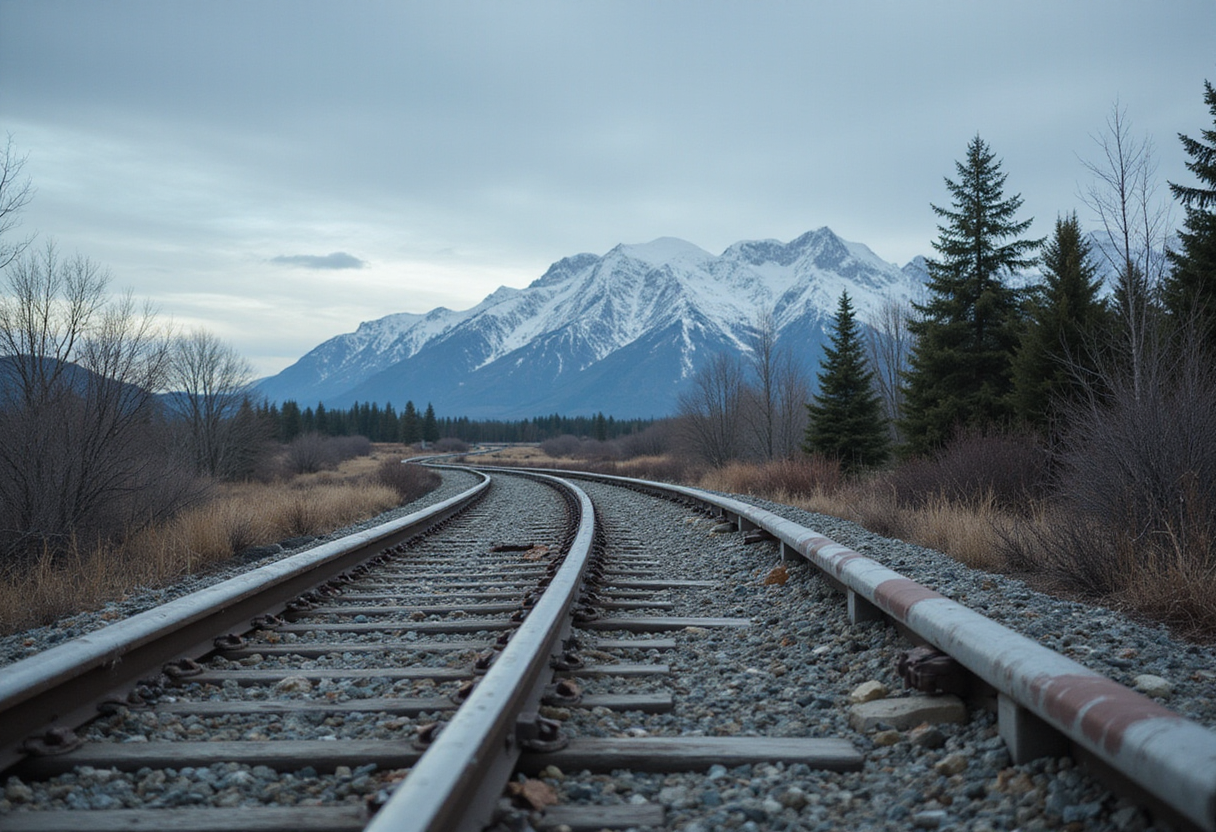
Canadian Prime Minister Mark Carney says the federal government will fast-track a new oil pipeline to the country's west coast, signaling a shift in Ottawa's approach to crude export infrastructure after years of constrained takeaway capacity west of Alberta.
The announcement, reported by TradingView citing Carney's remarks, points to a renewed push for a new heavy-crude export route to the British Columbia coast. No pipeline route, capacity figure in bpd, operator, or timeline accompanied the statement, leaving the project at the policy-intent stage rather than a sanctioned development.
What Carney said
The prime minister framed the pipeline plan as part of a broader effort to speed up approvals for major resource projects. The federal government has faced pressure from Alberta, Canada's crude production heartland in the Western Canadian Sedimentary Basin, to add export capacity beyond the existing corridor to the Pacific.
Canada currently moves the bulk of its roughly 4.9 million bpd of crude production through three systems: Enbridge's Mainline network to the US Midwest, the Trans Mountain pipeline (TMX) to Burnaby, British Columbia, and smaller cross-border lines. Trans Mountain's 590,000-bpd expansion entered service in May 2024, adding 190,000 bpd of capacity to the west coast after years of construction delays and cost escalation.
Fast-track mechanics remain undefined
Carney did not specify which regulatory instruments the government would use to accelerate the project. Major Canadian pipelines normally pass through Impact Assessment Agency of Canada review, provincial permitting in British Columbia and Alberta, and consultations with Indigenous communities along the right-of-way.
Industry observers have questioned whether a new west coast line can attract shippers and capital after Trans Mountain's expansion — which the federal government bought in 2018 for C$4.5 billion and which ultimately cost an estimated C$34 billion — struggled with economics throughout its construction.
Any new line would also need a coastal export terminal. The Trans Mountain system delivers to the Westridge Marine Terminal in Burnaby, where tanker exports flow to US West Coast and Asian refiners. A second major pipeline would likely require new dock and storage infrastructure at a deepwater port.
Watch items
The immediate questions for the desk: whether Ottawa names a proponent or opens a competitive process for the line, what capacity the government envisions in bpd, and whether First Nations equity partnerships — a feature of recent northern pipeline proposals such as Eagle Spirit and the now-shelved Northern Gateway — form part of the structure.
Alberta Premier Danielle Smith has pressed for expanded egress, and any federal-provincial agreement on route and tolling would shape shipper commitments. Until a proponent files with regulators, the project remains a policy declaration rather than an FID-track development.
via Google News: Pipelines and midstream (Source)
More from Olivia Hart
Adjoining reports
- Canada Moves to Fast-Track New West Coast Oil Pipeline
- Ottawa to Fast-Track Crude Pipeline Aimed at Non-US Markets
- Carney Signals Producer Backing for New West Coast Oil Pipeline
- Carney Caps Pivot From Climate Envoy to Pipeline Champion
- Canada to Fast-Track Oil Pipeline Aimed at Reducing US Export Dependence