Well report No. RR-3311 · T3N · R42W · SEC 27 · filed September 29, 2026
Gas & LNGWell report
Canada's First Major LNG Terminal Targets Capacity Doubling
Canada's first major LNG export terminal, the 14-mtpa Kitimat complex, plans to double capacity, AP News reports, with a Phase 2 expansion under consideration.
Field notes
- Canada's first major LNG export terminal plans to double its capacity, AP News reports.
- The facility is the LNG Canada complex at Kitimat, British Columbia, with Phase 1 rated at 14 mtpa.
- A Phase 2 expansion would lift potential site output toward roughly 28 mtpa; no FID date or contracted volumes were specified.
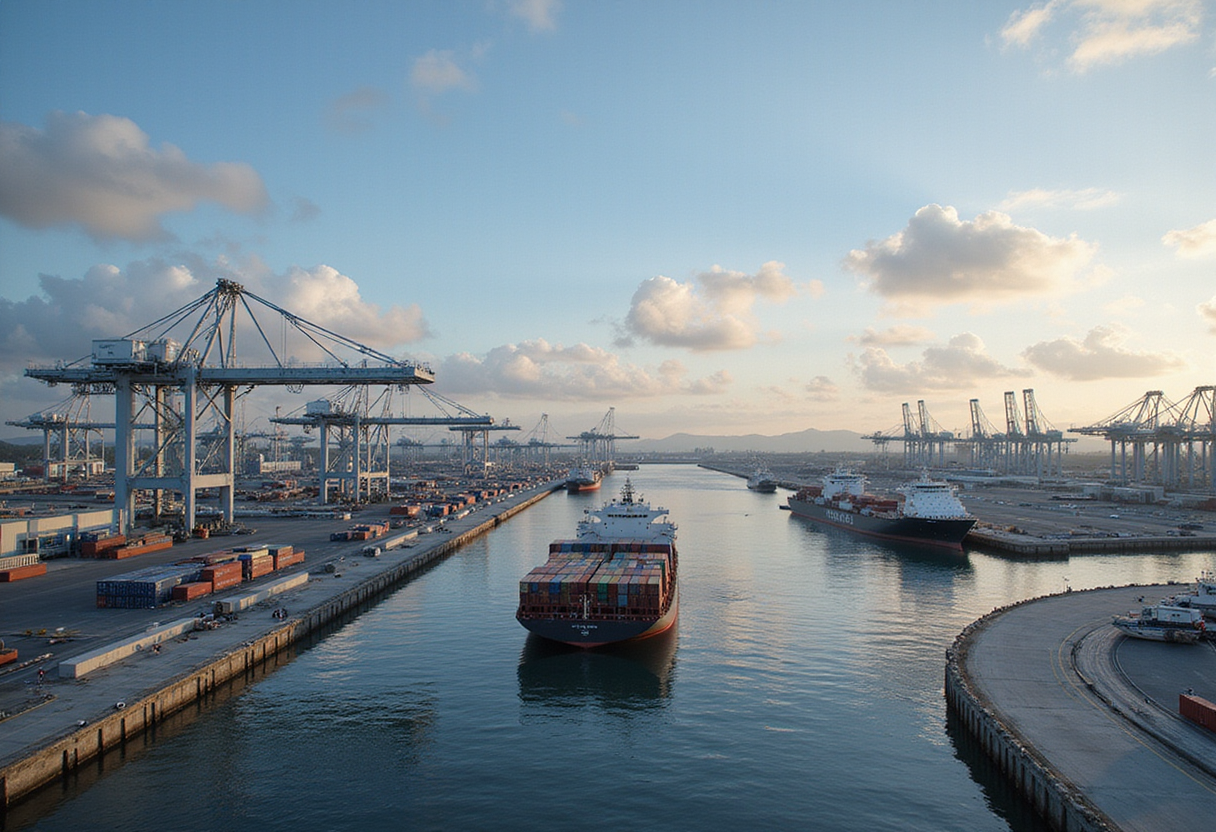
Canada's first large-scale LNG export terminal plans to double its capacity, according to a report from AP News, a move that would significantly expand the country's foothold in the global gas trade just as the facility establishes itself in Asian markets.
The terminal in question is the LNG Canada project at Kitimat, British Columbia, the country's first major liquefaction and export complex on the Pacific coast. Phase 1 of the development carries a nameplate capacity of 14 million tonnes per annum (mtpa) of LNG, drawn from gas produced in the Western Canadian Sedimentary Basin and delivered via the Coastal GasLink pipeline from northeast British Columbia and Alberta.
The planned expansion under discussion would roughly double that throughput, adding a second phase of liquefaction trains at the Kitimat site. A doubling would put the complex's potential output in the range of 28 mtpa, positioning it among the larger single-site export operations on the Pacific Rim and deepening the link between Montney and other WCSB gas production and Asian demand centers.
The report did not specify a sanction timeline, final investment decision date, or contracted volumes for the expansion. Phase 2 of LNG Canada has long been flagged by the operator and its partners as a logical follow-on to the first phase, given the site's brownfield space and existing marine and feedgas infrastructure, but any capacity addition remains subject to engineering, commercial commitments, and regulatory review.
LNG Canada's joint venture ownership includes Shell, Petronas, PetroChina, Mitsubishi, and Korea Gas Corporation, with Shell holding the operatorship of the venture and Coastal GasLink pipeline builder TC Energy providing feedgas transport under long-term arrangements.
Phase 1 of the Kitimat facility shipped its first cargo in mid-2024, marking the start of Canadian LNG exports to world markets. Since startup, commissioning of the initial trains has proceeded toward full rated production, with cargoes flowing primarily toward Asian buyers.
A capacity doubling at Kitimat carries basin-level implications. Sustained feedgas demand from a two-phase LNG Canada would add another pull on Western Canadian gas balances, supporting drilling activity and processing investment across the Montney and adjacent plays. Pipeline throughput on Coastal GasLink, designed for roughly 2.1 bcfd with expansion potential, would rise accordingly if Phase 2 proceeds.
For global LNG markets, additional Canadian liquefaction adds Atlantic-basin-independent supply to the Pacific, a factor buyers in Japan, South Korea, and China weigh against competing volumes from the US Gulf Coast, Qatar, and Australia.
The watch items: the formal sanction decision and FID timing for Phase 2, the customer contracts underpinning the added trains, and the pace at which Phase 1 reaches full 14-mtpa production.
via Google News: LNG export terminals (Source)
More from James Calloway
Show full bio
Staff writer covering industry trends and analytics at Rig & Refinery.
72 articles