Well report No. RR-3649 · T15N · R23W · SEC 15 · filed September 29, 2026
Gas & LNGWell report
LNG Canada Eyes Doubling Kitimat Export Capacity
Kitimat terminal's partners are weighing a doubling of capacity, requiring a fresh FID, added Coastal GasLink feedgas, and new permits before any Phase 2 proceeds.
Field notes
- LNG Canada at Kitimat, BC, is considering plans to roughly double export capacity
- Phase 1 is a Shell-led joint venture with Petronas, PetroChina, Mitsubishi and Kogas
- No sanction timeline, capital estimate or startup window was specified in the report
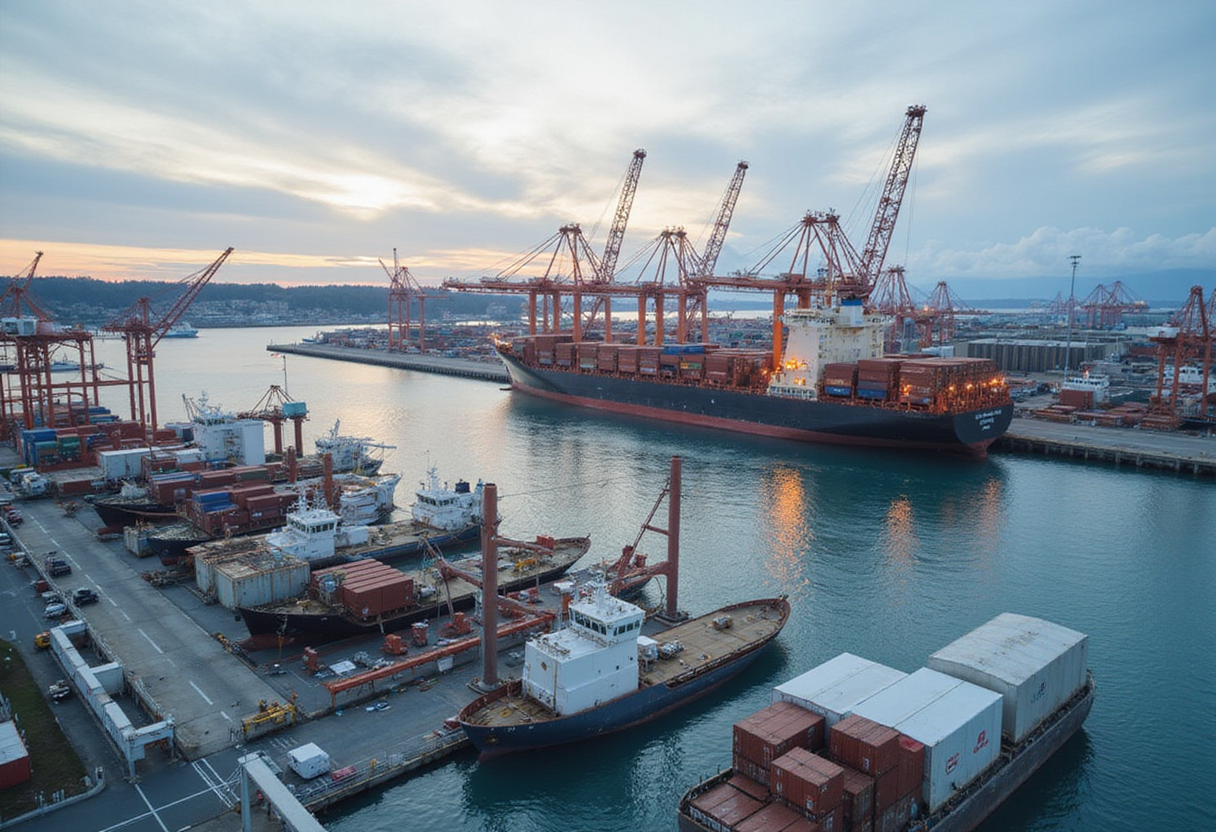
Canada's first large-scale LNG export terminal, LNG Canada at Kitimat, British Columbia, is looking at plans that would roughly double its shipping capacity, according to a report carried by the Ottumwa Courier.
The facility on the province's North Coast sits at the end of the 670-km Coastal GasLink pipeline, which moves Montney and Horn River gas from northeast British Columbia to the coast. Phase 1 of the terminal was built around two liquefaction trains. An expansion to the scale now under discussion would add trains of similar size, taking the complex toward a second phase of roughly equivalent throughput to the first.
The report did not specify a sanction timeline, a capital estimate, or a target startup window for the added capacity. Any second-phase development at Kitimat would require a fresh final investment decision from the joint venture partners, additional feedgas commitments on the supply corridor, and renewed federal and provincial permitting for the expanded site footprint.
LNG Canada is a joint venture led by Shell, with Petronas, PetroChina, Mitsubishi, and Kogas holding interests alongside minority partner the Haisla Nation through a participation agreement. The Phase 1 investment ranks among the largest private capital projects in Canadian history.
The expansion interest comes as buyers in Asia — the terminal's target market — continue to sign long-term SPAs for Pacific basin supply, and as US Gulf Coast and Qatari projects compete for the same demand pool. A Kitimat sailing offers the shortest shipping distance from North America's west coast to Northeast Asian import terminals, a logistics advantage the venture has cited in its marketing since the project's inception.
For Canadian producers, additional liquefaction at Kitimat would translate into incremental demand for Western Canadian Sedimentary Basin gas. The Montney play, straddling the Alberta–British Columbia border, holds the bulk of the established reserves that would serve both the existing plant and any second phase. Analysts have argued for years that egress constraints have depressed Alberta benchmark AECO prices relative to Henry Hub; new export capacity at the coast is the most direct remedy on the table. That price framing remains analysis rather than fact — basis outcomes will depend on supply growth, pipeline utilisation, and the pace at which any expansion actually enters service.
Construction sequencing matters. Phase 1 startup on the Douglas Channel was long-delayed by cost pressures and labour disputes during building, and any Phase 2 would face a tighter contractor market and the same remote-site logistics that inflated the first phase's budget. The venture has not publicly committed to a construction window, and no engineering, procurement, or construction award tied to the doubling has been announced.
Feedgas is the other gating item. Coastal GasLink was built with expansion in mind, but a second phase at full scale would likely require looped or upsized capacity on the line, plus firm transportation agreements backing the incremental trains. Producers would need to dedicate Montney volumes years ahead of any new liquefaction startup.
Watch items: a formal sanction decision from the LNG Canada partners on Phase 2, the associated permitting filings with British Columbia and Ottawa, and any long-term SPA announcements from Asian buyers that would underpin the expanded trains. Until those pieces land, the doubling remains a plan on paper — significant, but unsanctioned.
via Google News: LNG export terminals (Source)