Well report · filed November 22, 2026
Petroleum MarketsWell report
Crude Settles at 83.41 on Hormuz Headlines Ahead of OPEC+
January WTI settled at 83.41, up 1.18 percent, after a 3.29-point outside session and post-settle reports of a tanker hit in the Strait of Hormuz. OPEC+ meets November 29.
Field notes
- January WTI settled Friday at 83.41, up 0.97 or 1.18 percent, on a 3.29-point range — the widest since November 18.
- Post-settle reports at 3:07 PM and 3:22 PM ET cited a tanker struck in the Strait of Hormuz and new Iran strikes under consideration.
- The 80.78 session low was the contract's lowest since September 4; the composite indicator read is 56 percent sell, weakening.
- Primary setup: long from 82.50-82.90, stop 82.10, targets 83.30/83.90/84.50; a settle below 81.44 negates the thesis.
- OPEC+ meets Sunday, November 29, 2026; the weekly petroleum status report is due 10:30 AM ET Wednesday, November 25.
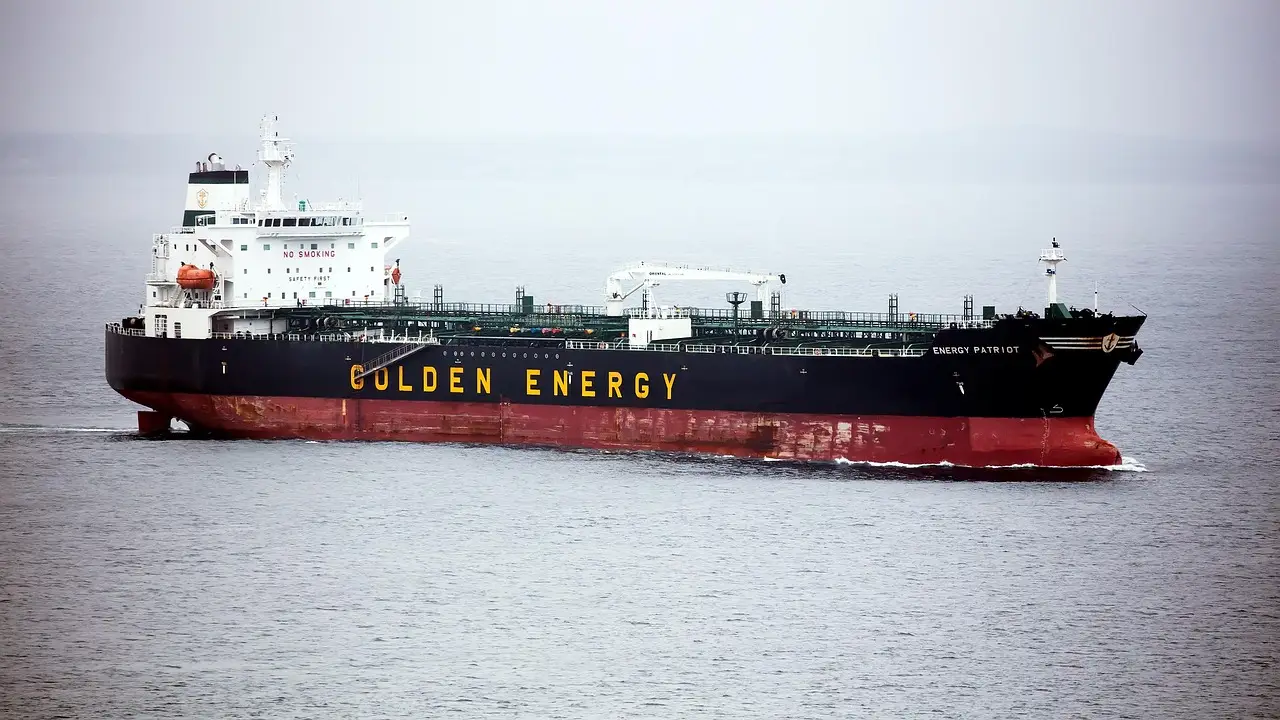
The January NYMEX crude contract settled Friday at $83.41, up 97 cents or 1.18 percent, after an outside session that printed the widest range — 3.29 points between 84.07 and 80.78 — since November 18. The session high printed at 3:30 PM ET, minutes after unconfirmed news-feed reports of a tanker struck in the Strait of Hormuz at 3:07 PM ET and of new Iran strikes under consideration at 3:22 PM ET.
The settle was the second consecutive higher one, and it sat in the upper fifth of the session range. The 80.78 low, printed during London hours in the 4:30 AM ET bar, marked the contract's lowest level since September 4. The December contract expired at 83.98, 57 cents above the January settle.
What moved price, and what didn't
Crude's gain ran against a broad risk-off tape. The S&P 500 cash index fell 3.70 percent and gold fell 4.62 percent, while the dollar index closed at 103.84, down 0.05. The provider's commentary attributed crude's strength to Middle East supply risk — attributed commentary, in the words of the analysis, not an established fact. The review covers the contract without a positioning dataset and makes no dealer-positioning claim.
On the intraday structure, the 3:00 AM ET 30-minute bar posted the largest decline; the contract rose through the afternoon into the 2:30 PM ET settlement before the post-settle geopolitical headlines lifted the session high into the 3:30 PM ET bar.
Where the technicals sit
The composite multi-indicator read is 56 percent sell with minimum strength and weakening direction, versus 48 percent sell on Thursday. The settle sits below the 9-day, 20-day and 50-day moving averages and above the 200-day.
Resistance levels stack from Friday's 83.41 settle upward:
- 83.46 — 5-day settlement average
- 84.07 — Friday's session high
- 84.51 — one standard deviation resistance
- 84.73 — Pivot R1
- 84.96 — two standard deviation resistance
- 84.98 — 61.8 percent retracement from the 52-week low
- 85.31 — three standard deviation resistance
- 86.04 — Pivot R2
Support runs:
- 82.77 — provider target price
- 82.75 — Pivot Point
- 82.44 — Thursday's settle
- 82.31 — one standard deviation support
- 81.86 — two standard deviation support
- 81.44 — Pivot S1
- 80.78 — Friday's session low, one-month low
- 79.46 — Pivot S2
What is the trade setup?
The primary setup is long the January contract from the 82.50 to 82.90 band, around the Pivot Point at 82.75 and the 82.77 target price. The stop sits at 82.10, below one standard deviation support. Targets are 83.30 first (beneath Friday's settle), 83.90 second (beneath Friday's high) and 84.50 third (beneath one standard deviation resistance), for risk-reward of roughly 1:1, 1:2 and 1:3 respectively from the entry midpoint.
Two conditions can kill it before the stop does. Two consecutive 30-minute closes below 82.50 remove the edge, and a bar trading through 82.10 before it closes stops the trade outright. A settle beneath Pivot S1 at 81.44 negates the thesis and opens a path back toward Friday's 80.78 low. The 14-day average true range is 3.64 points against a 0.60-point stop distance, so a weekend de-escalation between the US and Iran, a softer turn in the Hormuz reports or a gap at the Sunday reopen could carry price through the stop in a single move — the setup is an analyst judgment that the supply premium holds.
What to watch
Two days of weekend headline exposure separate Friday's settle from the 6:00 PM ET Sunday reopen. OPEC+ meetings are scheduled for Sunday, November 29, 2026, per the verified forward calendar, which prints no time for them. The weekly petroleum status report lands at 10:30 AM ET on Wednesday, November 25.
In the review's interpretation the bias is two-way with a supply premium in place: a pullback toward 82.50-82.90 is the more likely first test, with a retest of Friday's 84.07 high the base case.
via tradingview.com (Source)
More from Elena Vasquez
Show full bio
News editor covering technology and product news in Oil and gas industry operations and markets at Rig & Refinery.
619 articles
Adjoining reports
- Crude settles at $86.53 as Hormuz risk tests a short setup
- Crude Settles at 85.72, Down 3.21 Percent, as Hormuz Reports Hit
- NYMEX January crude settles at $82.44; setup sets $84.15 stop
- Crude Settles at 84.65 as 5.3-Million-Barrel Build Hits After Hours
- WTI Settles at 82.31 as 3.38-Million-Barrel Build Caps Rebound Bids