Well report No. RR-3577 · T23N · R40W · SEC 11 · filed October 10, 2026
Gas & LNGWell report
Delfin Midstream clears FID on first US floating LNG export project
Delfin Midstream has approved an FID on the first U.S. floating LNG export project, Reuters reported. The offshore Louisiana deepwater port ends a permitting cycle that ran more than a decade.
Field notes
- Delfin Midstream has approved a final investment decision on the floating LNG export project, Reuters reported.
- Reuters described the project as the first sanctioned U.S. floating LNG export development.
- The deepwater port is sited roughly 40 nautical miles off the Louisiana coast in the Gulf of Mexico.
- The permitting cycle across MARAD, FERC, and the U.S. Coast Guard has run more than ten years.
- The U.S. is the world's largest LNG exporter, with operating terminals at Sabine Pass, Corpus Christi, Cameron, Plaquemines, and Calcasieu Pass.
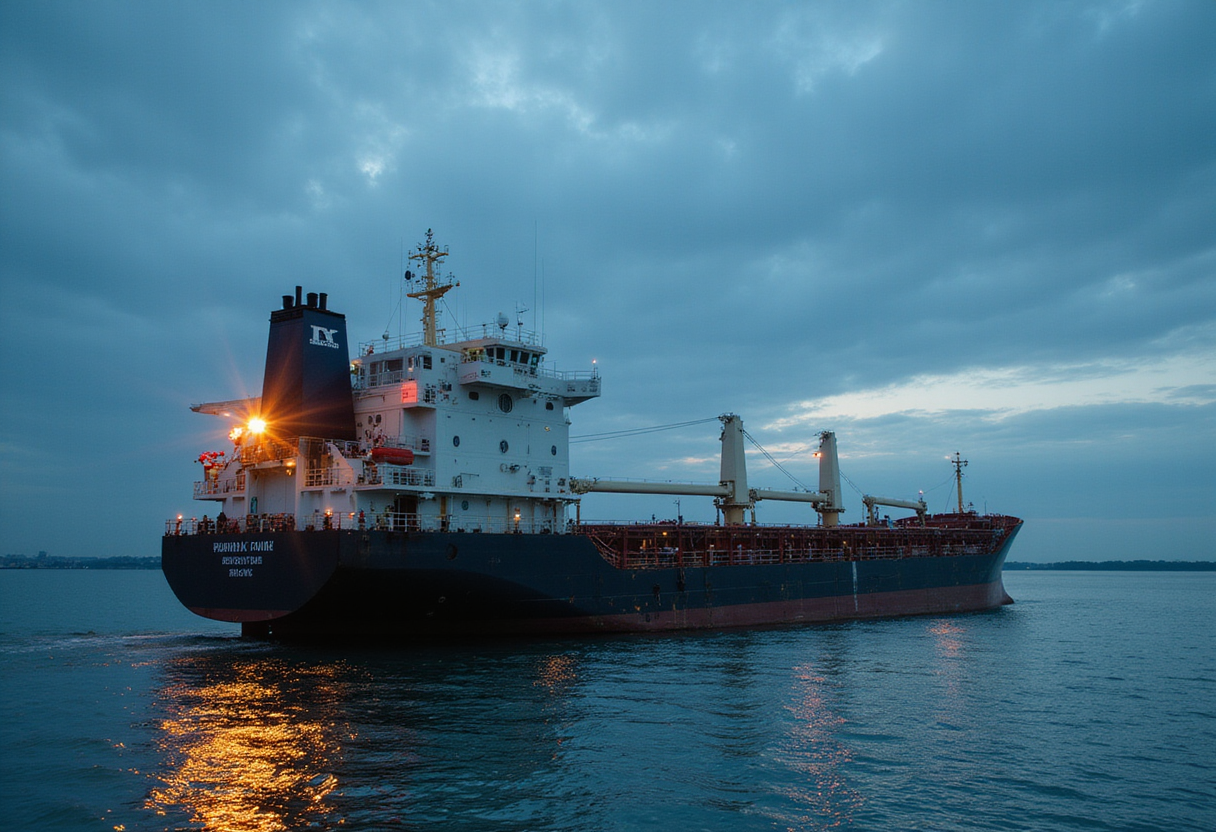
Delfin Midstream has approved a final investment decision on what the company frames as the first floating LNG export project in the United States, Reuters reported. The sanction covers the deepwater port facility offshore Louisiana and ends a permitting cycle that has run more than ten years.
The greenlight, if confirmed by company disclosure, places Delfin's floating LNG development ahead of every other U.S. floating liquefaction proposal on file. FLNG has run commercially in Cameroon, Malaysia, Argentina, and offshore Mozambique. The U.S. — the world's largest LNG exporter by volume — has until now had no sanctioned floating project.
What does the project cover?
Delfin's design calls for moored FLNG vessels roughly 40 nautical miles off the Louisiana coast, fed by existing Gulf of Mexico pipeline infrastructure. Liquefaction happens onboard converted LNG carriers, not at an onshore terminal. The site sits near the Fourchon corridor, giving Delfin a feed-gas advantage over greenfield onshore developments.
The deepwater-port licence track runs through the Maritime Administration and FERC — a different permitting route from the onshore LNG terminals that have dominated U.S. export growth. That split explains why the Delfin project has taken so long to clear, and why it is the first of its kind to reach FID.
How did the project reach FID?
Delfin first filed for the deepwater-port licence more than a decade ago, ahead of the U.S. LNG export wave that started in 2016. The project survived multiple rounds of regulatory review at MARAD, FERC, and the Coast Guard, and several restructurings of its commercial terms. The shift to floating over onshore reflected a bet that the deepwater-port route would be quicker and less capital-intensive than a greenfield Gulf Coast terminal — a bet that took more than ten years to test.
Why floating LNG in the U.S. Gulf?
The U.S. LNG export fleet runs on onshore terminals at Sabine Pass, Corpus Christi, Cameron, Plaquemines, and Calcasieu Pass, with Golden Pass and Rio Grande under construction. Each required multibillion-dollar capex, multi-year permitting, and direct pipeline lateral construction. The terminals together have moved U.S. export capacity past Qatar and Australia.
Floating LNG offers a different cost profile and a shorter critical path, with its own scale constraints around vessel size and storage. The Delfin FID will test whether the MARAD/FERC track can deliver a floating project on commercial terms comparable to the onshore buildout. Sponsors of competing Gulf FLNG proposals will read the decision as a regulatory litmus test.
What does the trade desk still need?
The Reuters headline does not name a liquefaction capacity, a vessel count, a sanction capex, an offtake volume, or a start-up date. Each will determine how the project ranks against the existing U.S. LNG buildout. Watch item: the company statement with capex, per-vessel capacity, and offtake counterparties.
The desk will also look for a finalised EPC contract and the first FLNG vessel-conversion yard. Both will set the schedule for first cargo. Any equity stake held by a producer with U.S. Gulf of Mexico gas resources will tighten the project's feed-gas logistics.
What should the desk watch next?
Three follow-ons: the equity partners and offtakers named in the company statement; the FERC and MARAD filings confirming the deepwater-port licence has moved into construction phase; and the schedule for converting the first FLNG vessel. First cargo will set the benchmark for any future U.S. floating LNG proposal. The capex, the per-vessel capacity, and the start-up window are the three numbers the trade desk will want on the company statement.
via Google News: LNG export terminals (Source)
More from James Calloway
Show full bio
Staff writer covering industry trends and analytics at Rig & Refinery.
400 articles
Adjoining reports
- Delfin Clears FID on $5 Billion Floating LNG Project Off Louisiana
- Delfin Advances Second Floating LNG Vessel for US Gulf Coast
- Court Upholds Delfin LNG Deepwater Port License Offshore Louisiana
- US DOT Flags $5 Billion for 'First' Waterborne LNG Export Project
- Trump greenlights offshore Louisiana LNG export hub; project risks flagged