Well report No. RR-5186 · T4N · R27W · SEC 28 · filed November 9, 2026
Gas & LNGWell report
Drone strike halts Khor Mor gas supply, cuts Iraqi Kurdistan grid
A drone strike at Iraq’s Khor Mor gasfield suspended gas to five power plants, removed 2,500-2,800 MW from the grid and left more than 70% of Kurdistan without power.
Field notes
- A Sunday night drone attack suspended Khor Mor gas supply to power plants in five cities.
- The strike knocked 2,500-2,800 MW off the grid, according to Omid Ahmed.
- More than 70% of the Kurdistan region lost power; security sources put grid capacity down 70%-80%.
- Prime Minister Ali al-Zaidi said an initial assessment found no casualties.
- A joint investigative committee was ordered; the same facility was attacked last year.
By Elena Vasquez
The drone attack on Iraq’s Khor Mor gasfield knocked 2,500 to 2,800 megawatts of electricity generation off the grid, Kurdistan Regional Government electricity spokesperson Omid Ahmed said.
A fire at the site and a regional power cut followed the Sunday night strike in Sulaimaniyah governorate. More than 70% of northern Iraq’s semi-autonomous Kurdistan region lost power, turning an attack on one gas installation into an immediate supply problem for the wider region.
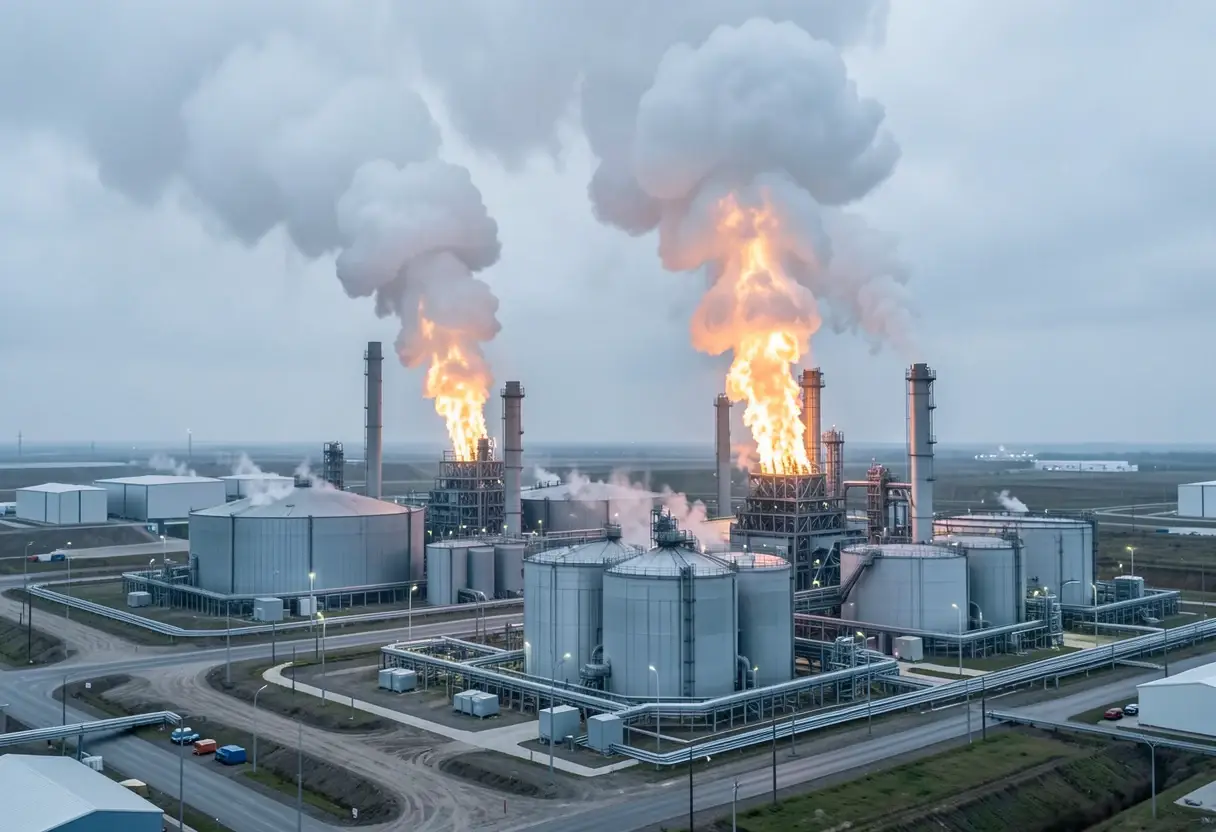
Smoke and flames rise in footage from the vicinity of Khor Mor that Al Jazeera’s fact-checking agency, Sanad, verified. The images show the visible fire, but they do not establish who launched the drone or why it came.
How did one gasfield strike cut power across Kurdistan?
Ahmed said: “The attack suspended gas supply to power plants” in Erbil, Sulaimaniyah, Bazian, Chamchamal and Duhok, the official Iraqi News Agency reported. The interruption linked the field to a five-city power-supply problem, with Khor Mor’s gas loss central to the regional shortfall.
Peter Smith, reporting from Baghdad for Al Jazeera, cited security sources who said the explosive-laden drone struck the Khor Mor gas storage facility. The sources put the reduction in grid capacity at 70% to 80%. That measure refers to generating capacity; the separate finding that more than 70% of the region lost power describes residents left without electricity.
In practical terms, one hit on gas storage translated into a system-wide electricity shortfall across the Kurdistan region.
What do investigators know about the attack?
It was not clear who was responsible or whether the strike was related to the United States and Israel’s war on Iran, according to the report. The uncertainty comes amid heightened regional tensions. A drone also hit the same Khor Mor facility last year, and no group claimed responsibility for that earlier attack.
Prime Minister Ali al-Zaidi said: “There were no casualties,” based on an initial assessment, the INA reported. He directed the formation of a joint investigative committee with the relevant Kurdish authorities to establish the circumstances of the attack.
Sanad’s verification supports the account of a fire at Khor Mor, while the security-source account places the impact specifically at the gas storage facility. Neither establishes responsibility, and the report gives no production, repair or restoration timetable for the field.
The cause and perpetrator remain unconfirmed, with the joint committee now tasked with establishing what happened.
Can critical services keep running?
Ahmed said the electricity ministry would provide power to critical facilities, including hospitals and water treatment plants, by operating hydroelectric stations and other plants that run on alternative fuel. The arrangement prioritizes essential services while Khor Mor’s gas supply to the five power plants remains suspended.
The report did not say how much electricity the backup arrangements can supply or when normal gas deliveries might resume. It also gave no revised timetable for restoring the grid after the loss of 2,500 to 2,800 megawatts.
The immediate power priority is continuity at hospitals and water-treatment sites, not a full return to pre-attack output.
What happens next?
Three items now frame the next phase: the joint committee’s findings, any official identification of those responsible and the restoration of gas deliveries to Erbil, Sulaimaniyah, Bazian, Chamchamal and Duhok. A fourth question is whether grid capacity returns from the reported 70% to 80% reduction.
The watch item is the timing of Khor Mor’s return to service, alongside the joint committee’s findings on responsibility.
via aljazeera.com (Source)
More from Elena Vasquez
Show full bio
News editor covering technology and product news in Oil and gas industry operations and markets at Rig & Refinery.
561 articles
Adjoining reports
- Khor Mor drone strike knocks out gas, cuts 2,800 MW in Kurdistan
- Drone strike on Khor Mor cuts power to 70% of Iraq's Kurdish region
- Drone strike ignites large fire at Libyan refinery; details thin
- Drone attack hits Kstovo refinery; output impact still unknown
- Fires Hit Lukoil's 15 Million Tonne Volgograd Refinery After Drone Strike