Well report No. RR-7720 · T22N · R39W · SEC 34 · filed November 10, 2026
Petroleum MarketsWell report
East-West Pipeline Attack Reprices Gulf Crude Risk as OPEC Hits 90%
An attack on Saudi Arabia's East-West pipeline near Medina meets a market in 1 million bbl/d surplus, with Murban at a $1.70/bbl premium to Brent and Hormuz risk still severe.
Field notes
- OPEC production has recovered to roughly 90% of pre-war levels.
- Attack targeted the East-West pipeline in the Medina region; the line feeds the Red Sea port of Yanbu.
- Murban crude is quoted at about a $1.70/bbl premium over ICE Brent futures.
- Global market ran a surplus exceeding 1.0 million bbl/d in September-October, per JPMorgan and other trackers.
- Brent spot assessments hovering in the mid- to high-90s USD/bbl; downside support seen in the low- to mid-90s.
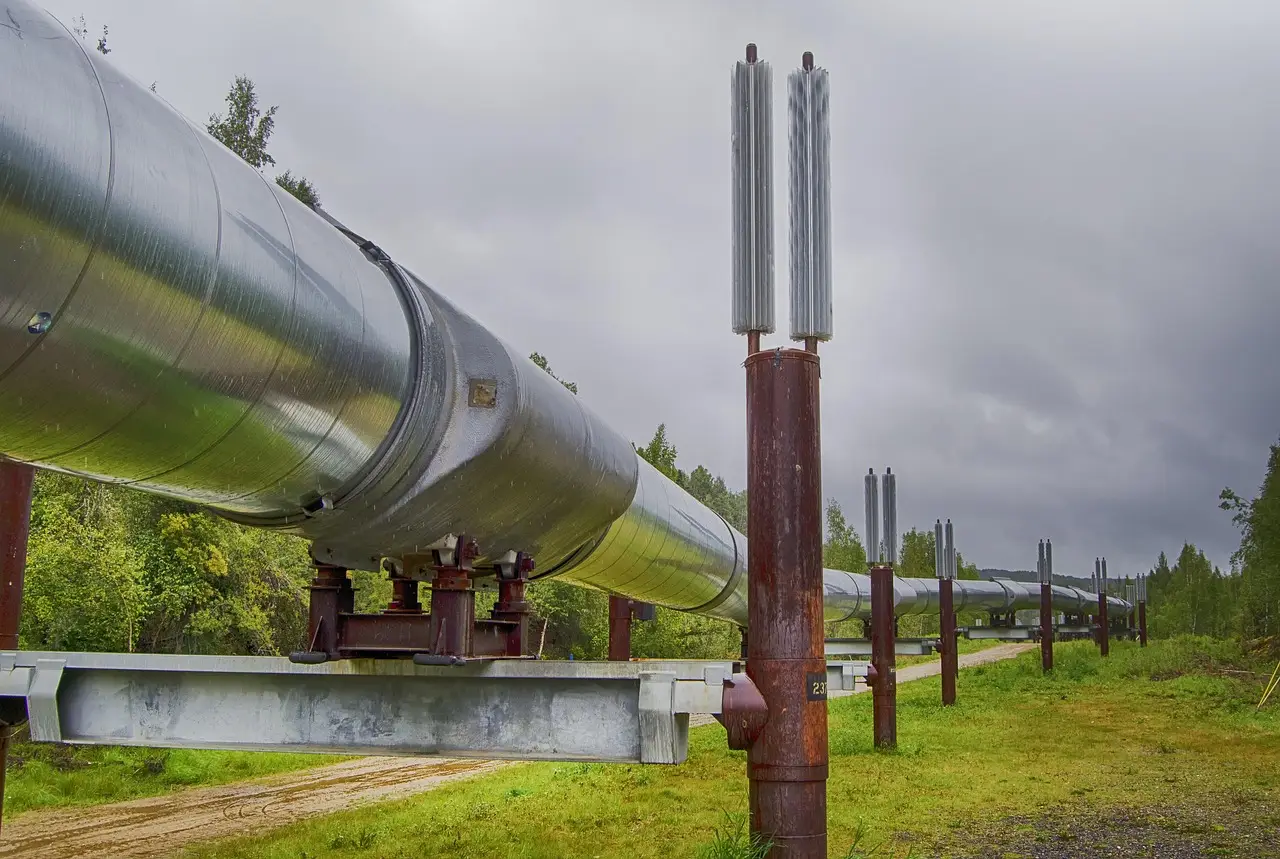
A fresh attack on Saudi Arabia's East-West crude pipeline near Medina has landed in a market where OPEC production has already climbed back to roughly 90% of pre-war levels — and the combination is repricing geopolitical risk across Gulf barrels.
The 1,200-km-class East-West line is the kingdom's main conduit from eastern fields to the Red Sea port of Yanbu, and its purpose is straightforward: it lets crude exports bypass the Strait of Hormuz entirely. Striking that bypass, at a moment when tanker traffic through Hormuz still faces mines, drones and naval stand-offs, puts the resilience of Saudi alternative routing back at the center of the oil market.
What did the attack hit, and why does it matter?
The incident targeted the strategic line in the Medina region. Earlier in the current conflict, Saudi Arabia successfully used the East-West system to shift exports to Yanbu and ease Hormuz bottlenecks. Any prolonged impairment of the pipeline would force more barrels back through high-risk sea lanes — or temporarily cap export capacity outright.
Hormuz itself remains far from settled. Recent monitoring puts risk scores for the strait in "severe" territory, and modelled war-risk hull insurance adds several percentage points to voyage costs. Those charges hit longer-haul flows to Asia and Europe hardest, supporting delivered prices even when flat benchmarks ease.
Where are prices now?
The attack arrived after a market that had sold off on hopes of US-Iran de-escalation and talk of a fading war premium. Spot Brent assessments have hovered in the mid- to high-90s USD/bbl area, after sessions oscillating between the mid-90s and low 100s.
Physical differentials tell the sharper story. Murban crude cargoes out of the UAE are quoted at a premium of about $1.70/bbl over ICE Brent futures — evidence that buyers will pay up for barrels with more secure evacuation routes, according to market assessments cited in the source analysis.
- Brent futures: slightly firmer to sideways bias over three days, torn between pipeline headline risk and de-escalation hopes.
- Murban vs. Brent: premium likely to stay elevated on Hormuz disruptions and tight regional logistics.
- Saudi OSPs: upward pressure on spot realizations into Asia and Europe, driven by bypass risk, war-risk freight and OPEC's output rebound.
How can supply be recovering and risk rising at once?
That's the tension defining this market. OPEC output has recovered to about 90% of pre-war levels, helped by incremental volumes from core Gulf producers and non-Gulf exporters. JPMorgan and other trackers see the global market slipping into a surplus exceeding 1.0 million bbl/d across September-October as exports recovered and demand softened.
Yet that headline surplus coexists with tightness in specific crude qualities and routes — particularly medium-sour Gulf grades that must still cross contested waters or lean on limited pipeline bypass capacity. The result: balanced-to-oversupplied fundamentals on paper, with a distinct regional risk premium alive in physical markets.
What about the macro picture?
Oil's traditional correlation with bond yields and inflation expectations has weakened in recent weeks, as investors refocus on equity volatility and AI build-out financing. Analysts cited in the source suggest this decoupling means a crude spike from fresh shocks may not translate as directly into higher long-term yields as earlier in the year — potentially giving central banks slightly more room to look through short-term energy volatility, while still watching for second-round inflation effects.
The watch items
Traders are watching four things over the next two to four weeks, per the source's outlook: the balance of risk on the geopolitical premium (skewed to the upside while the pipeline is threatened and no Hormuz settlement exists); curve shape, with nearby spreads expected to hold supported or steepen into backwardation if Saudi infrastructure downtime proves prolonged; route and quality differentiation, with securely-logged barrels outperforming high-sulfur Gulf streams hostage to shipping conditions; and downside triggers — rapid pipeline repair, US-Iran progress or coordinated SPR releases — that could compress the premium and test Brent technical support in the low- to mid-90s USD/bbl range.
via commodity-board.com (Source)
More from Elena Vasquez
Show full bio
News editor covering technology and product news in Oil and gas industry operations and markets at Rig & Refinery.
561 articles
Adjoining reports
- Militia Strike on East-West Pipeline Underscores Hormuz Workaround Limits
- Satellite Images Reveal Damage to Saudi Pipeline Bypassing Hormuz
- Saudi East-West pipeline targeted again; operations remain unaffected
- Aramco Restarts East-West Pipeline as Yanbu War Risk Builds
- Saudi Crude Flows Shift Back to Hormuz After Pipeline Shutdown