Well report No. RR-8326 · T12N · R33W · SEC 36 · filed October 10, 2026
Midstream & PipelinesWell report
East-West Saudi pipeline struck; Iran-aligned Iraqi factions blamed
ABC7 New York attributes an attack on Saudi Aramco's East-West Pipeline — the kingdom's domestic crude corridor between Abqaiq and Yanbu — to Iran-backed militias inside Iraq, though operational impact remains undisclosed.
Field notes
- East-West Pipeline reported as target per ABC7 update
- Attack attributed to Iran-backed militias operating from Iraq
- Aramco operates the line under its Petroline brand
- Line links Abqaiq processing hub to Yanbu Red Sea export terminal
- Nameplate capacity reported at approximately 5 million bpd; volume impact and restart timing undisclosed
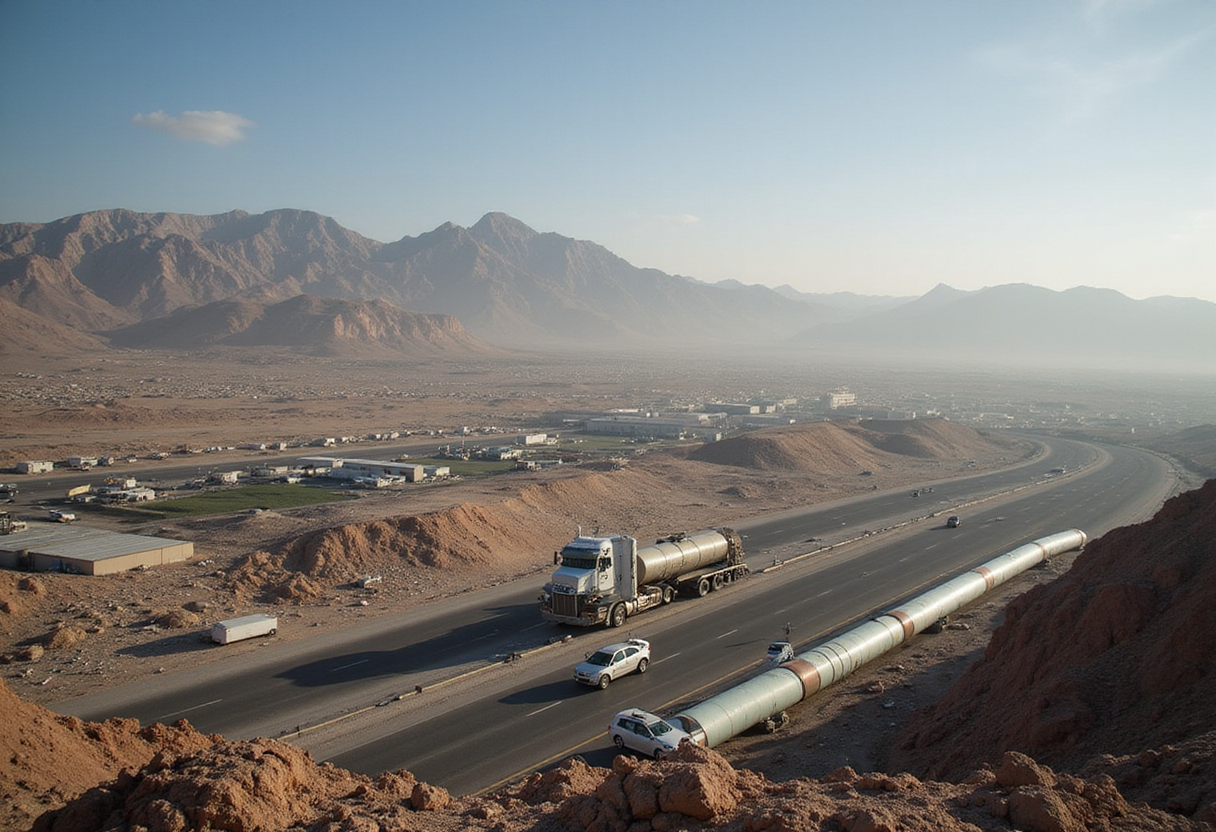
Saudi Aramco's East-West Pipeline — the kingdom's main overland crude corridor to the Red Sea — was struck in an attack that ABC7 New York attributes to Iran-backed militias operating from Iraq, per an update to the broadcaster's breaking coverage.
What does the update confirm?
The headline-level report names the East-West Pipeline — the crude corridor linking the Eastern Province processing hub at Abqaiq to the Yanbu export terminal on the Red Sea — as the asset targeted. Aramco operates the line, marketed under the Petroline brand, as one of two overland routes that let Saudi crude bypass the Strait of Hormuz for shipments bound to the Mediterranean and Europe. A parallel natural-gas-liquids line shadows the same corridor. Yanbu's tankage supports loading VLCCs and Handy-max-class vessels for westbound exports.
The targeted corridor carries strategic weight beyond Saudi domestic flows. The route underpins Riyadh's spare export capacity outside the Strait and supports contract deliveries to customers in the Mediterranean basin.
What is the operational impact?
ABC7's update does not specify the volume impact, the line section targeted, or the timing of the strike. The outlet also does not state whether the line is shut, flowing at reduced rates, or already restored to nominal throughput. Saudi Aramco has not issued a statement on the incident; Saudi state media have not commented. Without an operational read, traders and Mediterranean refiners cannot yet price a sustained disruption into their forward barrels.
Any Aramco statement on the line's status will set the market tone for the Asia open.
Who is being blamed?
The ABC7 attribution points to Iran-backed factions operating from Iraq. The same Tehran-aligned network has claimed responsibility for drone and rocket operations across Iraq, Syria and the Gulf in recent years, often under the Islamic Resistance brand. Saudi air-defense units have previously intercepted projectiles aimed at Aramco facilities — including sites at Abqaiq and Yanbu, both anchored on the East-West corridor. The Houthis in Yemen, also aligned with Tehran, have separately claimed multiple rounds of strikes on Saudi territory, including operations the kingdom has publicly attributed to Tehran.
What is the supply implication?
If the line remains operable at its alternate-route baseline, the supply hit stays contained. Aramco can continue to load Yanbu from Eastern Province storage even with the East-West Pipeline out, though the system's spare capacity and tank-farm buffer at the Red Sea terminal have not been disclosed publicly. East-West nameplate capacity has been reported at around 5 million bpd, although day-to-day throughput sits well below that ceiling. A sustained outage would force Riyadh to lean harder on Strait-routed crude, push more barrels into storage, or accelerate tank-farm draws at Yanbu — any of which would move Brent-Dubai spreads in early Asian trade and lift freight on the Baltic Dirty list.
Even a limited restart delay adds risk premium to the regional refining margin, with Italian and Greek buyers among the most exposed if Yanbu loadings slip.
Watch items
- Aramco or Saudi energy ministry confirmation of any restart window.
- A formal claim of responsibility from the Iraqi factions cited by ABC7, or from Houthi media in Sanaa.
- US Treasury or State Department statements on the incident and any follow-on sanctions designations.
- Brent-Dubai spread reaction in Asian trade if a sustained outage firms up.
- Freight response on the Baltic Dirty and Western Mediterranean routes.
The bottom line: Saudi Arabia's western crude export corridor is back in the headlines. Attribution points to Iran-aligned Iraqi factions. Volume impact and operational status remain unconfirmed.
via Google News: Pipelines and midstream (Source)
More from Priya Raman
Show full bio
Senior reporter covering media and advertising at Rig & Refinery.
395 articles
Adjoining reports
- Saudi Aramco begins start-up of East-West crude pipeline
- Saudi Arabia Restores Oil Flows on East-West Pipeline
- Saudi East-West Pipeline Moves 5.8 MMbbl as Red Sea Route Recovers
- Saudi Aramco Ramps Up Gulf Oil Loadings After Pipeline Attack
- Saudi East-West Pipeline Flows at Normal Rates, Bloomberg Reports