Well report No. RR-8956 · T2N · R3W · SEC 26 · filed October 10, 2026
Refining & PetrochemicalsWell report
Fire at eastern India petrochemical plant injures at least 20
A fire at a petrochemical plant in eastern India injured at least 20 people, AP News reported. The initial dispatch did not identify the operator, the feedstock processed, or the cause of ignition.
Field notes
- At least 20 people injured in fire at petrochemical plant in eastern India, AP News reported
- Plant operator, parent company, and petrochemical feedstock slate not identified in AP's initial dispatch
- Cause of fire, damage assessment, and production status undisclosed as of initial reporting
- Investigators opened probe into cause and emergency services responded, per AP
- Trade watchers expect operator disclosure, cause determination, and any force majeure declaration within 24-48 hours
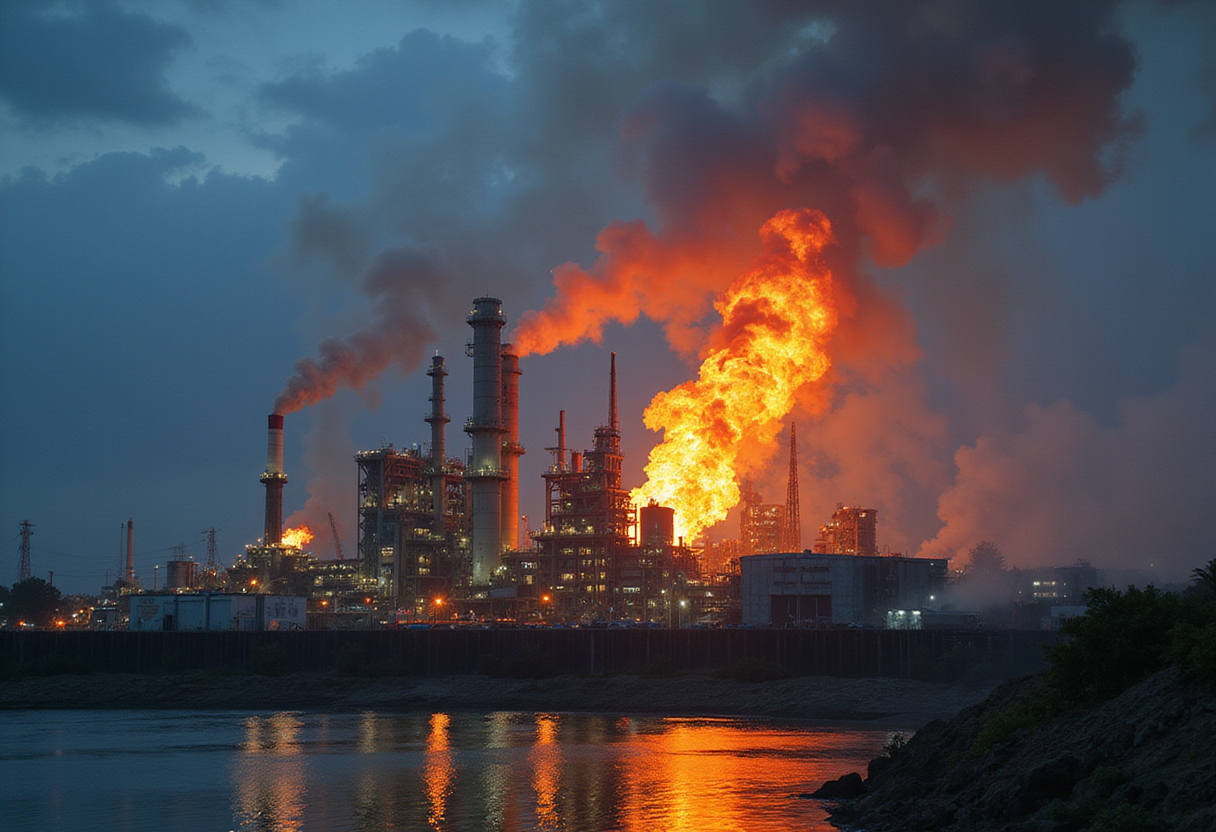
A fire at a petrochemical plant in eastern India injured at least 20 people, AP News reported in its initial dispatch.
The blaze broke out at a petrochemical facility in the eastern part of the country. Casualties received medical attention, AP said. The newswire's initial reporting did not name the plant, identify the operator, or specify the petrochemical feed processed at the site.
Emergency services responded to the scene. AP said investigators have opened a probe into the cause. The newswire provided no damage assessment, no cause of ignition, and no indication of whether production continues, has been suspended, or has been curtailed at the affected facility.
What does the wire tell us — and what doesn't it?
AP's initial report establishes four datapoints: the country, the sub-region, the asset class, and a casualty floor of 20. Absent from the dispatch are the metrics downstream operators, traders, and risk desks normally require to size an incident.
The agency did not name the operator, the parent company, or the legal entity of record. It did not specify whether the plant produces olefins, aromatics, polymers, intermediates, or specialty chemicals. The newswire also did not disclose nameplate capacity, the share of national or regional output the plant represents, or its downstream customer mix.
The cause of the fire — process upset, equipment failure, hydrocarbon release, ignition source, or external factor — went unreported. AP did not address the status of fixed-asset damage, the perimeter of any evacuation, or the status of adjacent units at the same site.
For a fire at a petrochemical asset, that absence list typically narrows within 24-48 hours as operator disclosures and regulator filings surface. Until then, the item sits as a casualty count in the trade ledger rather than a market mover.
Why does the eastern India location matter?
Eastern India hosts a portion of the country's downstream chemicals capacity, with units along the eastern seaboard and inland corridors producing polymers, aromatics, intermediates, and feedstock derivatives. AP did not tie the incident to a specific state or to a specific feedstock slate.
In trade terms, three questions typically follow any incident in the region: the operator's share of regional supply for the affected product slate, whether a force majeure follows on contractual offtake to domestic or export customers, and the scale of feedstock disruption upstream of the unit.
Those datapoints typically surface through the operating company's investor disclosure or the relevant state pollution control board rather than through initial wire reporting.
How does the story typically develop?
Indian industrial fires typically resolve through a sequence of disclosures in the first 72 hours. An operator statement on cause and damage leads, followed by a state disaster management authority briefing on casualties and a state pollution control board filing on emissions and remediation.
A court-of-inquiry brief, a district administration statement, or an exchange filing on production impact usually trails. For listed operators, an intimation to the stock exchanges typically arrives within the same window.
Until those sequences start, the incident reads as a casualty-led wire item — useful for safety tracking and incident ledgers, but unallocable across product markets for pricing or contractual analysis.
What are the watch items?
Two datapoints will move this story from wire to trade-relevant incident: the operator disclosure and the cause-of-fire determination. Either can arrive in the next 24-48 hours through a company release, a regulator filing, or a court-of-inquiry brief.
A third derivative worth tracking: any force majeure declaration, contract-of-sale amendment, or temporary shutdown notice. For regional polymers, aromatics, or intermediates, that disclosure is what downstream converters, traders, and risk desks will price first.
A fourth: the casualty list revision. Initial industrial-fire counts in India frequently move as hospitals report admissions, discharge, or fatalities over the first 72 hours.
via Google News: Refineries and petrochemicals (Source)
More from James Calloway
Show full bio
Staff writer covering industry trends and analytics at Rig & Refinery.
401 articles
Adjoining reports
- Fire at eastern India petrochemical plant injures at least 20
- Blast Reported at Mangalore Refinery and Petrochemicals Complex
- Explosion at MRPL Refinery in Mangaluru Kills One, Injures Nine
- Drone Strike Ignites Fire at Petrochemical Plant in Bashkortostan
- Sabotage and theft blamed after fire on Syrian gas pipeline