Well report No. RR-2383 · T21N · R45W · SEC 21 · filed October 10, 2026
Petroleum MarketsWell report
Fire Reported Near Aramco Riyadh Site as Saudi-Houthi Fighting Escalates
Flames and smoke rose near an Aramco Riyadh facility on Saturday as Saudi-Houthi fighting killed 80 combatants around Taiz on Friday, ahead of a Camp David review of US policy.
Field notes
- At least 80 combatants killed in Friday fighting around Taiz: 55 Houthi fighters and 26 government troops, per separate claims reported by AFP
- Flames and smoke reported near an Aramco facility in Riyadh on Saturday; Saudi authorities and Aramco had not commented as of publication
- Vice President JD Vance chaired an unannounced Camp David meeting Friday with senior US national security officials on the Saudi-Houthi conflict, Axios reported citing three US officials
- Houthis have previously claimed attacks on Aramco facilities, including the Red Sea terminal at Yanbu
- Combat between Houthis and Saudi-backed government forces resumed in July after several years of relative calm under a fragile truce
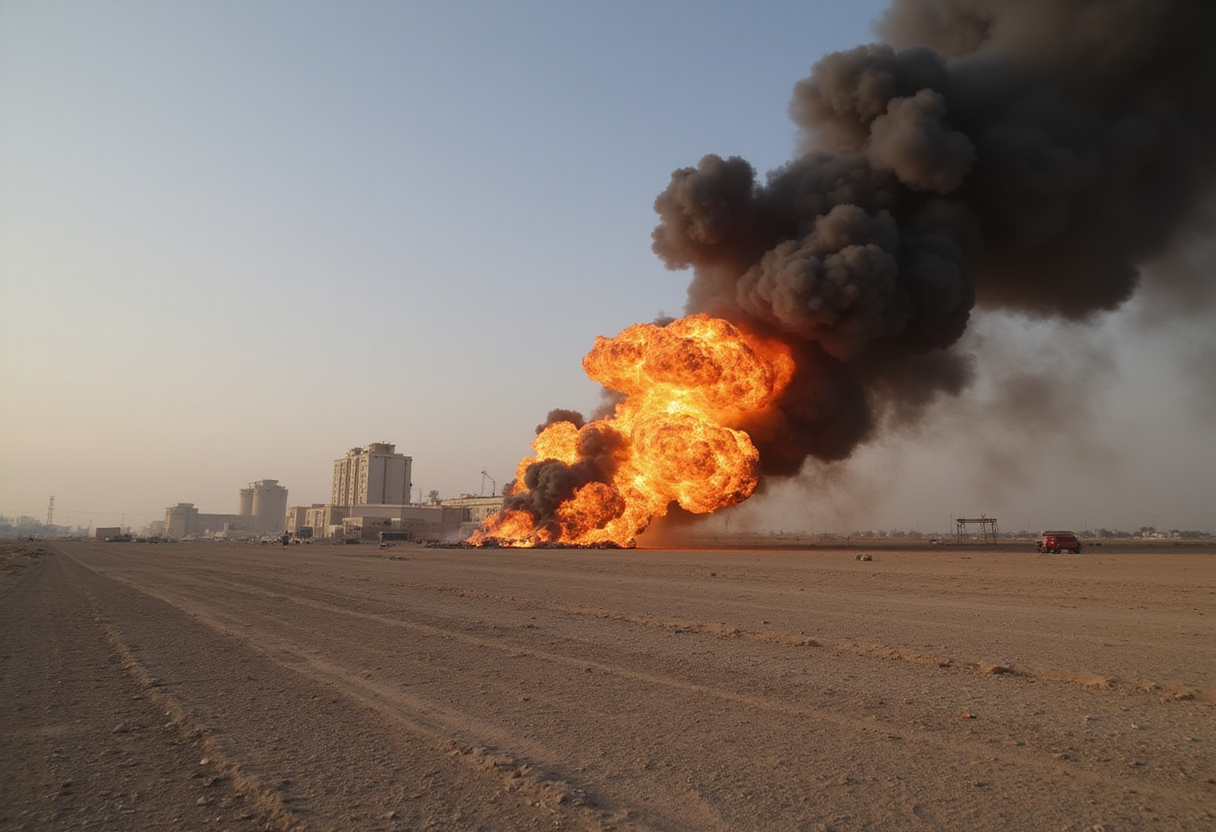
Flames and heavy smoke rose near an Aramco facility in Riyadh on Saturday as fighting across Yemen killed at least 80 combatants around Taiz the previous day, according to witnesses and reporting from Reuters and AFP.
A Reuters witness reported seeing a large plume of smoke and fire near an Aramco installation in the Saudi capital. Saudi authorities had not immediately confirmed the incident, and Aramco had not issued a comment. No group had claimed responsibility as of Saturday.
What is known about the Riyadh incident?
The Riyadh-area fire followed recent Houthi claims of attacks on Saudi cities and energy infrastructure, including Aramco's Red Sea port terminal at Yanbu. Saudi officials said they intercepted missiles launched toward Taif and Yanbu but did not confirm damage to Aramco assets in those strikes. Aramco's processing and distribution network across central Saudi Arabia is the backbone of the kingdom's domestic product supply and a key node for flows from Eastern Province fields.
The escalation marks a major reversal after several years of relative calm under a fragile truce. Combat resumed in July, pitting the Iran-backed Houthis, who control most of northwestern Yemen including Sanaa, against Saudi-backed government forces.
How heavy is the fighting around Taiz?
Friday's combat in Taiz governorate killed 55 Houthi fighters and 26 government troops, according to separate claims from each side reported by AFP. Taiz, Yemen's third-largest city after Sanaa and Aden, sits on highland positions overlooking Red Sea coastal territory the Houthis have recently seized. The group has not entered the city itself despite those gains.
Houthi-run Al-Masirah television reported dozens of Saudi airstrikes on Houthi-held areas on Saturday. AFP correspondents in Sanaa heard at least five blasts, with two warplanes seen firing missiles over the city. The broadcaster gave no target or casualty details and earlier reported missile strikes that hit telecommunications infrastructure in Saada, a northwestern Houthi stronghold.
Saudi authorities said a Houthi projectile damaged a school in Najran, near the Yemeni border.
Why does the Bab al-Mandab Strait matter?
The renewed Houthi reach into Saudi border territory has revived concerns over the Bab al-Mandab Strait, a strategic maritime chokepoint linking the Red Sea with the Gulf of Aden. Saudi Arabia is preparing a major counteroffensive, in coordination with Yemeni government forces, to reclaim Red Sea coastal territory and restore control over the waterway.
How is Washington responding?
Vice President JD Vance chaired an unannounced Camp David meeting Friday with senior US national security officials to discuss the war in Iran and the Saudi-Houthi conflict, Axios reported, citing three US officials. The administration did not publicly announce the meeting.
Reuters reported that Washington has so far declined to join the Saudi-backed offensive directly, while continuing intelligence and defensive support for Riyadh. Saudi Arabia's energy infrastructure remains central to global oil markets; any sustained disruption to major facilities or maritime routes adds another layer of risk to an already volatile regional supply picture.
What is the watch item?
Three signals will shape the next 72 hours: Aramco's confirmation or denial of damage at the Riyadh-area site; the scope of the Saudi counteroffensive along the Red Sea coast; and any shift in US posture from intelligence support to direct involvement. For the oil market, the operative question is whether Houthi strikes widen from border infrastructure to the Yanbu export complex or to Gulf shipping lanes.
via kurdistan24.net (Original)