Well report No. RR-7260 · T16N · R31W · SEC 16 · filed October 10, 2026
Petroleum MarketsWell report
UAE energy project pipeline reaches $210 billion: report
UAE energy project pipeline hits $210 billion per Oil & Gas Middle East, with the bulk tied to ADNOC upstream, Ruwais petrochemical conversion, and the federal hydrogen and renewables build.
Field notes
- UAE energy project pipeline valued at $210 billion according to Oil & Gas Middle East
- Bulk of the envelope sits with ADNOC's integrated gas, LNG and offshore developments
- Dubai contributes via DEWA power-and-water and the Mohammed bin Rashid Al Maktoum Solar Park phases V-VII
- Roughly one-third of the pipeline sits in operational or commissioning phase, one-third sanctioned, one-third pre-FID
- Watch items include the next ADNOC drilling tender, Borouge 4 commissioning and the federal hydrogen roadmap update
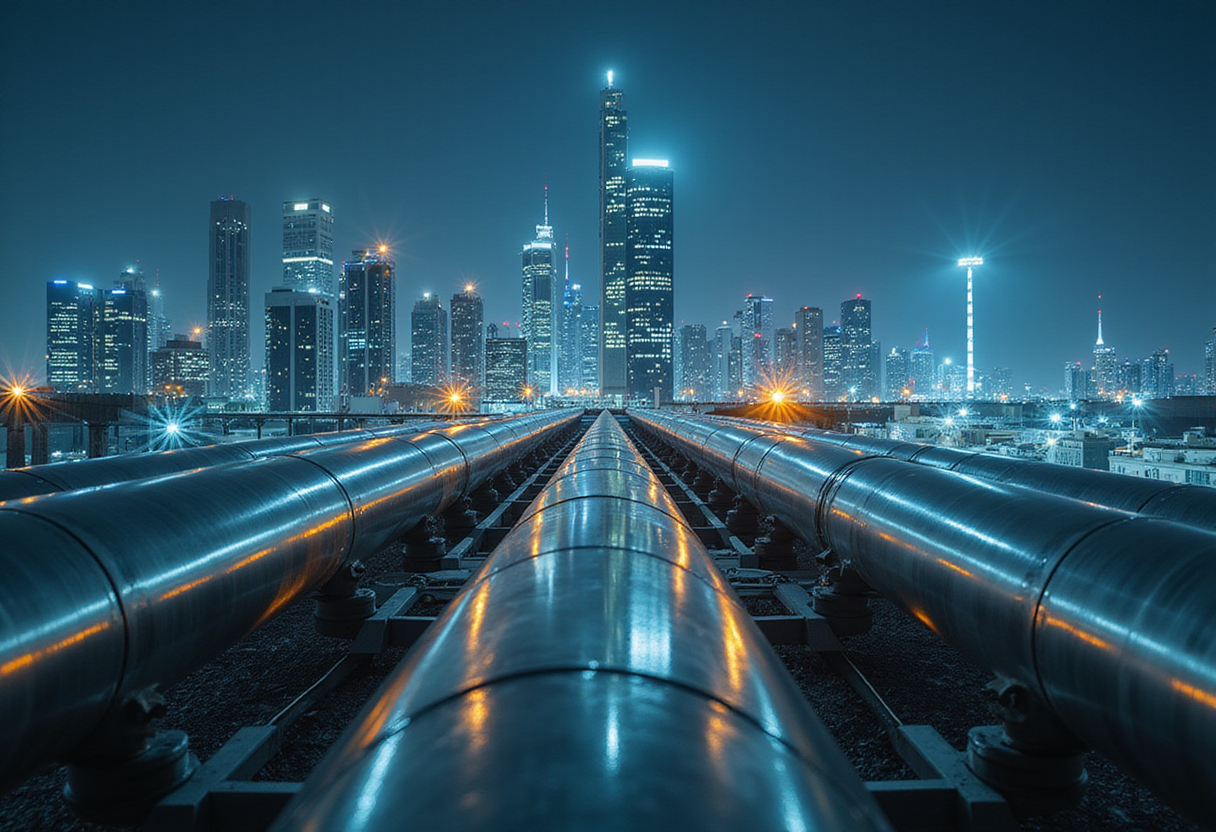
The United Arab Emirates' energy project pipeline has reached $210 billion, according to a report by Oil & Gas Middle East, placing the Gulf producer alongside the most active upstream-to-power capital allocators in the Middle East.
The $210 billion figure, disclosed in the trade publication's pipeline tracker, captures the cumulative value of projects attributed to the UAE across hydrocarbons, petrochemicals, low-carbon fuels and associated infrastructure. The total places Abu Dhabi's national champion ADNOC, Dubai's DEWA, and the federal authorities' hydrogen and renewables portfolios in the same capital frame as the Kingdom of Saudi Arabia's pre-IPO Aramco expansion slate and QatarEnergy's North Field build-out.
What does the $210 billion figure cover?
Oil & Gas Middle East's headline number aggregates announced, sanctioned and pre-FID allocations across the UAE's federal and emirate-level portfolios. The bulk sits with Abu Dhabi:
- ADNOC's integrated gas expansion, including the Ruwais LNG complex and the offshore ultra-sour Hail and Ghasha developments
- The Bab and Bu Hasa tight-gas reinvestment cycle
- Downstream petrochemical conversion at Borouge and TA'ZIZ, the Ruwais Derivatives Park
- The company's unconventional gas programme in the Abu Dhabi onshore block
Dubai accounts for the next-largest tranche through DEWA's power-and-water build, Mohammed bin Rashid Al Maktoum Solar Park phases V through VII, and the Hassyan coal-to-clean conversion. Sharjah's Sharjah National Oil Corporation contributes the Moveyeid field redevelopment and the Sajaa gas processing complex revamp. Fujairah, host to the country's main product export terminals and storage hubs, anchors bunker fuel and bitumen investment lines.
How does the UAE compare regionally?
The $210 billion envelope, if sustained, cements the UAE's position as the second-largest single-country energy capital pool in the Gulf after Saudi Arabia. QatarEnergy has guided the North Field expansion programme at a lower headline figure but with a higher LNG-tonnage share. Saudi Arabia's combined Aramco, SABIC and PIF energy allocations exceed $300 billion on most industry counts.
The UAE's edge has been speed-to-FID. ADNOC has converted a record share of its 2022-2024 licensing-round discoveries into final investment decisions within twelve to eighteen months, a faster cycle than the regional average of three to four years for comparable deep-gas developments.
Where does the money sit in the cycle?
Roughly one-third of the UAE's $210 billion sits in the operational or commissioning phase: Borouge 4 polyolefin units, the Al Reyadah carbon capture network, ADNOC Drilling's extended-reach rig programme and the Ruwais LNG trains. Another third is sanctioned but pre-execution, where long-lead orders are still being placed. The remaining third remains at pre-FID, with final numbers sensitive to offtake contracts, EPC pricing and export credit availability.
What should operators and service contractors watch?
Three watch items sit at the centre of the next twelve months for anyone with UAE exposure:
- The next ADNOC integrated drilling tender, expected in the first half, will set day-rate benchmarks for high-spec jack-ups operating in the Arabian Gulf.
- The Borouge 4 commissioning sequence, with first polymer export targeted from Ruwais, will tighten or loosen Asian polyethylene supply depending on ramp profile.
- The federal hydrogen roadmap update, due before year-end, will determine whether the UAE's blue-ammonia export corridor outpaces Saudi Arabia's NEOM Green Hydrogen project on FID timing.
Margin pressure on EPC contractors remains the unresolved variable. Saudi Arabia's Jafurah unconventional gas build has already reset regional cost benchmarks upward; the UAE's later-mover status on similar packages could either compress or expand contractor margins depending on how ADNOC and TA'ZIZ structure their risk-sharing on the next wave of petrochemical conversions.
What does the headline not yet resolve?
The $210 billion figure is a pipeline tally, not a committed spend. The gap between announced and sanctioned dollars is widest in low-carbon hydrogen, where the UAE has signed multiple offtake memoranda with European, Japanese and Korean buyers but has yet to convert a single project to full FID at the multi-billion scale. Watch the next ministerial round of the Hydrogen Roadmap for the conversion offtake data that will signal which blue and green projects move from pipeline to procurement.
via Google News: Pipelines and midstream (Source)
More from Olivia Hart
Adjoining reports
- UAE Crude Output Nears Record After OPEC Exit, Sources Say
- Saudi Arabia Weighs Crude Pipeline to Oman, TotalEnergies Chief Says
- CFR Reports UAE Exit From OPEC; Member-State Confirmation Still Pending
- UAE Set to Exit OPEC and OPEC+ Producer Groups
- Saudi East-West Pipeline Moves 5.8 MMbbl as Red Sea Route Recovers